In early 2025, a sudden tragedy struck Thanh Nga's family when her young daughter, Kim Anh, began experiencing persistent vomiting, loss of appetite, and abdominal pain. Initially believing it was a digestive disorder, her parents took her to a provincial hospital. She was then transferred to the National Children's Hospital, where doctors diagnosed her with neuroblastoma. The tumor carried a high risk of rupture, and the prognosis was dire.
"It felt like the sky had fallen", Nga recalled the moment she learned her daughter had cancer.
This diagnosis completely upended the family of 6. To stay by her daughter's bedside, Nga had to quit her job. The financial burden fell entirely on her husband, whose monthly salary was 6 million dong, while her elderly parents in their hometown were frail and often ill.
To cover the costs of Kim Anh's initial chemotherapy rounds, the couple borrowed money from everyone they knew. After selling all their valuable possessions, the family was left bankrupt, and Kim Anh faced a critical juncture in her fight for survival.
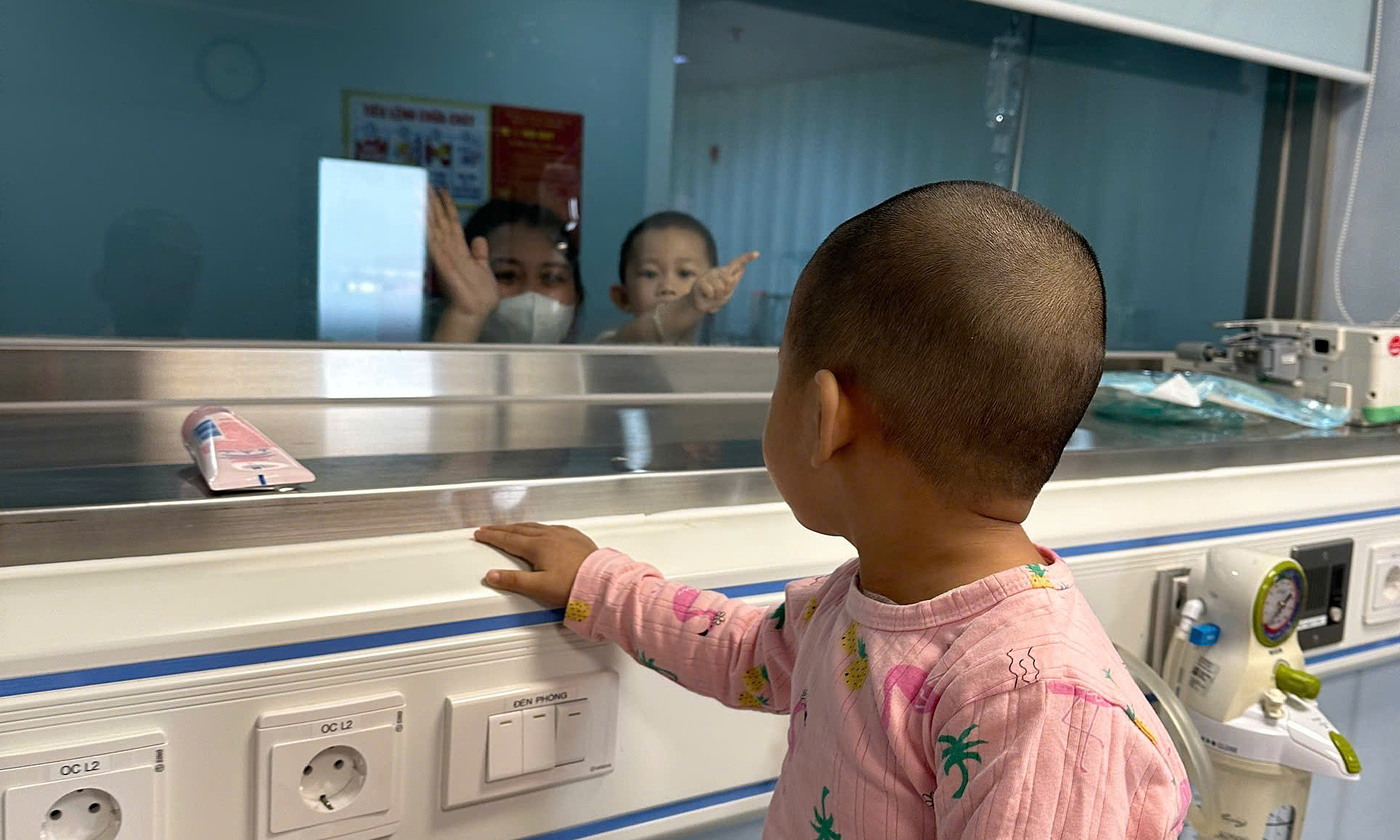 |
Kim Anh during treatment at the National Children's Hospital. Photo: Family provided |
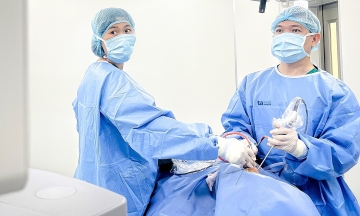
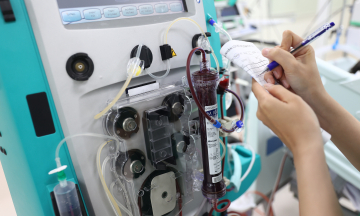
The treatment protocol required Kim Anh to undergo a stem cell transplant. This procedure is crucial for eradicating cancer cells, regenerating healthy cells, and reducing the recurrence rate. After a transplant, the 5-year survival rate for patients can reach 30% to 60%.
However, the estimated cost for the surgery and medications not covered by health insurance was 100 million dong. Additionally, the child needed to stay in a standard sterile isolation room with a specialized air filtration system and equipment – expenses also not covered by health insurance. This amount was beyond the reach of the impoverished couple. At times, the mother felt helpless, watching her under-'hai'-year-old daughter's chance at life slip away due to financial strain.
Neuroblastoma is a common solid tumor in infants and children under 5 years old. Most cases are only discovered after the cancer has metastasized to other parts of the body, such as lymph nodes (small, bean-shaped organs that help fight infection), liver, lungs, bones, and bone marrow (spongy, red tissue inside large bones). For patients receiving only maintenance treatment for neuroblastoma, the 5-year survival rate is quite low. Depending on the stage of the disease and the child's physical condition, doctors develop appropriate treatment regimens. Among these, stem cell transplantation is considered a "lifeline" for patients, helping to completely destroy cancer cells, regenerate healthy cells, achieve remission, and reduce the risk of recurrence.
On the brink of despair, a miracle smiled upon the family when Kim Anh received sponsorship for her stem cell transplant costs from the Mat troi Hy vong program (Quy Hy vong – VnExpress newspaper). This timely intervention prevented the cancer from metastasizing further.
Following the surgery, the 'hai'-year-old young warrior continued to face a series of severe side effects from the potent chemotherapy: continuous high fever, diarrhea, and rapid weight loss. Yet, with extraordinary resilience, she bravely endured and overcame the most critical phase. Her vital signs gradually stabilized, bringing immense relief to her family and doctors.
Watching her daughter slowly regain her color, Thanh Nga emotionally shared, "The road ahead is still long, but for her to bravely overcome death is like being born a second time". She added, "we are determined not to give up on her, no matter how difficult it gets".
| With the goal of igniting hope for child patients in difficult circumstances, Quy Hy vong, in collaboration with Ong Mat troi, implements the Mat troi Hy vong program. Every contribution from the community adds a ray of hope to the nation's future generation. Readers can support the program here: |
Program name: Ten cua ban - Mat troi Hy vong
Program ID: 195961
Thuy An