Answer:
Individuals with long-term diabetes face a high risk of developing eye complications, including diabetic retinopathy and retinal detachment. Prolonged high blood sugar damages the blood vessels supplying the retina, causing them to leak, bleed, or form abnormally. In advanced stages, fibrous tissue can pull on the retina, leading to its detachment.
Retinal detachment occurs when the retina – the light-sensitive nerve tissue at the back of the eye responsible for receiving images and transmitting them to the brain – separates from the underlying supportive tissue. When the retina detaches, the affected area no longer receives sufficient oxygen and nutrients, posing a risk of severe or permanent vision loss if not treated promptly.
To mitigate the risk of these complications, strict blood sugar control, guided by a doctor, is paramount. Maintaining stable blood sugar levels helps limit damage to retinal blood vessels and slows the progression of diabetic retinopathy. Additionally, patients should manage their blood pressure and blood lipid levels, as these factors can further increase the risk of vascular damage in the eyes.
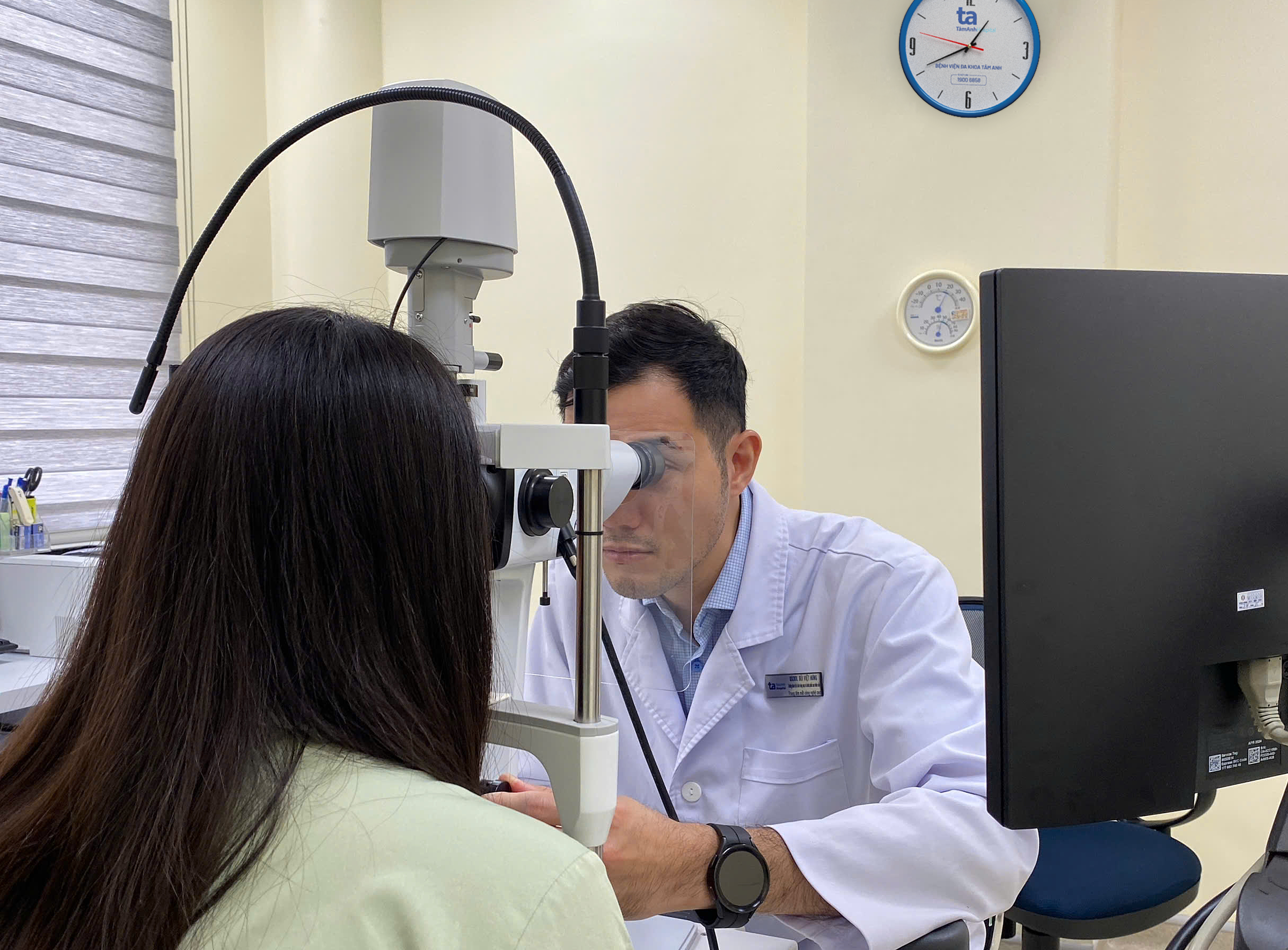 |
Doctor Hung examining a patient's eye. Photo: Tam Anh General Hospital |
A healthy lifestyle also contributes significantly to long-term vision protection. Individuals should maintain a balanced diet, limiting high-sugar and high-fat foods, engage in appropriate exercise, get sufficient sleep, and avoid smoking. These practices improve vascular health and support more effective diabetes management.
Regular eye examinations are crucial for people with diabetes. Many cases of retinal damage progress silently in their early stages, without causing noticeable symptoms. Consistent fundus checks enable doctors to detect retinal abnormalities early, allowing for timely treatment and reducing the risk of retinal detachment and vision loss.
Additionally, be aware of warning signs such as the appearance of black spots floating in your vision, flashes of light, distorted images, sudden vision loss, or a sensation of a curtain obscuring your sight. If you experience any of these symptoms, seek an ophthalmological examination promptly, as they may indicate retinal damage or the onset of detachment.
Doctor Bui Viet Hung
Center for High-Tech Ophthalmology
Tam Anh General Hospital Hanoi
| Readers can submit ophthalmology questions here for a doctor's response. |