Professor Doctor Vo Thanh Nhan, director of the Interventional Cardiology Center at Tam Anh General Hospital TP HCM, reported this as the youngest case of three-vessel coronary artery disease the hospital has treated. All three main arteries supplying Vu's heart were 80-95% narrowed. The condition developed silently over many years without symptoms.
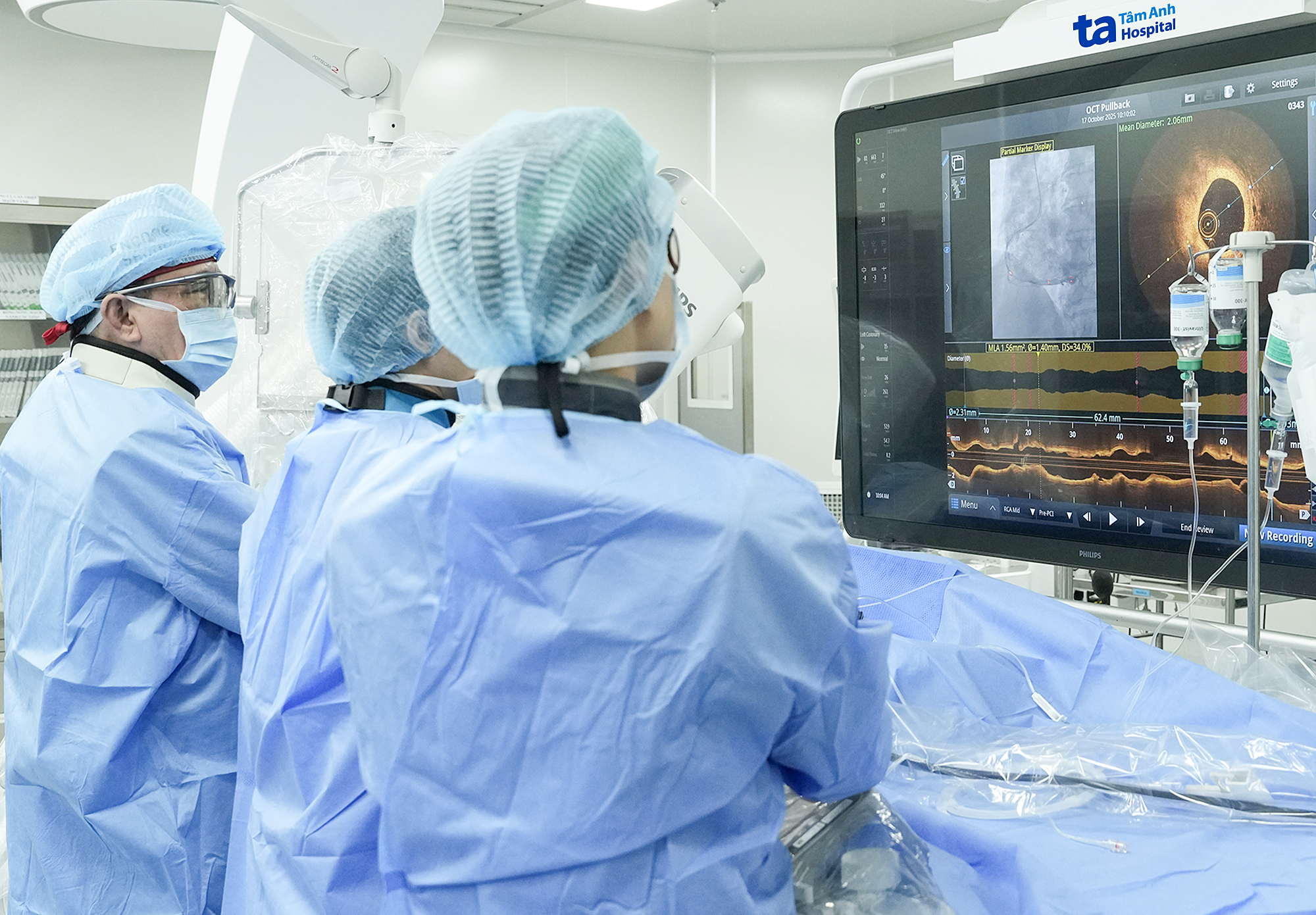 |
The intervention team placing stents for the patient. *Photo: Tam Anh General Hospital* |
Genetic testing revealed two recessive gene mutations, leading to a diagnosis of familial hypercholesterolemia (FH). This condition increases the body's production of LDL cholesterol and reduces its ability to remove it, resulting in high LDL cholesterol levels from birth.
Excess LDL cholesterol accumulates on artery walls, forming atherosclerotic plaques. As these plaques grow, they narrow the arterial lumen, obstructing blood flow. This leads to severe conditions such as chronic ischemic heart disease, increased risk of myocardial infarction, and heart failure. Professor Nhan stated that in cases of myocardial infarction, if more than 40% of the heart muscle undergoes necrosis, the mortality risk is 100%.
Doctors placed four stents in the severely narrowed areas of the three arteries, improving blood flow and alleviating the patient's chest pain. Three weeks later, Vu underwent a second intervention, where the remaining two stents were placed to fully re-open his coronary system and prevent acute coronary syndrome that could cause a myocardial infarction.
 |
Professor Nhan (center) checking on the patient's health after the procedure. *Photo: Tam Anh General Hospital* |
The patient recovered quickly, experiencing no fatigue and a significant improvement in exercise capacity. In both procedures, the team utilized optical coherence tomography (OCT), a technique that accurately measures blood vessel diameter and lesion length to ensure appropriate stent selection. Vu was discharged after two days and prescribed LDL cholesterol-lowering medication to reduce the risk of recurrent cardiovascular events.
According to Professor Nhan, besides genetic factors, an unhealthy lifestyle is a common cause of coronary artery disease in young individuals. To prevent the condition, one should avoid smoking, limit foods high in fat and bad cholesterol, increase vegetable and fruit intake, exercise regularly, maintain a healthy weight, reduce stress, and effectively manage underlying conditions such as hypertension, diabetes, and dyslipidemia. Everyone should undergo regular health check-ups once every 6 to 12 months.
Thu Ha
* Patient's name has been changed
| Readers can submit questions about cardiovascular disease here for doctors to answer. |