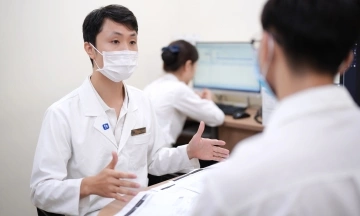
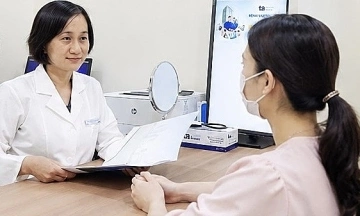
Phuong received a diagnosis of uterine fibroids about 6 years prior. Due to their small size then, regular monitoring was advised. During her recent visit to Tam Anh General Hospital TP HCM, a large inferior vena cava leiomyosarcoma, measuring approximately 6x8 cm, was discovered in addition to the uterine fibroids.
The inferior vena cava is the largest blood vessel in the abdominal venous system, responsible for returning blood from the legs, kidneys, liver, and abdominal organs to the heart.
Doctor Nguyen Anh Dung, Head of Thoracic and Vascular Surgery at the Center for Thoracic and Vascular Surgery, assessed that the large tumor narrowed the vessel lumen and compressed organs including the liver, pancreas, and bile duct. This tumor could obstruct the inferior vena cava, forming blood clots that lead to pulmonary embolism and invading adjacent organs, thereby threatening the patient's life.
World medical literature indicates that inferior vena cava leiomyosarcomas comprise about 0.5% of soft tissue sarcomas in adults. "Approximately 400 cases of inferior vena cava leiomyosarcoma have been reported globally to date, and this patient represents the first such case at Tam Anh Hospital," Doctor Dung stated.
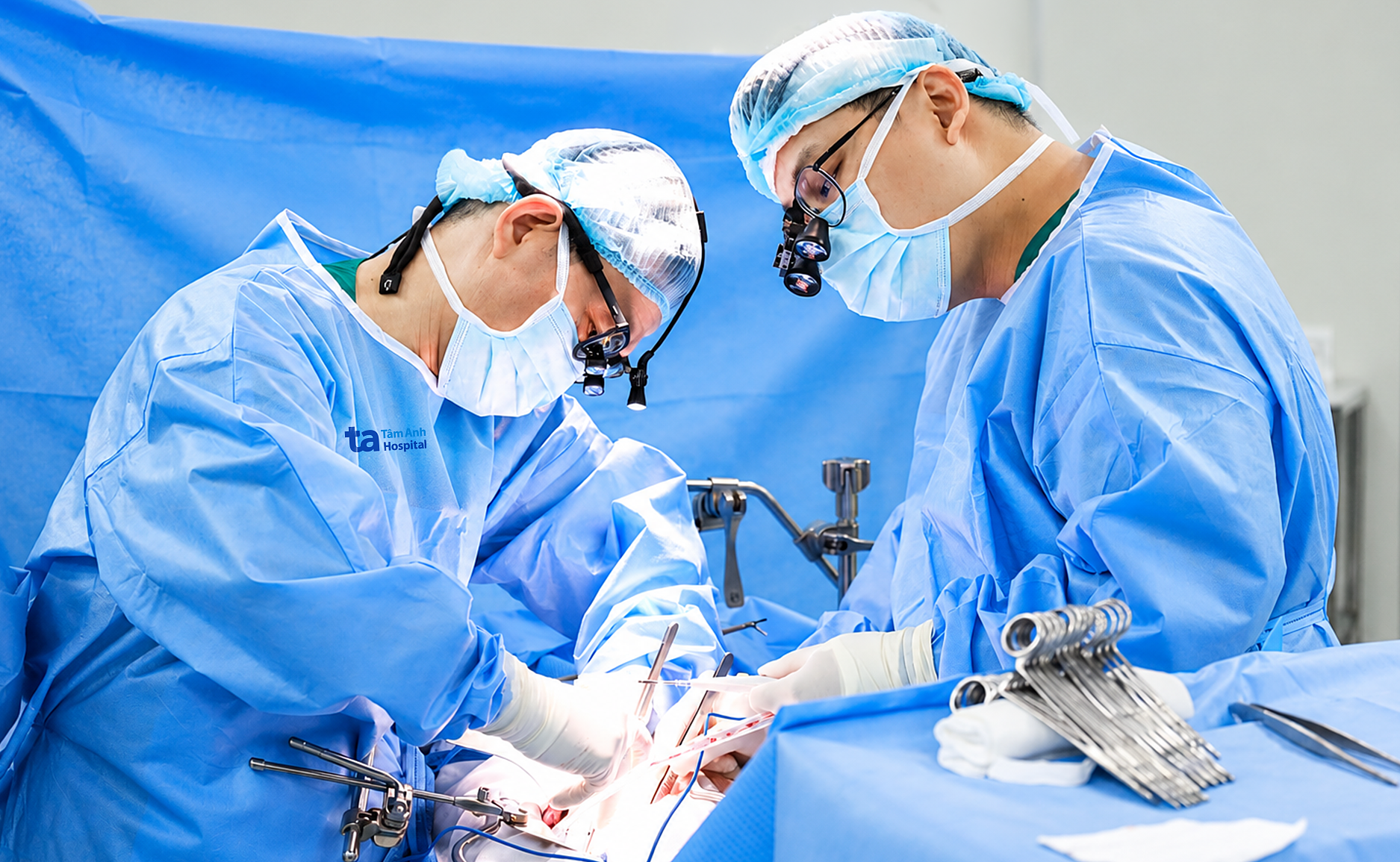 |
Doctor Dung (left) with the surgical team removing Phuong's inferior vena cava leiomyosarcoma. Photo: Nguyet Nhi
The patient, who has one child, was approaching menopause. The surgical team performed a hysterectomy and removed both adnexa to treat the uterine fibroids. Regarding the inferior vena cava tumor, doctors devised a surgical plan for complete removal, aiming for maximum organ preservation.
Doctor Lam Hoang Duy and his team from the Center for Obstetrics and Gynecology first performed a total hysterectomy, removing both adnexa, and closed the abdominal cavity. Following this, Doctor Dung's team proceeded with the second phase of the surgery, accessing the retroperitoneal tumor through a flank incision. Doctor Dung explained that this "2-in-1" approach prevented patient exhaustion. Additionally, treating the uterine fibroids first created more surgical space in the abdominal cavity, which facilitated the team's access to the inferior vena cava tumor.
The leiomyosarcoma grew within the vessel lumen, leading to nearly complete narrowing of the inferior vena cava. Concurrently, the outer wall of the vessel adhered to, compressed, and infiltrated the duodenum and pancreas. "The tumor's location was precarious; a slight misstep could tear the vena cava, causing massive bleeding on the operating table," Doctor Dung stated.
After five hours, the team successfully separated the tumor from the liver, the duodenal-pancreatic system, and both kidneys. Given that the origin of the left renal vein from the vena cava was completely invaded and obstructed by the tumor, the doctors had to resect it.
An artificial blood vessel was subsequently used to replace the resected portion of the inferior vena cava. Concurrently, doctors reconnected the left renal vein to the new vascular system to maintain blood flow and preserve kidney function. Five days after surgery, Phuong could stand, walk, eat, and resume normal activities.
According to Doctor Dung, complete resection of the malignant tumor and reconstruction of the inferior vena cava are the most crucial steps in controlling the disease. The patient will continue to be closely monitored to develop a supplementary treatment plan, such as chemotherapy or radiation therapy, to reduce the risk of recurrence.
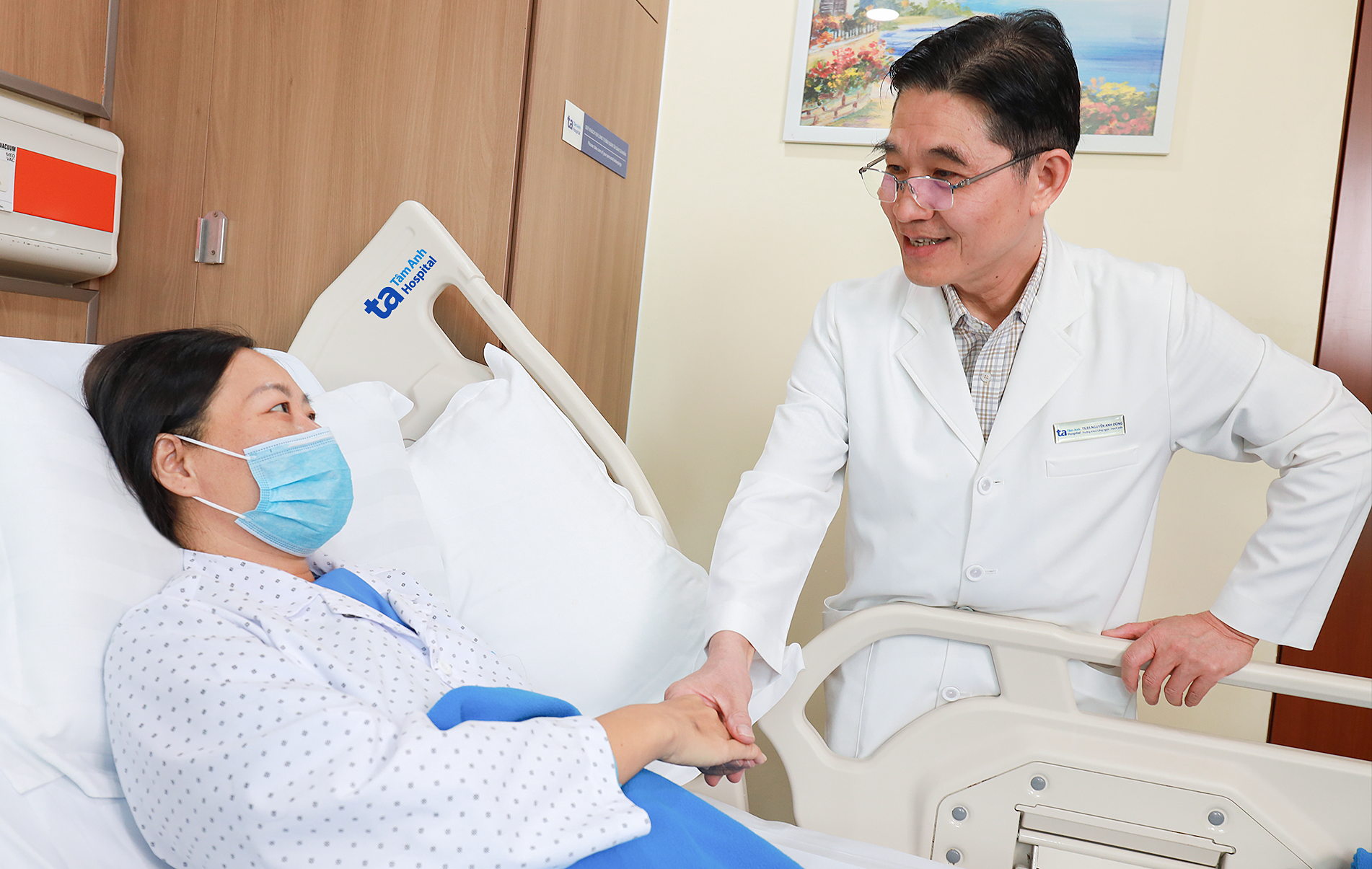 |
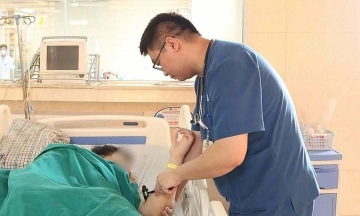
Doctor Dung visits Phuong during her recovery one week after surgery. Photo: Nguyet Nhi
Doctors caution against overlooking symptoms such as persistent abdominal pain, rapid weight loss, loss of appetite, or a sensation of abdominal fullness. Many retroperitoneal and vascular tumors can develop silently for extended periods, often compressing or invading multiple vital organs by the time symptoms manifest. Early detection significantly enhances the prospects for complete treatment.
Nguyet Nhi
| Readers can submit questions about obstetrics and gynecology here for doctors to answer. |