On the afternoon of 16/10, a representative from the TP HCM Department of Health announced that health authorities, in collaboration with Hai Ba Trung Secondary School and local government, are conducting epidemiological investigations, identifying close contacts, and implementing preventive measures.
The TP HCM Center for Disease Control (HCDC) reported the first case on 14/10: a student born in 2014, who contracted fulminant meningococcal disease leading to septic shock and multi-organ failure. Despite intensive treatment, the student died the same day. Laboratory tests confirmed meningococcal B infection.
On the same day, another student from the same school was admitted to the Hospital for Tropical Diseases with a similar diagnosis. The patient is currently stable and continues to receive treatment.
On the morning of 15/10, a classmate who sat at the same desk as the deceased student developed a fever and was taken to the Hospital for Tropical Diseases. The following morning, blood and cerebrospinal fluid PCR tests confirmed meningococcal B infection. The patient is currently conscious, with stable vital signs, and is receiving isolated treatment.
Health experts and leaders from the Department of Education and Training met to assess the situation and agree on response measures. The health sector continues to monitor close contacts and advises them to seek medical examination if suspicious symptoms appear.
Cough, runny nose, or sore throat do not necessarily mean meningococcal disease. Individuals with exposure factors should monitor their health according to the guidance of medical staff.
 |
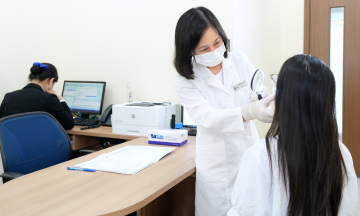
HCDC collaborates with Hiep Phuoc Commune Health Station and the school to identify close contacts, administer prophylactic antibiotics as indicated, provide hygiene instructions, and monitor student health. Photo: TP HCM Department of Health |
According to the Department of Health, suspending a class or the entire school is not a mandatory measure for every recorded case. Decisions to adjust teaching and learning activities will be based on epidemiological assessments, the risk of spread, and the ability to ensure the safety of students and teachers.
Close contacts of patients receive prophylactic antibiotics. However, antibiotics are not universally applied to all students without symptoms. Therefore, the health sector advises parents not to self-medicate their children. Individuals who have taken prophylactic antibiotics still need to monitor their health and seek medical attention immediately if suspicious symptoms appear.
The Department of Health advises parents to remain calm, not be complacent but also not panic, actively monitor their children's health, and follow health authority guidelines. Vaccines for meningococcal B are available. However, different types of vaccines offer varying scopes of protection, and vaccination should be appropriate for age, health status, vaccination history, and professional guidance.
Meningococcal disease, caused by Neisseria meningitidis bacteria, can lead to meningitis and severe sepsis. The bacteria spread through respiratory droplets via close contact with infected individuals or carriers. The disease can progress rapidly within 24 hours, causing death or severe sequelae if not detected and treated promptly.
According to Pasteur Institute TP HCM, from 2014 to 2025, meningococcal B accounted for over 98% of cases in the southern region. The disease is common in young children under 5, adolescents aged 15-24, and immunocompromised individuals.
Le Phuong