


Joint degeneration, a condition involving damage to the articular cartilage and subchondral bone, can lead to symptoms such as joint pain, stiffness, clicking sounds during movement, joint deformity, and even disability. This process often progresses silently, accumulating over time, particularly in large, weight-bearing, and highly active joints.
Doctor Hoang Quyet Tien, from the Medical Information Center at Tam Anh General Hospital, Ho Chi Minh City, highlights specific joints that are vulnerable and require protection to prevent degeneration.
The knee joint bears the body's entire weight and experiences high frequency of movement. Beyond age, the risk of knee degeneration increases significantly in individuals who are overweight or obese, sedentary, engage in high-impact activities involving the knee (such as sports), or have a history of knee injuries. Degeneration of the knee joint makes movement difficult and may be accompanied by stiffness and clicking sounds.
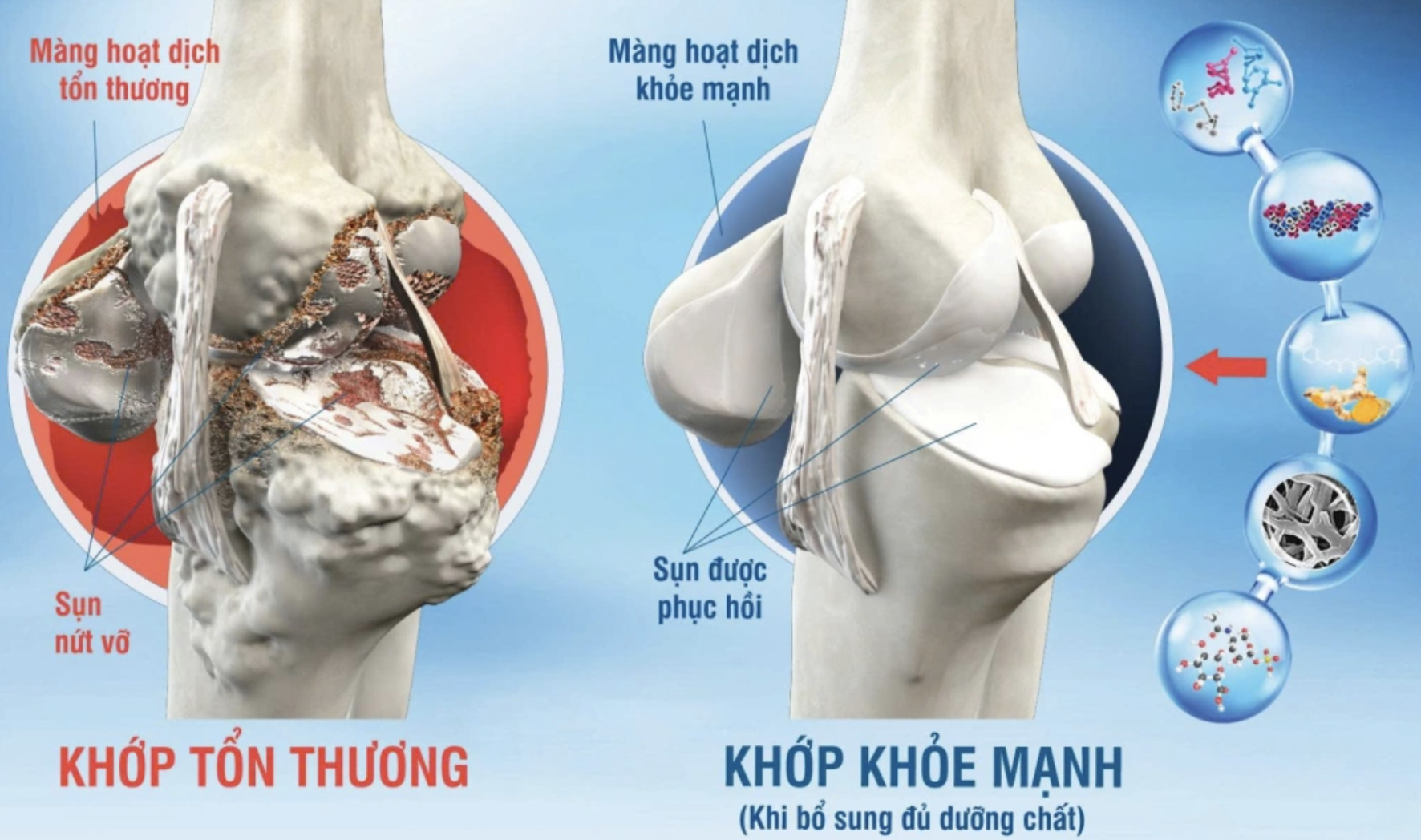 |
A healthy joint compared to a damaged joint. *Photo: Eco Pharmaceutical Joint Stock Company*
The hip joint plays a vital role in supporting the body and transmitting force between the upper body and legs. It is also susceptible to damage from an unhealthy lifestyle, including excessive alcohol consumption, smoking, irregular eating habits, and a sedentary lifestyle.
When joint inflexibility persists, it can affect the joint structure, causing pain in the groin and thigh that may radiate to the femur, knee, and buttocks. Pain often occurs when turning, bending, extending the hip, moving extensively, or sitting for too long. The pain is typically more severe in the morning after waking or in the late evening, especially with changes in weather.
The spine, particularly the neck and lower back regions, is crucial for daily physical activities and supports body weight. Excessive or prolonged pressure can damage the articular cartilage, subchondral bone, and spinal discs, leading to degeneration, pain, spinal bone spurs, and herniated discs.
The shoulder joint has a large range of motion, requiring support from muscle groups, tendons, and ligaments to function smoothly. As one of the body's most active joints, the shoulder is more prone to injury than other joints. If left undetected and untreated, shoulder degeneration can lead to serious complications, increasing cartilage damage, forming bone spurs, reducing the joint's range of motion, and impacting daily activities.
The hand joints are involved in most daily activities, including holding, grasping, and carrying objects. Continuous activity gradually leads to degeneration over time, triggering pain in the finger joints. High-risk groups include the elderly, office workers, and women, especially during perimenopause and menopause.
Doctor Tien states that major joint degeneration can occur at any age, though the risk increases with age. To mitigate this risk, individuals should maintain a healthy lifestyle, exercise regularly, manage weight appropriately, adopt correct posture, and allocate appropriate rest periods during work and daily activities. Regular supplementation with undenatured type II collagen, hydrolyzed collagen peptide, eggshell membrane, chondroitin sulfate, and turmeric root extract can help nourish joint cartilage and slow the progression of joint degeneration.
Dinh Dieu


