Located at 114-116-118 Tran Quoc Thao street, Xuan Hoa ward, this building stands directly opposite the hospital's existing campus, ensuring convenient connectivity for patient care. The facility underwent extensive renovation and functional reorganization to prepare for its new role.
This expansion is a direct result of the city's initiative to reorganize its grassroots healthcare network. Following the restructuring of medical centers, numerous surplus facilities were identified and reallocated to hospitals in need, enhancing efficiency and public service. Ho Chi Minh City ear, nose, and throat hospital was among the institutions prioritized to receive such premises.
The new facility is expected to significantly reduce the long-standing patient overload and shorten waiting times for examinations and treatments. In its first phase, the hospital will relocate its emergency department and several clinics to the new building. It will also introduce various paraclinical services, including audiometry, tympanometry, ABR, CT scans, X-rays, laboratory tests, and ear, nose, and throat endoscopy. Specialized diagnostic imaging will also see further technological investment to improve detection and treatment quality.
Upon completion of renovations, this new facility will serve as a foundation for developing key specialized departments. The cochlear implant department, for instance, is slated for expansion. This will provide greater opportunities for communication recovery for individuals with severe hearing impairment, especially children with congenital deafness or profound hearing loss.
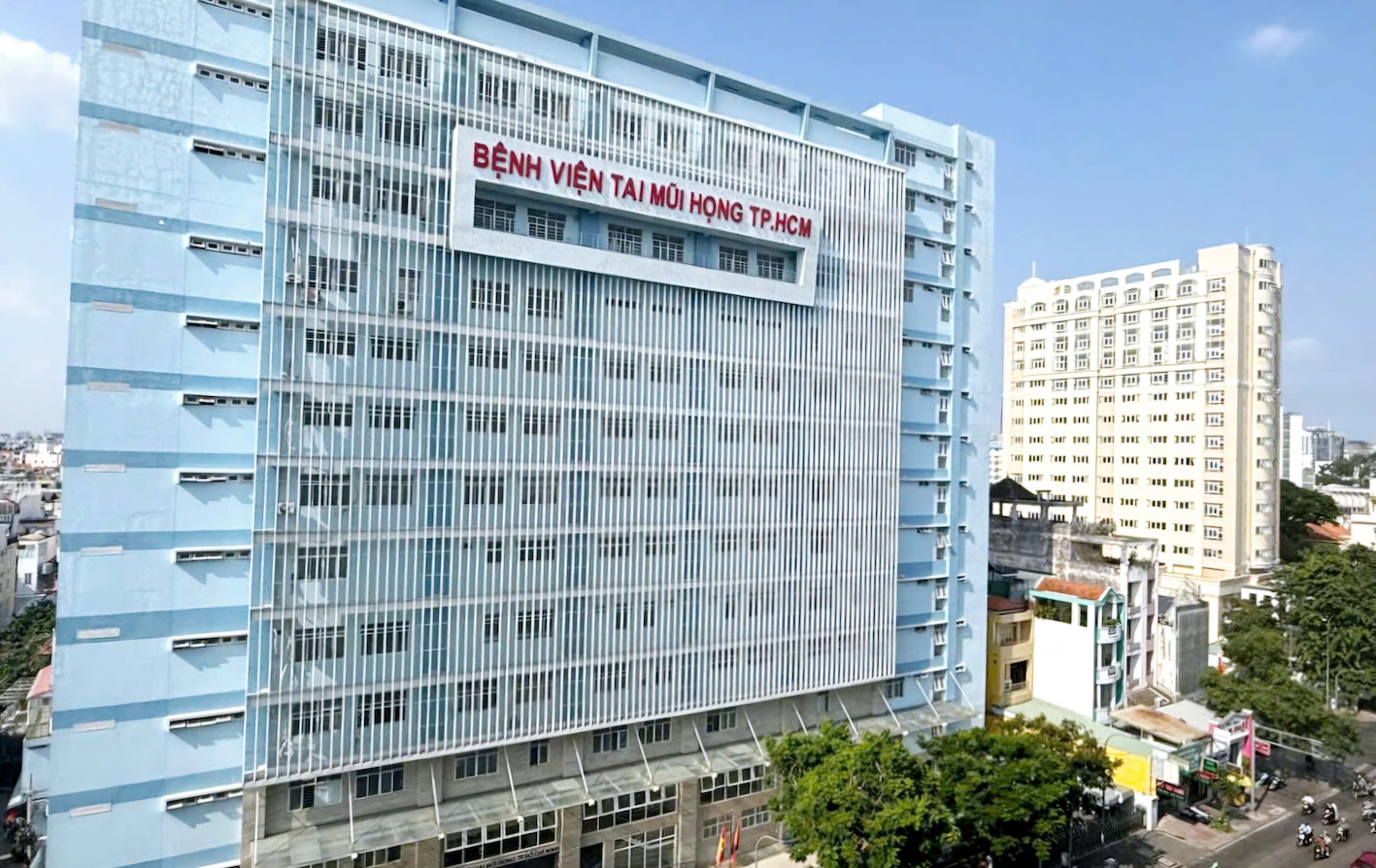 |
Ho Chi Minh City ear, nose, and throat hospital receives an additional facility at 114-116-118 Tran Quoc Thao. Photo: Hospital provided |
Ho Chi Minh City ear, nose, and throat hospital receives an additional facility at 114-116-118 Tran Quoc Thao. Photo: Hospital provided
The hospital also plans to establish an ear, nose, and throat oncology department to address the growing demand for head and neck cancer treatment. This department aims to integrate advanced technologies such as ultrasound knives, lasers, and three-dimensional spatial navigation systems in surgical procedures. Additionally, a neuro-otology department will focus on inner ear disorders, auditory nerve conditions, and skull base surgery, treating complex conditions that demand high expertise and modern equipment.
Furthermore, the hospital is promoting a day treatment model. This allows eligible patients to receive examinations, minor procedures, or short-term treatments and return home on the same day, thereby reducing inpatient stays and optimizing bed utilization.
Tang Chi Thuong, director of the Ho Chi Minh City Department of Health, expressed his hope that with its comprehensively invested infrastructure, strong professional foundation, and experienced team, Ho Chi Minh City ear, nose, and throat hospital will advance. He believes it will progressively become a leading modern specialized center in the country and the region.
Le Phuong