


Embryo transfer is an important step in the IVF cycle, but it does not mean a woman must remain in absolute bed rest afterwards. After a short rest at the medical facility, patients can move around and engage in light activities.
There is no evidence indicating that normal movement reduces the embryo's ability to implant. Conversely, prolonged bed rest can lead to increased fatigue, poor circulation, and stress.
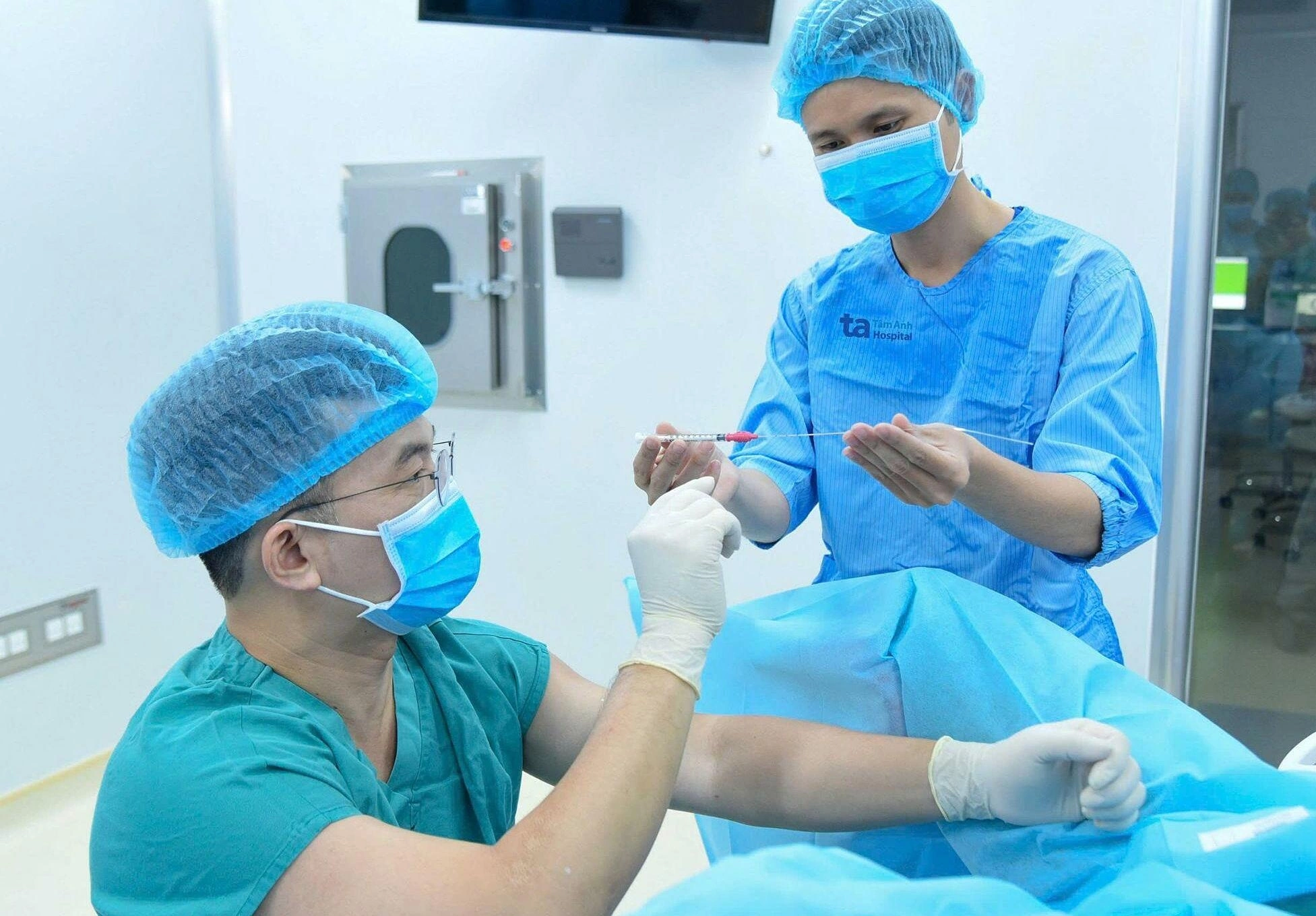 |
A doctor performs embryo transfer for a patient. *Photo: Tam Anh General Hospital*. |
Anatomically, the uterine cavity is a closed space with a sealed cervix. When an embryo is transferred to the correct position, it is not likely to "fall out" as many people worry. The factors determining implantation success are embryo quality, endometrial receptivity, and the synchronization between the embryo and the endometrium.
During the first 2-3 days, prioritize rest, adequate sleep, a balanced diet, and maintaining a stable mood. If you must travel, choose a gentle itinerary, limit excessive stair climbing, avoid carrying heavy items, long walks, late nights, and frequent time zone changes.
When traveling long distances by car, train, or plane, avoid sitting still for many hours. Continuous sitting increases feelings of pressure, bloating, constipation, or pelvic discomfort. In some patients, especially after ovarian stimulation, prolonged lying or sitting also increases the risk of blood clots. You should change positions, walk lightly every 30-60 minutes, drink enough water, and avoid excessive fatigue.
Consider your body's condition before deciding to travel. If you have just had an embryo transfer and are experiencing significant discomfort, bloating, abdominal pain, nausea, or have a history of miscarriage or ectopic pregnancy, limit long-distance travel during the initial period.
Beyond travel considerations, pay attention to taking medication on time, especially hormonal medications that support embryo implantation. Many patients traveling forget their medication, take it at the wrong time, or have irregular routines, all of which can affect the treatment process. When traveling long distances, bring enough medication, necessary treatment records, and keep the contact information for your monitoring medical facility.
After embryo transfer, you should eat and drink like someone preparing for pregnancy: stay hydrated, consume sufficient nutrients, and limit alcohol, caffeine, raw foods, unfamiliar foods, and items that can cause digestive upset. A trip with a packed schedule, lack of sleep, irregular eating, and prolonged stress will not be as beneficial as gentle, relaxing rest.
You should postpone long-distance travel and seek immediate medical attention if, after embryo transfer, you experience symptoms such as increased abdominal pain, rapid bloating, frequent vomiting, fever, unusual vaginal bleeding, shortness of breath, or extreme fatigue.
Master, Doctor Do Thi Thu Trang
Reproductive Support Clinic
Tam Anh Cau Giay General Clinic
| Readers can submit questions about obstetrics and gynecology here for doctors to answer |


