Answer:
Young children are particularly vulnerable to respiratory syncytial virus (RSV) infection, which can lead to severe illness due to their immature immune systems and narrow airways. To protect against this, Vietnam has introduced Nirsevimab (Beyfortus), a monoclonal antibody developed by Sanofi, available for infants and young children up to 24 months of age.
This monoclonal antibody offers immediate protection by directly providing antibodies that identify and eliminate the virus, bypassing the need for the body to develop its own immunity, unlike traditional vaccines. It can be administered shortly after birth, making it suitable for preterm infants, those with low birth weight, and children with underlying health conditions.
For children from one day old to under 12 months, a single dose is administered: 0,5 ml for infants weighing less than 5 kg, and one ml for those weighing 5 kg or more. Children aged 12-24 months receive two doses, each one ml, given at two different injection sites.
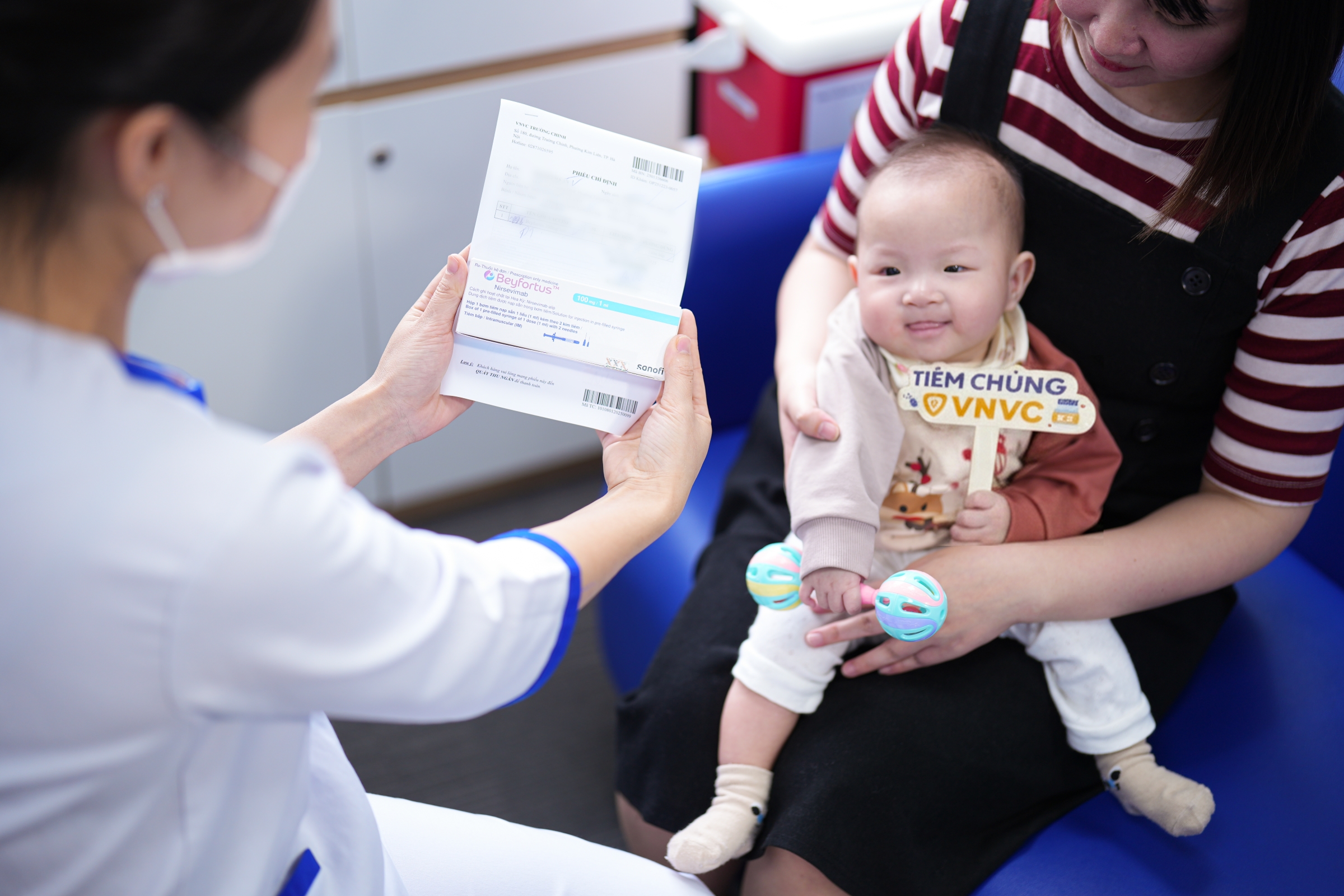 |
Children receiving Nirsevimab monoclonal antibody at VNVC Vaccination System. Photo: Tuan Anh
Clinical data shows that this solution significantly reduces the risk of hospitalization and intensive care due to RSV-related pneumonia and bronchiolitis by over 82%. It also lowers the risk of hospitalization from general respiratory infections by nearly 70%. The protective effect of the monoclonal antibody lasts throughout the period when infants are most susceptible to RSV.
RSV is a primary cause of respiratory illnesses in children, responsible for 50-90% of bronchiolitis cases and 5-40% of pneumonia cases. Between 75-90% of children contract RSV during their first year of life, with approximately 0,5-2 children out of every 100 infected requiring hospitalization. Complications can be severe, including acute respiratory failure, collapsed lung, bacterial superinfection, pneumothorax, dehydration, arrhythmia, apnea, and even death. Long-term consequences may include pulmonary fibrosis, impaired respiratory function, recurrent hospitalizations, or chronic bronchial asthma.
Globally, Nirsevimab has received approval in over 60 countries, including the United States, France, the United Kingdom, Canada, Japan, and Australia. It has also been integrated into national immunization programs in 28 countries.
Doctor of First Degree Specialization Nguyen Cong Luan
Medical Manager, VNVC Vaccination System
Readers can ask vaccine consultation questions for doctors to answer here.