Dr. Ho Anh Tuan, from the Interventional Cardiology Unit at Tam Anh District 7 Polyclinic, explained that a blood clot forming in the deep venous system of the leg obstructs blood flow back to the heart. This increases pressure within the veins, causing fluid to leak into surrounding tissues, resulting in swelling. A local inflammatory response also makes the skin hot, red, and painful to touch or during movement.
Mrs. Be has a history of hypertension, though the cause of the clot formation remains unclear. According to Dr. Tuan, deep vein thrombosis can lead to chronic venous insufficiency, post-thrombotic syndrome (prolonged leg swelling, slow-healing skin ulcers), infection, or, more dangerously, pulmonary embolism - a condition where the blood clot travels to the lungs, which can be life-threatening.
She was treated with anticoagulants according to an individualized regimen. The medication blocks the clotting process, preventing further clot growth, limiting new clot formation, and reducing complication risk. The body's natural fibrinolytic mechanism can also gradually dissolve the clot over time.
Mrs. Be tolerated the medication well, and her swelling and pain significantly improved, allowing her to move her limb gently. After three months, ultrasound results showed the blood clot had dissolved.
The doctor recommended that patients continue to adhere to treatment, take medication on time, and elevate their legs 10-15 cm higher than the heart to support venous return. Gentle exercises like ankle rotations and toe flexing also help increase blood circulation. If abnormal signs appear, such as bleeding gums, nosebleeds, subcutaneous bruising, or black stools, patients should seek immediate medical attention.
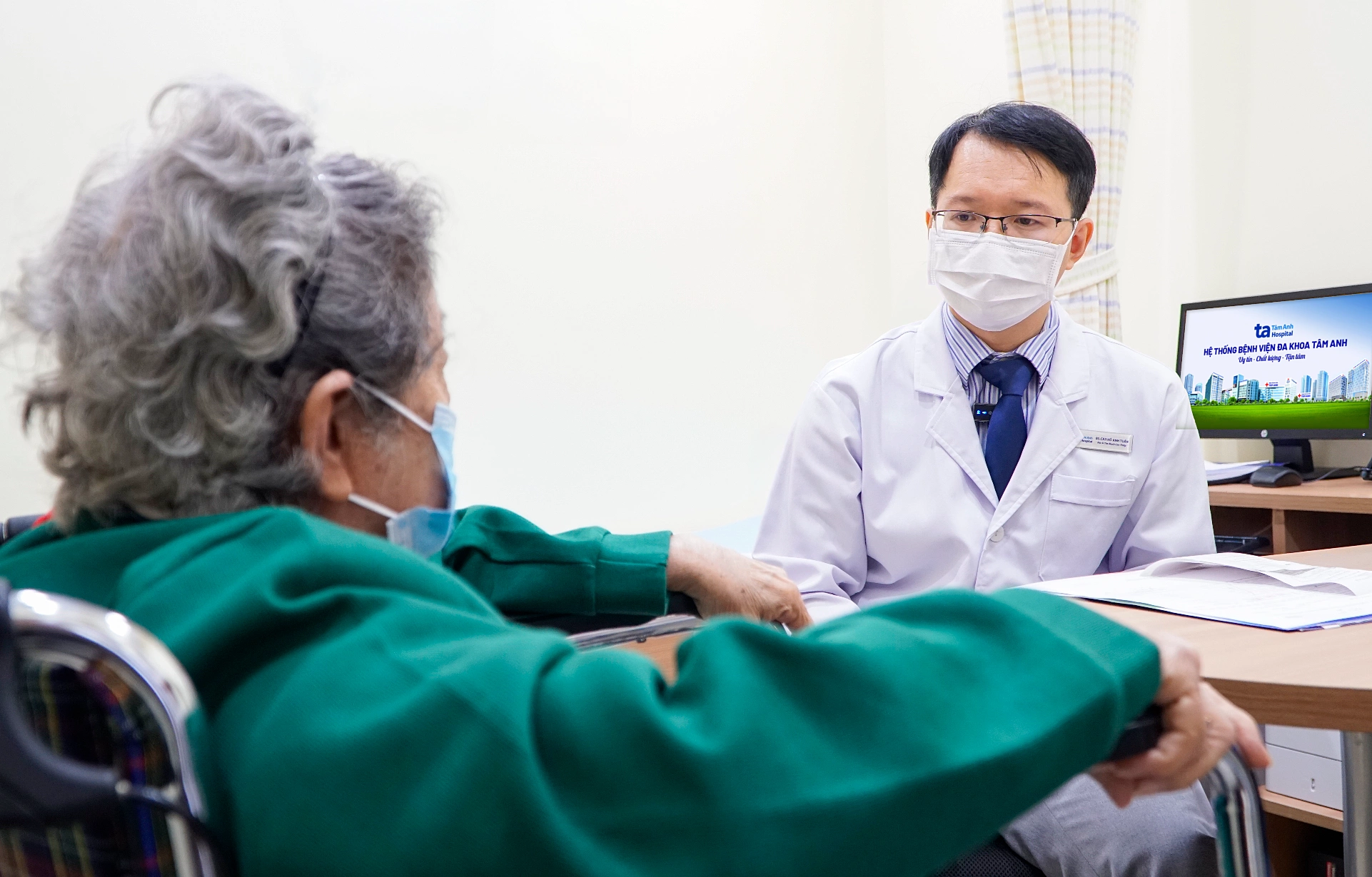 |
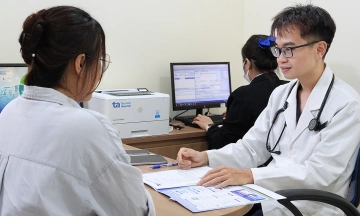
Dr. Tuan consults a patient at Tam Anh District 7 Polyclinic. Photo: *Ngoc Chau*. |
Deep vein thrombosis (DVT) of the lower limb is a condition where a blood clot forms in the deep veins of the leg, often occurring in the popliteal region, thigh, or pelvis. Risk factors include advanced age, inactivity, being overweight or obese, smoking, hormone use, pregnancy, or having blood clotting disorders.
The condition can progress silently or manifest with signs such as swelling in one leg, pain, redness or skin discoloration, and visible veins. In some cases, patients remain asymptomatic until complications arise. If the blood clot travels to the lungs, patients may experience chest pain, shortness of breath, coughing blood, dizziness, or fainting, requiring immediate emergency care.
Doctors recommend that when leg swelling and pain occur, patients should not self-treat with folk remedies but should seek medical attention to determine the cause and receive timely treatment.
Ngoc Chau
| Readers can submit questions about cardiovascular diseases here for doctors to answer. |