The hot summer weather increases the demand for air conditioning, especially at night to improve sleep. Many people experience headaches upon waking after a night in an air-conditioned room, often due to several factors.
One primary reason is **blood vessel constriction**. When the air conditioner is set too cold, it can reduce blood flow to the brain. This constriction often leads to headaches, a heavy sensation in the head, or tension across the forehead.
Direct cold air flow also contributes to **muscle tension**. It can cause muscles in the head, neck, and shoulders to spasm, leading to pain and discomfort. Furthermore, the body tends to lose water through sweat and breath while sleeping in an air-conditioned environment. This dehydration affects blood supply to the brain, with common symptoms including dizziness and headaches.
**Dry air** from air conditioning can irritate the nasal and sinus membranes, potentially triggering an inflammatory response. Individuals with sinusitis, in particular, may find that prolonged exposure to a dry, cold environment worsens nasal congestion and fluid retention in the sinuses. This often results in headaches in the forehead, cheekbones, or around the eye sockets after waking.
Another factor is **poor air circulation**. People often keep rooms tightly closed when air conditioning is on to prevent cold air from escaping. This practice can slightly increase carbon dioxide levels and decrease oxygen in the room, leading to fatigue and mild headaches upon waking.
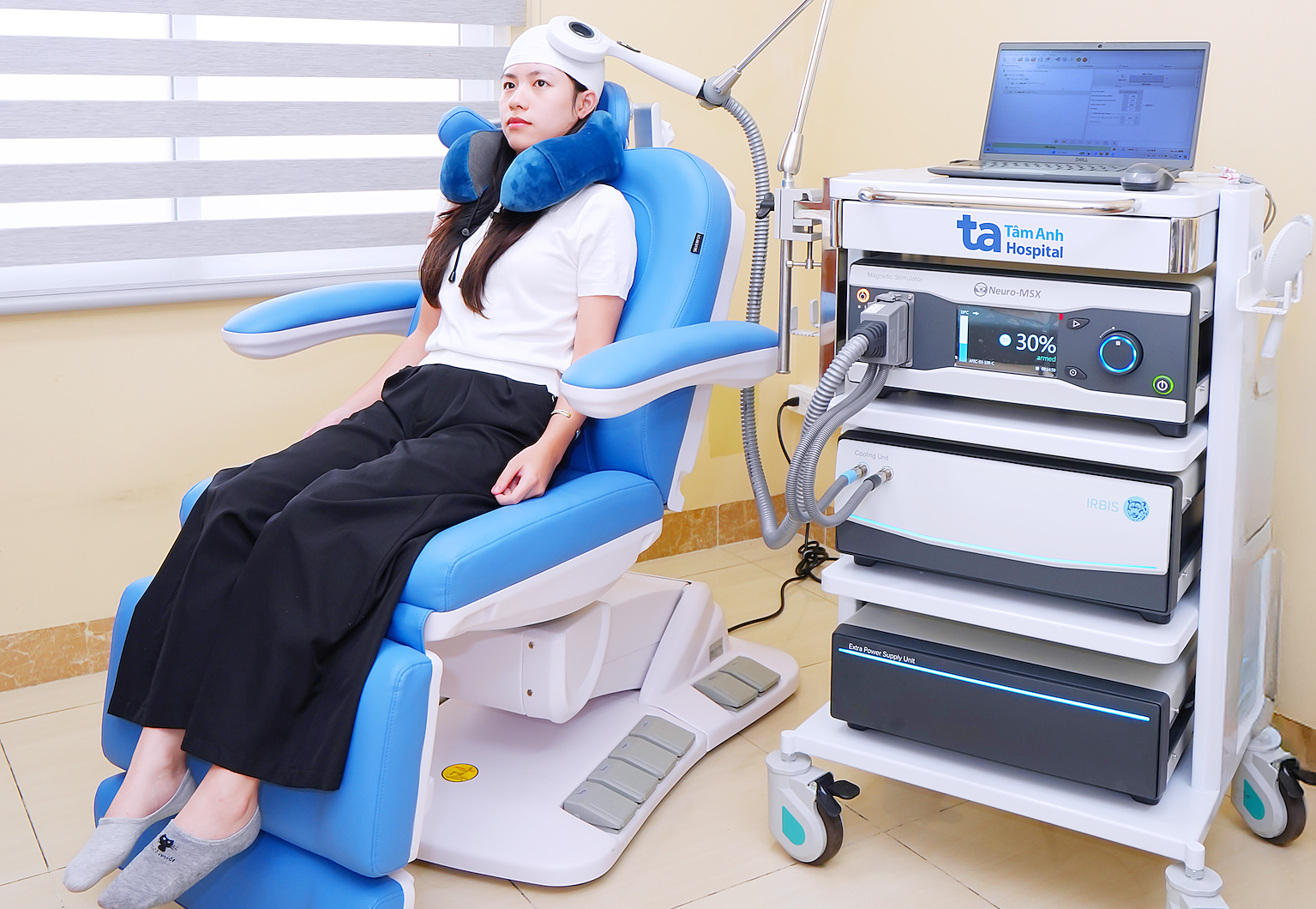 |
Transcranial magnetic stimulation to treat headaches. Photo: Tam Anh General Hospital
If you frequently experience headaches after sleeping in an air-conditioned room, several preventive measures can help. Ensure you drink enough water throughout the day, and have one glass about an hour before bedtime. Avoid setting the room temperature too low or making the air too dry. Consider creating small ventilation openings in the room or placing a bowl of water to increase humidity.
However, if headaches do not subside, occur frequently, last for many days, or are accompanied by symptoms like nausea, dizziness, limb weakness, or blurred vision, it is crucial to consult a specialized hospital for examination. Underlying causes could include migraine, hypertension, sleep apnea, brain tumor, or a cerebrovascular disorder, all of which can manifest as headaches upon waking.
A doctor will typically base their diagnosis on your medical history, sleep habits, and a neurological examination. They may also order additional blood tests, magnetic resonance imaging (MRI), or computed tomography (CT) scans to rule out structural brain damage. The treatment plan will be tailored to your specific condition.
Dr. Nguyen Thi Hai Yen, Master of Science
Department of Neurology and Stroke
Tam Anh Cau Giay General Clinic
| Readers can ask questions about neurological diseases here to get answers from doctors. |