On 12/5, Master, Doctor Vu Thai Hoang of the Andrology Department at Military Hospital 175, stated that the patient arrived after a long period of enduring persistent pain, difficult sexual activity, and psychological insecurity. According to the patient, he was self-conscious about the size of his genitals, so he followed word-of-mouth advice and self-injected liquid silicone, hoping to improve their appearance and enhance pleasure.
Upon examination, doctors discovered a lesion surrounding the circumference of the penis, approximately 3-4 mm thick and nearly 3 cm at its widest point. Alarmingly, the silicone had integrated into the tissue, adhering tightly and merging with the skin and subcutaneous tissue, making treatment complex.
According to Doctor Hoang, the greatest difficulty was that the silicone was not isolated but had deeply infiltrated the tissue. The medical team had to meticulously dissect to avoid damaging critical structures. Doctors were forced to remove all fibrotic tissue caused by the silicone, then reconstruct the area using a skin flap to restore the patient's shape and function as much as possible.
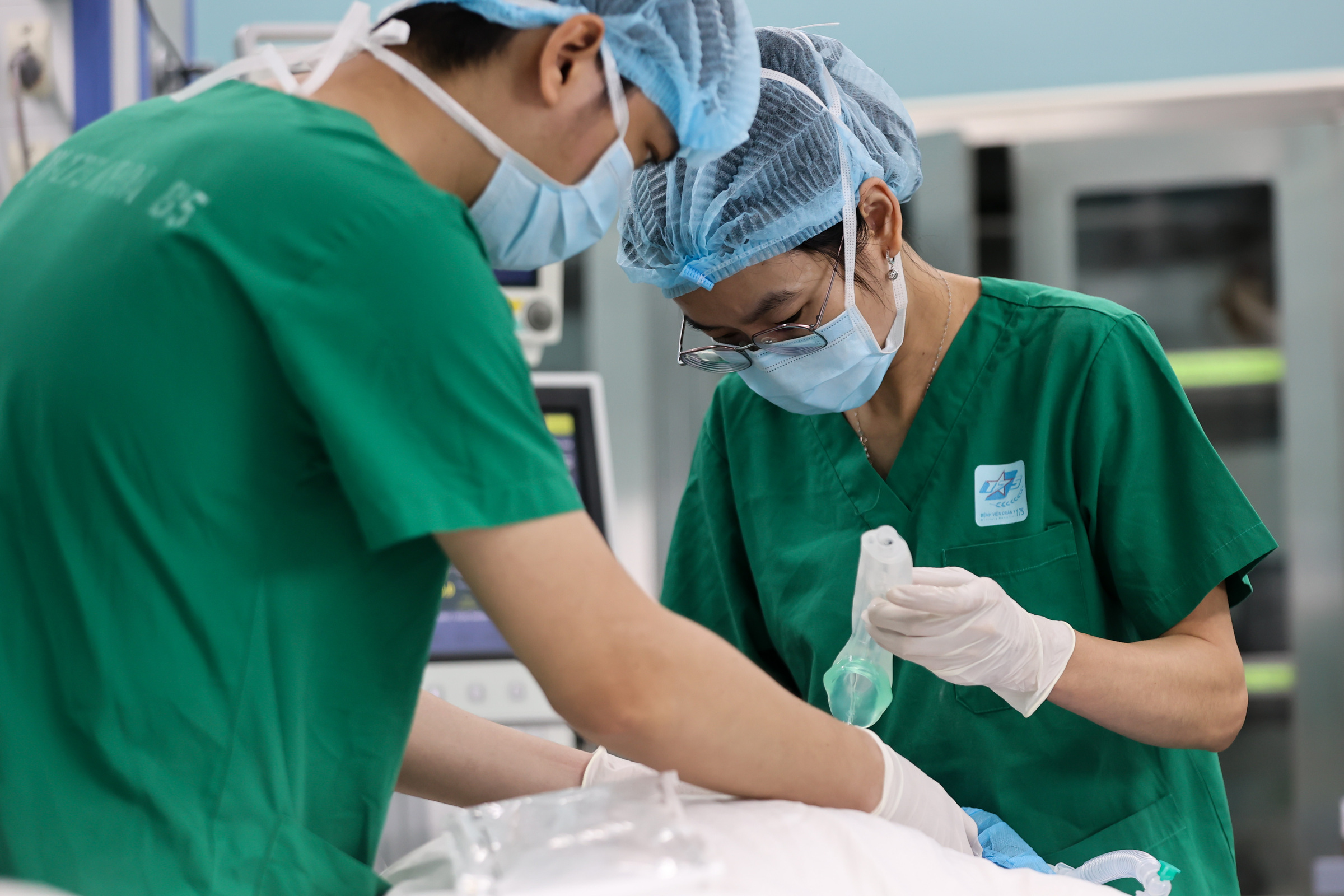 |
Medical staff in the operating room at Military Hospital 175. *Photo: Quynh Tran* |
Doctors warn men against believing unverified enlargement methods advertised by word-of-mouth or on social media. Liquid silicone is absolutely not permitted for injection into the body for penis enlargement or cosmetic purposes due to the risk of inflammation, fibrosis, permanent tissue deformation, and even affecting erectile and reproductive function.
When considering cosmetic intervention or experiencing physiological health issues, patients should visit a specialized medical facility for proper consultation and treatment to avoid severe complications.
Le Phuong