


Initially, Quynh Anh experienced back pain for one to two days, which then subsided. Over time, the pain became more severe, worsening when she bent down, making it impossible for her to lie on her back, and accompanied by numbness radiating down her leg. Two months after giving birth, her condition did not improve. She sought examination at Tam Anh General Hospital TP HCM, where she was diagnosed with a schwannoma.
Doctor of Medicine, Specialist Level II Tran Quang Hien, Head of the Spine Surgery Department, explained that schwannomas are benign tumors originating from Schwann cells, found in the sheath of peripheral nerves, the spinal cord, or the brain. These tumors typically grow slowly and are rarely malignant, but their increasing size can lead to compression, pain, and paralysis.
An MRI scan revealed the patient's tumor was quite large, measuring 2,5x1,5 cm, located within the spinal canal at the 11th and 12th thoracic vertebrae. The tumor significantly compressed the spinal cord, leading to an urgent recommendation for surgery to prevent complications.
Quynh Anh underwent a hemilaminectomy, a procedure to remove part of the lamina – a thin bone segment located behind the spinal canal that protects the spinal cord and nerve roots. The surgeon dissected muscles on one side to expose the lamina, which was then carefully removed using a high-speed drill. Following this, the dura mater was opened to reveal the tumor. The remaining tumor tissue was then cauterized and completely excised. This minimally invasive technique avoids the need for screws, minimizes damage to spinal muscles and ligaments, and promotes faster patient recovery.
During the operation, Dr. Hien utilized a spinal cord function monitoring system to precisely intervene on the tumor, thereby preventing nerve damage that could lead to paralysis.
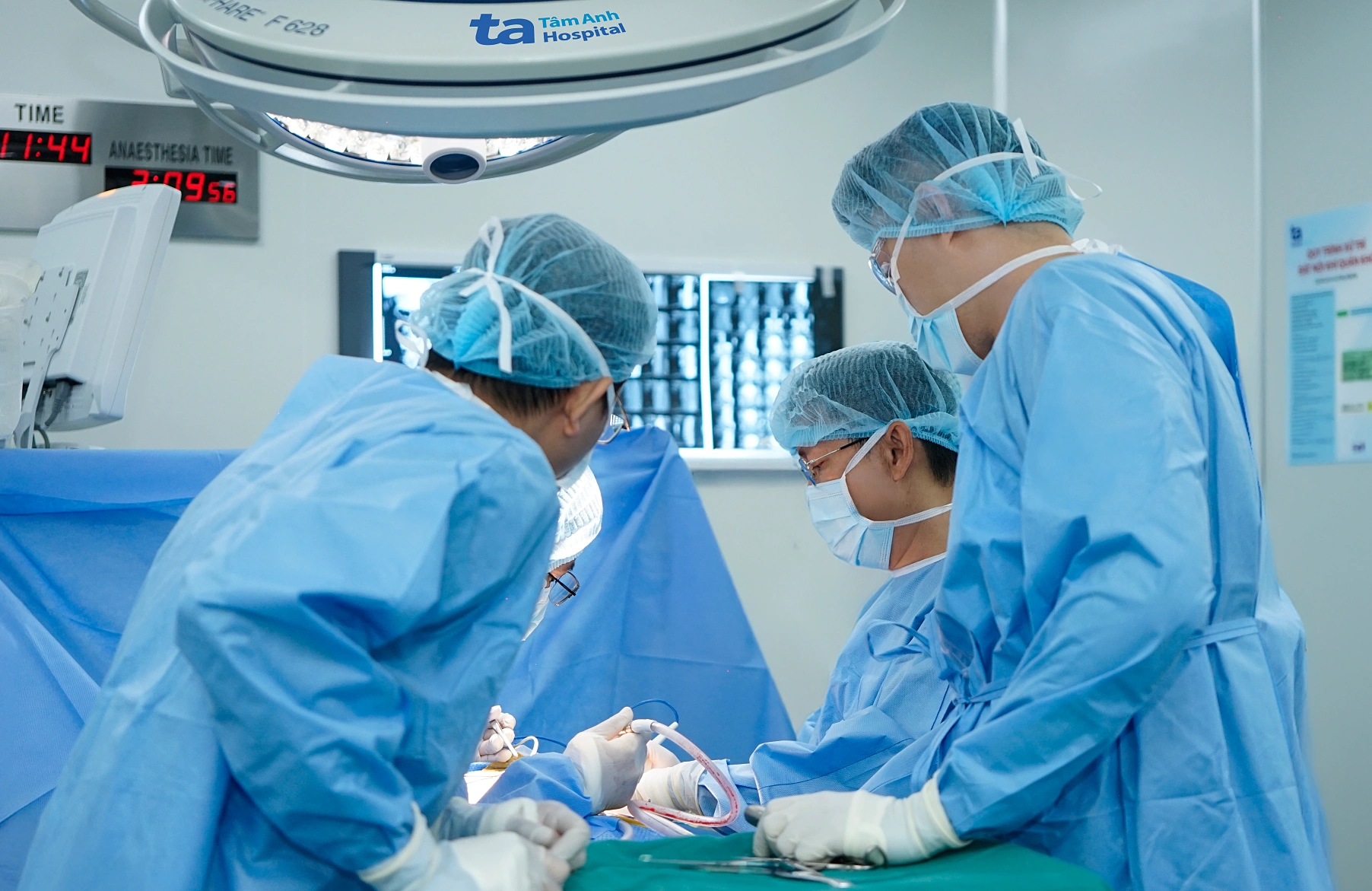 |
Dr. Hien (second from right) performs surgery to remove the tumor. Photo: Tam Anh General Hospital |
Dr. Hien (second from right) performs surgery to remove the tumor. Photo: Tam Anh General Hospital
According to Dr. Hien, opening the dura mater is a complex surgical technique that requires careful rest and postoperative care to prevent complications, the most common being cerebrospinal fluid leakage. For the first four days after surgery, Quynh Anh needed extensive bed rest to reduce pressure on the surgical site, prevent fluid leakage, and allow the dura mater to stabilize and heal quickly.
One week later, she was free of back pain and could walk normally. After discharge, patients are advised to avoid heavy lifting and excessive standing during the initial recovery period. Regular follow-up appointments are necessary to monitor recovery and assess the risk of recurrence.
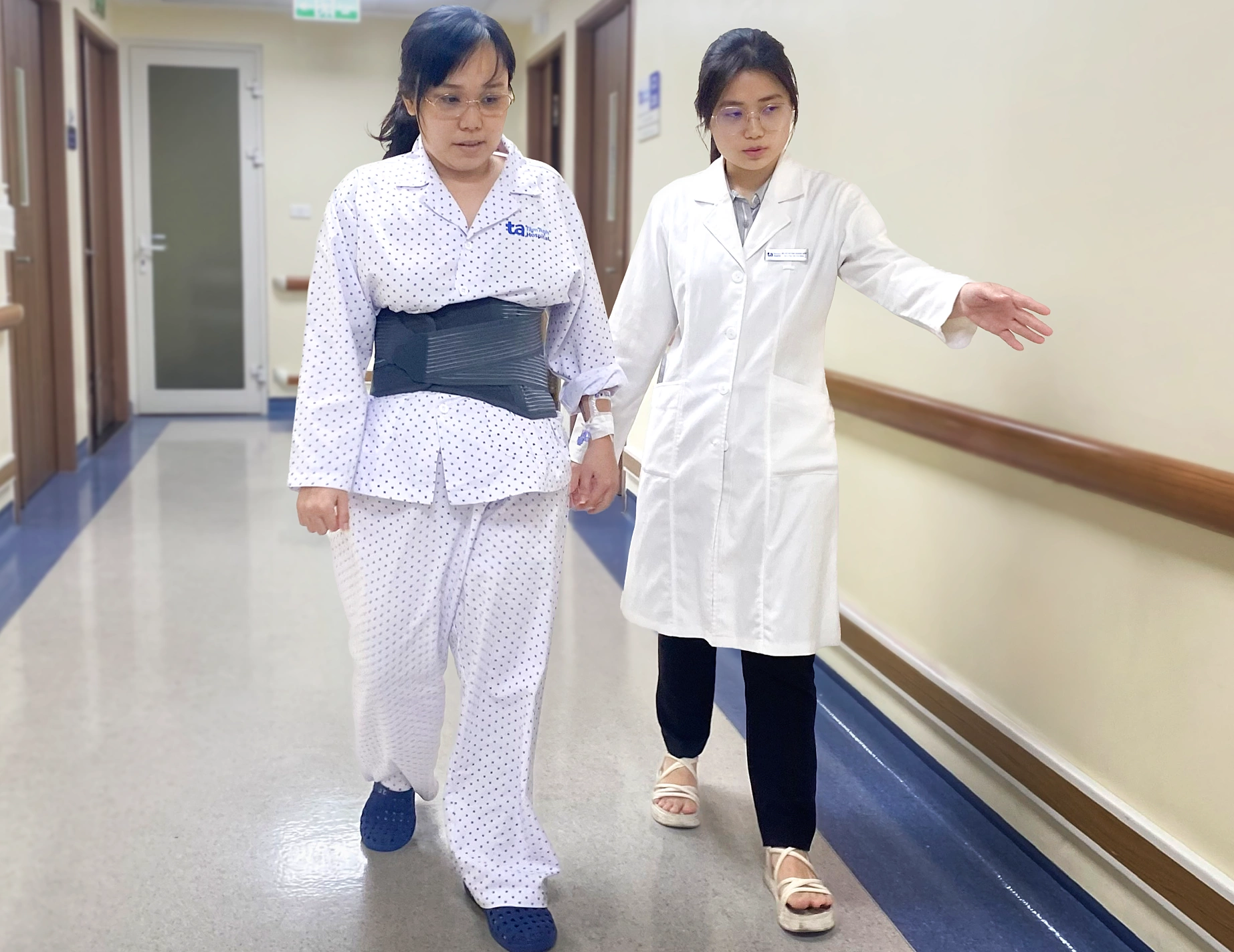 |
The patient practices walking before discharge. Photo: Tam Anh General Hospital |
The patient practices walking before discharge. Photo: Tam Anh General Hospital
Dr. Hien stated that there are currently no preventive measures for schwannomas, as the cause of the disease remains unknown. Depending on the tumor's location, symptoms can vary and may be easily mistaken for other conditions, such as back pain, headaches, numbness in the limbs, or hoarseness. Therefore, individuals experiencing unusual symptoms for an extended period should seek medical examination at a hospital for timely treatment.
Phi Hong


