Dr. Hap Tien Loc, from the Pediatric Unit at Tam Anh District 7 General Clinic, examined Trang and observed signs of abnormal growth, indicative of early puberty. He ordered bone age X-rays, uterine and ovarian ultrasounds, and endocrine tests to determine the cause.
The results showed Trang’s bone age was equivalent to that of a nine-year-old, two years older than her chronological age. This indicated her skeletal system was developing faster than normal, posing a risk of premature growth plate fusion if left untreated. The patient's reproductive organs also showed pubertal changes, leading Dr. Loc to diagnose central precocious puberty.
 |
Dr. Loc examines Trang at Tam Anh District 7 General Clinic. *Photo: Trung Vu* |
Trang was diagnosed at the onset of puberty. Dr. Loc prescribed GnRH agonist medication combined with regular monitoring. After 6 months of treatment, her pubertal signs were controlled, and the rate of bone maturation slowed, allowing her to achieve optimal adult height.
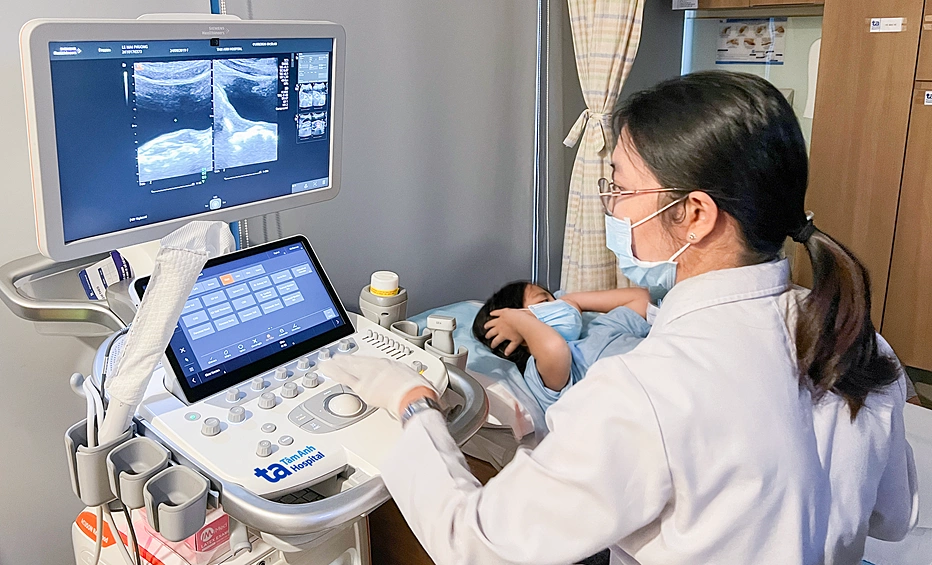 |
Doctors perform an ultrasound on the patient to assess the development of reproductive organs, aiding in the diagnosis of early puberty. *Photo: Tam Anh General Hospital* |
Signs of early puberty in girls include: breast development, growth of pubic or underarm hair, menstruation, and rapid height growth compared to peers.
Causes are categorized into central and peripheral precocious puberty. Central precocious puberty is the most common form, occurring when the brain prematurely releases hormones, initiating normal puberty at an earlier age. Peripheral precocious puberty occurs when sex hormones are produced by the adrenal glands, ovaries, or testes due to tumors or other health issues, independent of brain stimulation.
According to Dr. Loc, some cases may be hereditary; if a girl's mother or older sister experienced early menstruation, the girl is also more likely to experience early puberty. Children with early puberty may feel confused or self-conscious due to their differences from peers. While they may initially be taller than their peers, their final adult height is often shorter because their growth process concludes earlier.
Dr. Loc recommends that parents bring their children for a health check-up before puberty to assess for signs of early puberty through blood tests measuring sex hormone levels like LH and FSH, bone age X-rays, ultrasound, or MRI scans to identify the cause if signs are detected. Regular health check-ups also help comprehensively monitor growth, enabling early detection and timely intervention for underlying conditions such as anemia, iron deficiency, metabolic disorders, cardiovascular issues, endocrine imbalances, and psychomotor development problems, thereby building a foundation for the child's long-term health.
According to the American Academy of Pediatrics (AAP), children three years and older should have a regular health check-up at least one time each year. For children experiencing rapid weight gain, obesity, or with a family history of endocrine or metabolic diseases, doctors may recommend more frequent examinations to monitor, screen for risks, and intervene promptly.
Minh Tam
*Patient's name has been changed
| Readers can submit questions about childhood illnesses here for doctors to answer. |