Doctor Yang Jingduan, founder and medical director of the Yang Institute of Integrative Medicine in the US, warns that early-stage kidney disease often does not cause noticeable pain. This leads many to mistakenly believe that "no back pain means healthy kidneys."
On the "4D Health" YouTube channel, Doctor Yang recounted a case of a 50-year-old male patient with high blood pressure who experienced frequent insomnia, leg cramps, and restless legs at night. Initially, the patient attributed these symptoms to work stress. However, Doctor Yang discovered deep, persistent sock marks around the patient's ankles. This seemingly minor detail served as a crucial warning: Do not wait for back pain to consider kidney problems, as the earliest and most easily overlooked warning signs sometimes appear first in the feet.
Explaining why kidneys are likened to a "silent killer," Doctor Yang stated that kidney damage does not always cause pain. Most chronic kidney damage does not directly produce painful sensations. Severe pain only occurs with acute damage, such as kidney stones or acute infections, causing kidney tissue swelling. Therefore, the focus of vigilance should not be on whether the body feels pain, but rather on seemingly minor yet persistent changes.
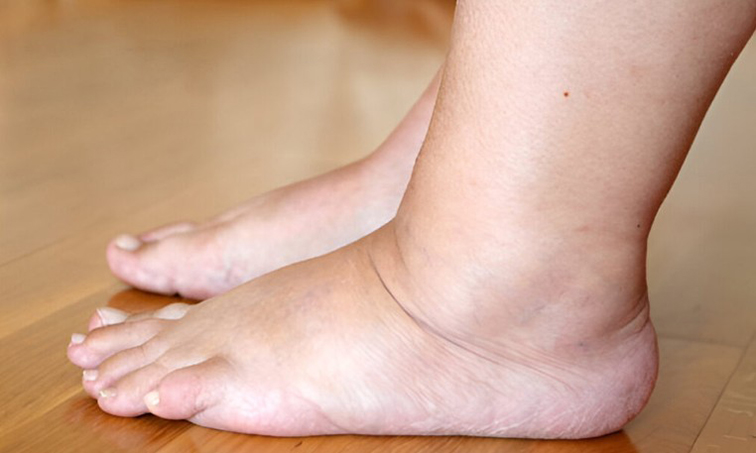 |
Illustration: Dialyze Direct
Doctor Yang highlighted five early warning signs in the feet that require particular attention, especially for individuals with underlying conditions like high blood pressure or diabetes:
The first sign is the appearance of deep, persistent sock marks around the ankles after removing socks in the evening, or a sudden feeling of tight shoes and swollen feet in the afternoon. This could indicate fluid retention (edema) in the lower limbs.
Frequent nocturnal leg cramps should not be dismissed as merely a calcium deficiency. Decreased kidney function can lead to an imbalance of water and electrolytes in the body.
Another concerning symptom is restless legs syndrome at night. When lying down to sleep, the legs experience strange aches, numbness, and itching, as if insects are crawling under the skin, compelling the patient to get up and walk around for relief. This phenomenon is directly linked to weakened kidney function, which disrupts red blood cell production, affects iron metabolism, and reduces the body's ability to excrete metabolic waste products.
Additionally, persistent dry and itchy skin on the calves without an apparent reason, especially at night, where steroid creams often have little effect, warrants attention for potential underlying health risks. Individuals with impaired kidney function are highly susceptible to itchy skin due to metabolic disorders. The specific cause requires a doctor's examination and accurate diagnosis.
Beyond the skin and neurological symptoms mentioned, persistently cold or numb feet, or small wounds that take an unusually long time to heal, are also directly related to impaired blood circulation, diabetes, or other chronic conditions. If these symptoms persist, self-diagnosis should be avoided; instead, seek medical evaluation to accurately determine the cause.
To proactively check for swelling, you can perform a 10-second home test. Sit down, pull up your pant leg, and firmly press your thumb against the front of your calf (near the shin bone) for about five seconds, then release and observe. If the skin quickly springs back to its original state, there is no abnormality. Conversely, if the pressed area leaves a distinct indentation that takes several seconds to slowly recover, it indicates pitting edema.
However, pitting edema can also result from cardiovascular disease, liver conditions, venous insufficiency, or medication side effects. Therefore, this test serves only as a preliminary screening.
Doctor Yang advises that if recurrent foot swelling is accompanied by persistent foamy urine, prolonged fatigue, or difficult-to-control blood pressure, immediate medical attention is necessary to check kidney function. Current assessment methods are straightforward, involving blood tests for estimated glomerular filtration rate (egfr) and urine tests to quantify urine albumin-to-creatinine ratio (uacr). It is crucial to avoid self-medicating with pain relievers or unverified supplements for extended periods. Do not mistakenly believe that "simply drinking a lot of water will protect your kidneys."
 |
Doctor Yang Jingduan. Photo: Yang Institute of Integrative Medicine
Binh Minh (According to SETN)