After the collision, Hai experienced fatigue, chest tightness, mild shortness of breath, and coughed up phlegm mixed with blood. Three days later, his symptoms worsened, leading to extreme fatigue and an emergency admission to Tam Anh General Hospital Ho Chi Minh City.
Dr. Huynh Hoang Khang, head of the Cardiovascular Surgery Department at the Interventional Cardiology Center, reported that upon admission, Hai had moderate shortness of breath. Within 30 minutes, he developed acute respiratory failure, requiring intubation and mechanical ventilation. His heart's pumping function (ejection fraction, EF) was reduced to 45% (normal is over 50%). An ultrasound confirmed severe acute mitral regurgitation due to ruptured chordae tendineae. This was the cause of his heart failure and acute pulmonary edema.
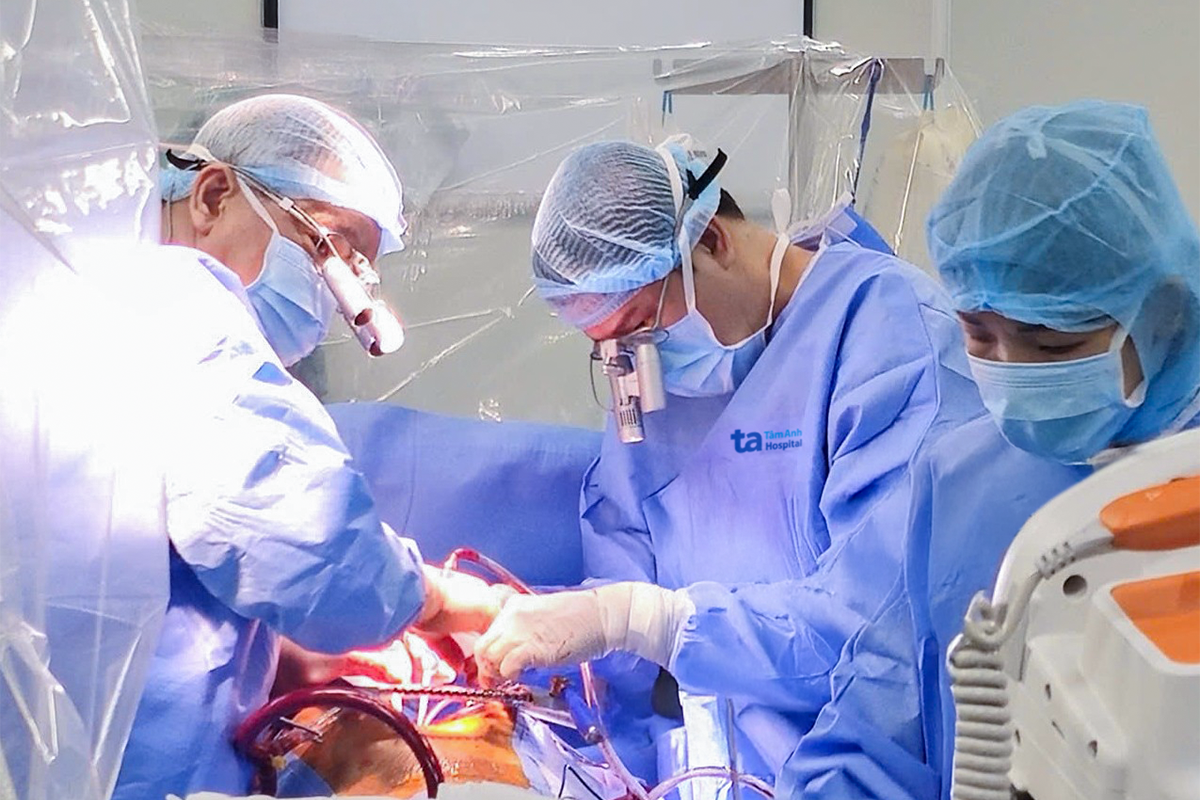 |
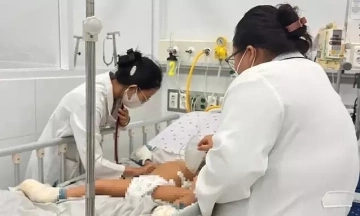
Doctors perform mitral valve replacement surgery on a patient. *Photo: Tam Anh General Hospital* |
Mitral regurgitation occurs when the valve leaflets do not close completely, causing blood to flow backward from the left ventricle to the left atrium during systole. In its acute form, the sudden backflow of blood dramatically increases pressure in the left atrium and pulmonary capillaries, leading to acute pulmonary edema and severe respiratory failure.
Various factors can cause mitral regurgitation, including congenital conditions, infective endocarditis, rheumatic heart disease, valve degeneration, dilated cardiomyopathy, and myocardial infarction. Less common causes include rheumatic fever, Marfan syndrome, endomyocardial biopsy, and trauma.
Dr. Khang attributed Hai's condition to direct chest trauma from the collision, which affected his mitral valve, including the annulus, leaflets, chordae tendineae, and papillary muscles. This trauma resulted in the complete rupture of the posterior leaflet's chordae tendineae. Without this support, the posterior leaflet could not close properly, causing severe acute heart valve regurgitation.
"This is a very dangerous incident," Dr. Khang stated, adding that without timely diagnosis and intervention, patients could die from cardiogenic shock or severe respiratory failure.
Surgeons removed the damaged valve and replaced it with a mechanical mitral valve to restore heart function and improve the patient's hemodynamics. The four-hour surgery was successful, with the artificial valve functioning well and ensuring stable, unidirectional blood flow, which rapidly improved the patient's heart failure and respiratory failure.
Hai recovered quickly after surgery, with the endotracheal tube removed 10 hours later. His heart function returned to normal, and he no longer experienced shortness of breath or coughed up blood. After seven days of treatment, the patient was discharged with a prescription for long-term anticoagulant medication.
Doctors advised Hai to limit high-intensity or antagonistic physical activities such as football, volleyball, basketball, and martial arts.
 |
Dr. Khang checks on the patient before discharge. *Photo: Tam Anh General Hospital* |
Acute valve regurgitation due to ruptured chordae tendineae is a rapidly progressing, dangerous medical emergency. In contrast, chronic mitral regurgitation often presents silently, with clear symptoms of heart failure only appearing later, such as reduced exercise capacity, chest pain, palpitations, shortness of breath, dry cough, coughing up blood, and difficulty breathing during sleep.
Dr. Khang recommended that middle-aged individuals avoid over-exercising. If shortness of breath, chest pain, a rapid or irregular heartbeat, or dizziness occurs during physical activity, they should stop immediately and seek early medical examination.
Individuals who play sports or regularly engage in strenuous activities should undergo cardiovascular check-ups. If abnormal symptoms like coughing up blood, shortness of breath, or severe fatigue appear after sports or chest trauma, they should go to the hospital immediately.
Thu Ha
* Patient's name has been changed
| Readers can submit questions about cardiovascular disease here for doctors to answer. |