Phyllodes tumors are a rare type of breast tumor, originating from the connective tissue of the mammary gland. While 80% are benign, the remaining 20% are either borderline or malignant.
Patients diagnosed with a phyllodes tumor, regardless of whether it is benign, borderline, or malignant, should undergo surgery to have the tumor removed. Benign tumors, if left untreated, can grow rapidly, sometimes reaching 20 to 30 cm. Operating on such large tumors becomes challenging and often necessitates a mastectomy to reduce the risk of recurrence.
 |
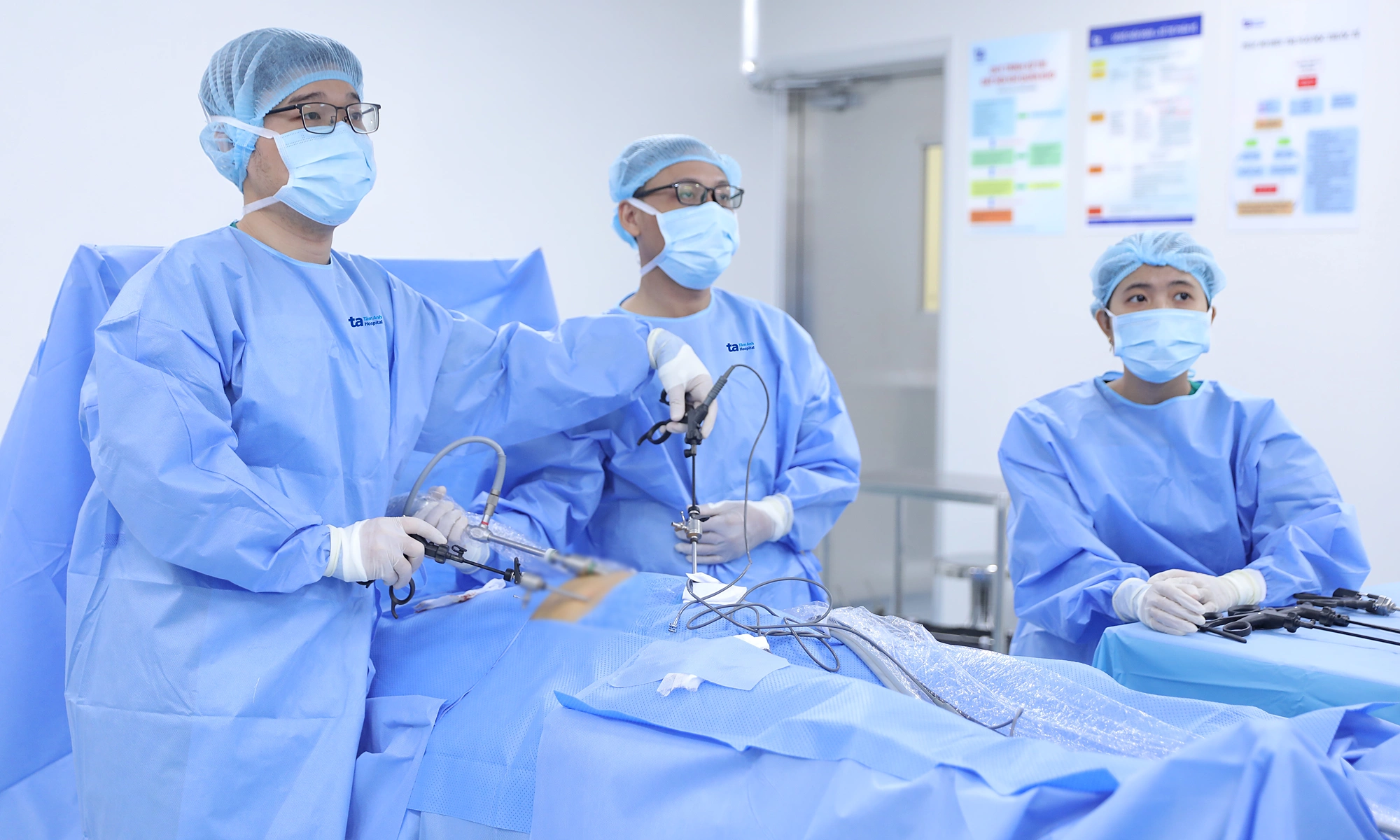
Doctor Tuan examines a patient. Illustration: Tam Anh General Hospital |
Leaving benign phyllodes tumors untreated for too long can lead to complications such as hemorrhage and infection, which can be life-threatening. If a tumor ruptures, complete removal of the cells becomes difficult, increasing the likelihood of recurrence. Moreover, benign phyllodes tumors can evolve over time, potentially transforming into borderline or malignant forms. Malignant phyllodes tumors specifically require radiation therapy post-surgery.
It is advisable to undergo surgery for a phyllodes tumor as early as possible, even if it is small, and to seek an experienced surgeon. The surgeon will remove the tumor along with approximately 1 cm of surrounding breast tissue, taking care not to rupture the tumor, which helps minimize the risk of recurrence.
For larger tumors, a surgeon may perform a complete mastectomy, followed by reconstruction using implants or tissue flaps to achieve a satisfactory aesthetic outcome. Patients with malignant or borderline phyllodes tumors may also require radiation therapy after surgery.
Following treatment, patients should attend regular follow-up appointments to monitor their health. This typically involves ultrasound and mammogram screenings every 6 months for the first two years, then annually, as guided by their doctor.
Dr. Do Anh Tuan
Oncology Surgery Department, Oncology Center
Tam Anh General Hospital, TP HCM
| Readers can submit their cancer-related questions here for a doctor's response. |