A week before admission, Mr. Chinh developed a fever, dry cough, and sudden weakness on his left side, with his condition deteriorating. Upon arrival at the emergency department of Tam Anh General Hospital, TP HCM, doctors observed altered consciousness, a Glasgow score of 10/15 (with 15 being normal), and seizures. He required oxygen support.
MRI results confirmed the patient suffered both a cerebral infarction and meningitis, two acute and dangerous conditions. He also presented with sepsis, pneumonia, and respiratory failure. Mr. Chinh had a history of using unprescribed corticosteroids. Doctor Nguyen Le Phuong Hong, from the Infectious Diseases Unit of the General Internal Medicine Department, explained that long-term corticosteroid use without medical supervision suppresses the immune system, activating opportunistic infections.
As a farmer, Mr. Chinh regularly contacted mud, soil, and organic fertilizers without protective equipment and had not undergone deworming for many years. "This likely served as a risk factor for parasitic infection", Doctor Hong stated, prompting a parasitic screening. Laboratory tests and stool examination confirmed Mr. Chinh was infected with Strongyloides stercoralis larvae and carried E. coli bacteria.
Strongyloides, a parasite primarily transmitted through soil, enters the body when skin directly contacts contaminated ground, such as walking barefoot or gardening. Many individuals infected with Strongyloides remain asymptomatic, unknowingly harboring the parasite for years. This parasite does not self-eliminate from the body without medical treatment.
Doctor Hong explained that in individuals with compromised immune systems, such as those who are elderly, have chronic diseases, or use corticosteroids, Strongyloides can multiply rapidly and disseminate beyond the intestines. As the parasite migrates, it can introduce intestinal bacteria like E. coli into the bloodstream, triggering sepsis and attacking organs such as the lungs and brain. This can result in pneumonia, meningitis, and respiratory failure.
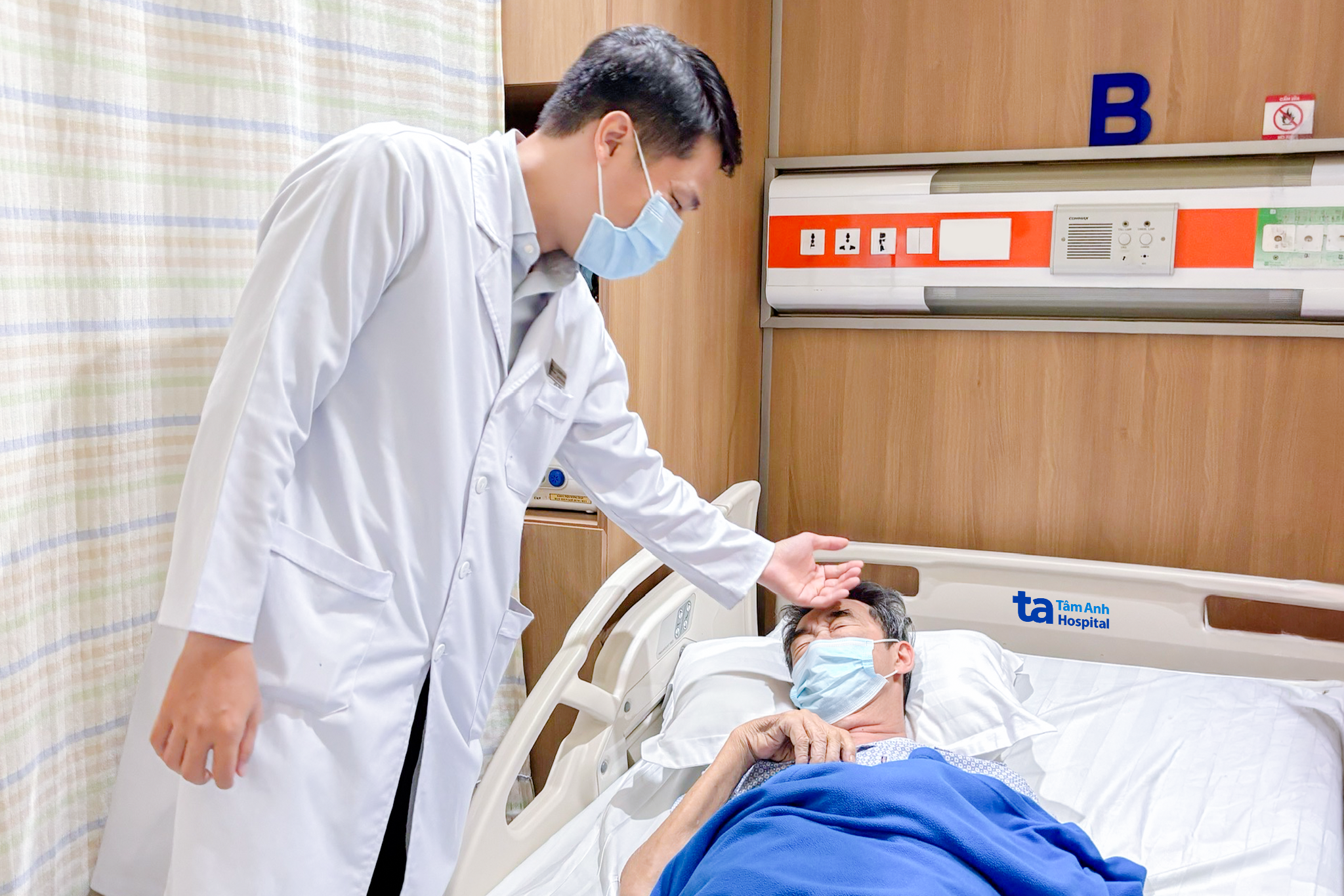 |
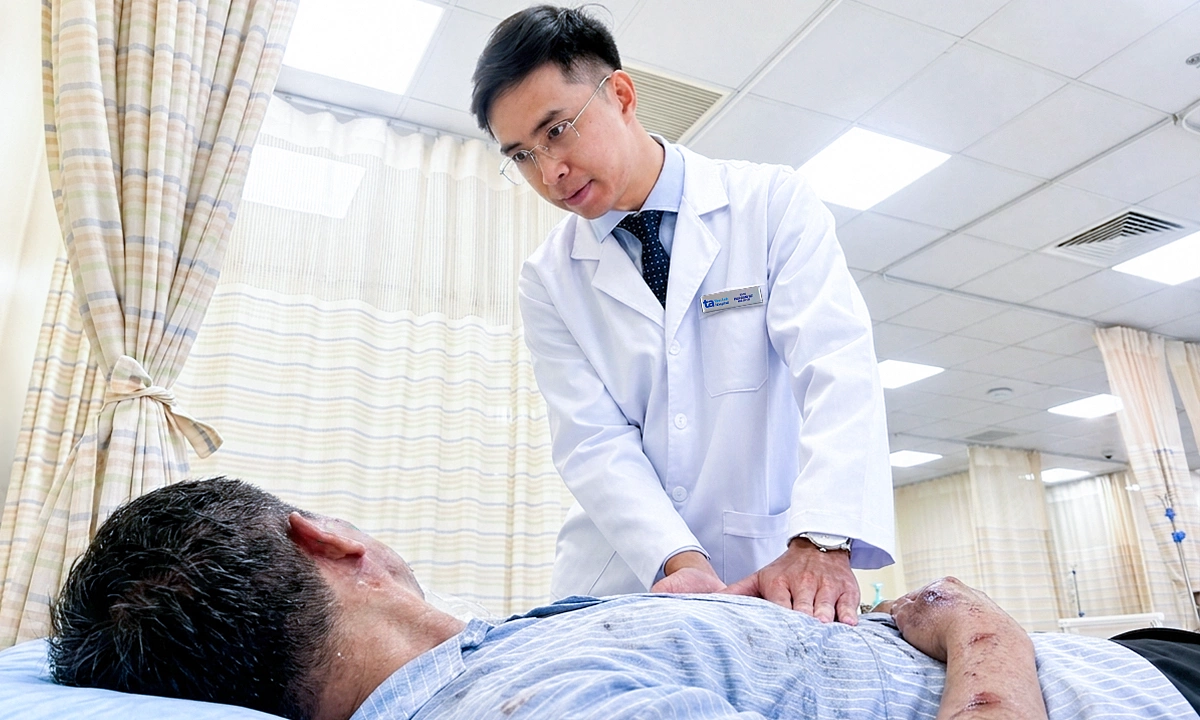
General Internal Medicine doctors monitor Mr. Chinh's condition after his transfer from the ICU. *Photo: Tam Anh General Hospital*
Mr. Chinh presented with several risk factors, including type 2 diabetes, chronic obstructive pulmonary disease (COPD), and hypertension. According to Doctor Hong, these conditions all compromise immune function, creating an environment conducive for Strongyloides to parasitize and proliferate in the intestines.
After 20 days of intensive treatment, Mr. Chinh regained consciousness, became fever-free, breathed independently, and could eat. His infection markers improved, leading to his discharge from the hospital.
Doctors advise individuals regularly exposed to soil or contaminated environments to wear footwear while working, consume cooked food, drink boiled water, and seek medical attention for persistent alternating abdominal pain, diarrhea, or constipation. For patients undergoing treatment with corticosteroids or other immunosuppressants, doctors may consider Strongyloides screening before initiating therapy.
Nhat Thanh
| Readers can submit questions about respiratory diseases here for doctors to answer |