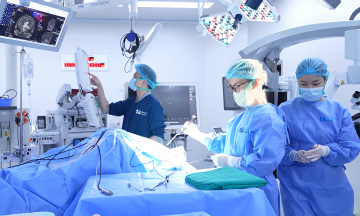
Trung had dull upper abdominal pain for nearly one week, initially believing it was a digestive disorder. When the pain worsened and pain relievers offered no relief, he was admitted to Tam Anh General Hospital, Ho Chi Minh City.
An abdominal ultrasound revealed fluid accumulation in some small bowel loops in the lower abdomen, along with small air pockets. A contrast-enhanced abdominal CT scan showed diverticulitis, which had caused a small bowel perforation, leading to peritonitis.
Master of Science, Doctor Vo Nhat Truong, from the Center for Endoscopy and Endoscopic Gastrointestinal Surgery, stated that diverticulitis causing organ perforation can progress rapidly, leading to sepsis, septic shock, and multi-organ failure.
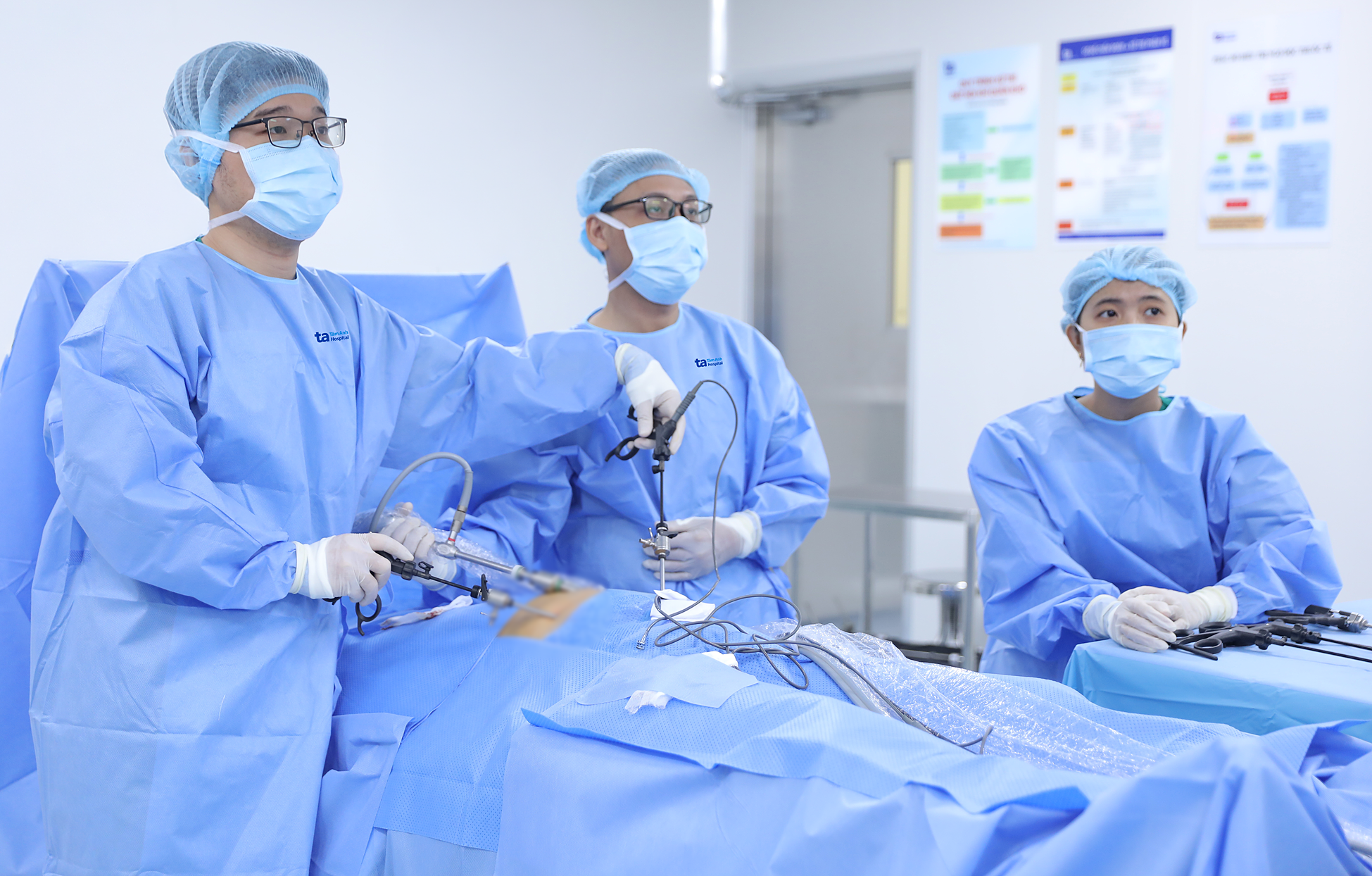 |
Doctor Truong (center) performs laparoscopic small bowel resection on Trung. Photo: Tam Anh General Hospital |
Immediately after the consultation, the medical team decided on emergency laparoscopic surgery. During the operation, doctors observed significant cloudy fluid throughout the abdomen. In addition to one inflamed and perforated diverticulum leaking digestive fluid, there were several other small diverticula, but they showed no signs of inflammation.
Doctors thoroughly cleaned the abdominal cavity, controlled the inflammation, then made a small incision below the navel to bring out the segment of the small bowel containing the diverticulum. The diseased section of the bowel was resected, the two ends of the bowel were reconnected, then placed back into the abdominal cavity, concluding the surgery.
Post-surgery, the patient recovered well, experienced significant pain reduction, was able to drink water after 24 hours, eat light meals after three days, and was discharged after 5 days in stable condition.
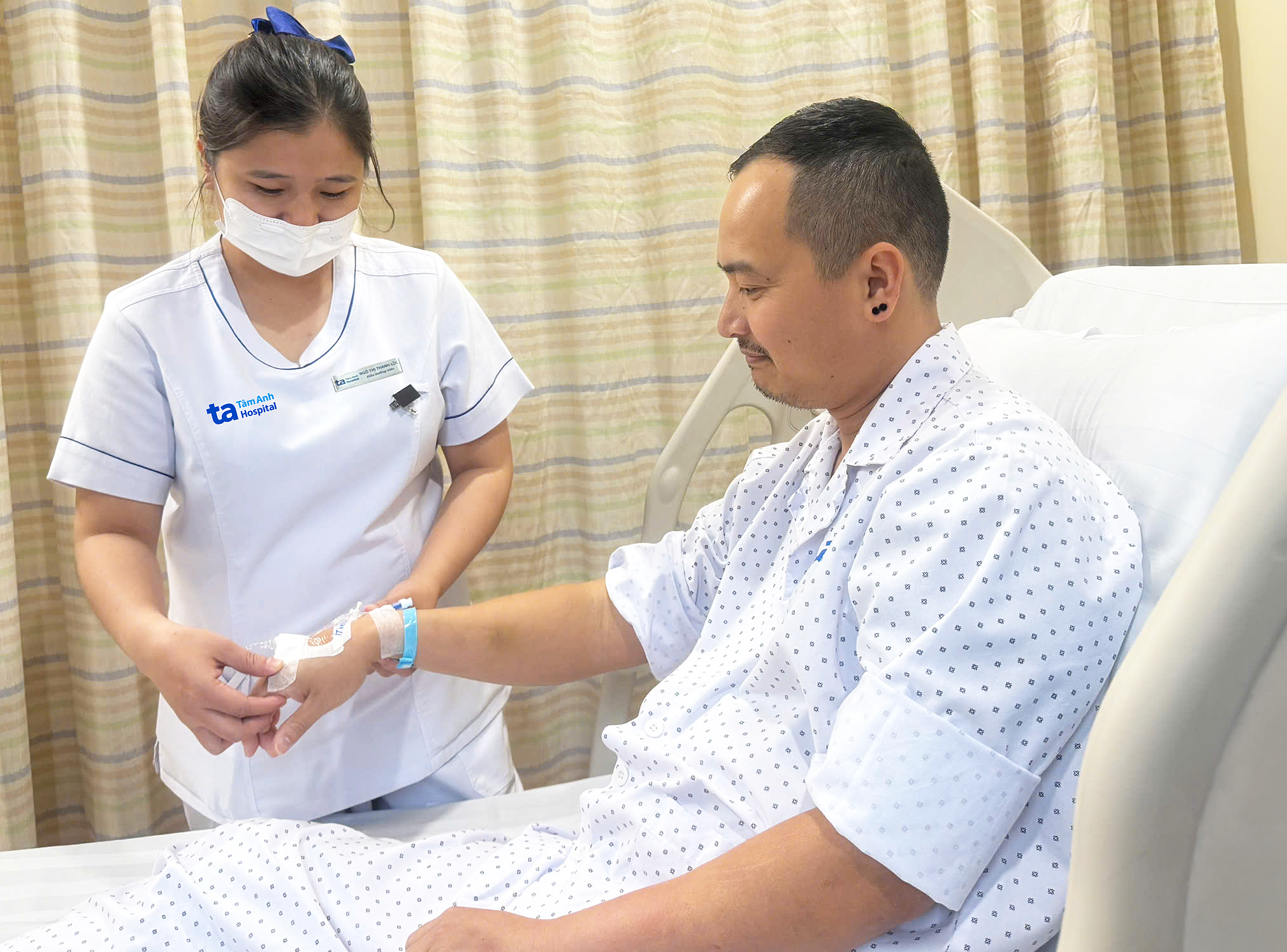 |
Trung receives care from a nurse after surgery. Photo: Tam Anh General Hospital |
Diverticula are small pouches that form due to the bulging of the mucous membrane through weak points in the intestinal wall. This condition can occur in any part of the digestive tract, from the esophagus to the colon, but is most common in the colon. Small bowel diverticula affect approximately 6-130 people per 10,000, according to Doctor Truong.
The exact cause of the disease is not clearly identified, but several factors are related, such as people over 40 years old having weakened intestinal walls, which are prone to forming bulges under pressure within the intestinal lumen. A diet low in fiber, high in red meat, alcohol consumption, smoking, and gene are also factors that increase the risk of developing the disease.
According to Doctor Truong, most diverticula cause no symptoms and are rarely detected. When a diverticulum becomes inflamed or infected, patients may experience continuous abdominal pain, fever, nausea, and digestive disorders. These symptoms are easily confused with many other acute abdominal emergencies, such as appendicitis or perforated peptic ulcers, leading to delays in diagnosis.
Doctors recommend that when unusual, prolonged abdominal pain accompanied by fever occurs, patients should visit a medical facility with a specialized gastrointestinal surgery department for examination, diagnosis, and timely intervention.
Quyen Phan
| Readers can ask questions about digestive diseases here for doctors to answer |