On 22/7, doctors from the Gastroenterology Department, 19-8 Hospital (Ministry of Public Security), reported that a patient had been suffering from persistent digestive issues for several weeks. The man recounted experiencing frequent nausea, loss of appetite, and unexplained weight loss.
It was only after he saw flat, white, moving segments in his stool that he decided to seek medical attention. During his medical history review, the patient revealed a long-standing habit of regularly consuming rare beef, thinly sliced beef dipped in hot broth (bo nhung), and rare beef pho.
Based on clinical symptoms and dietary habits, doctors concluded the patient was infected with beef tapeworm due to consuming raw or undercooked food. This type of parasite can silently reside in the human intestines for many years.
In Vietnam, the prevalence of tapeworm infection ranges from 0,5% to 12% of the population, with beef tapeworm accounting for the majority at 70-80%, and the remainder being pork tapeworm. This parasite exhibits remarkable resilience; each mature segment that detaches contains up to 50.000 tapeworm eggs. An adult beef tapeworm typically measures from 4 to 12 meters in length, with some recorded reaching an exceptional 25 meters.
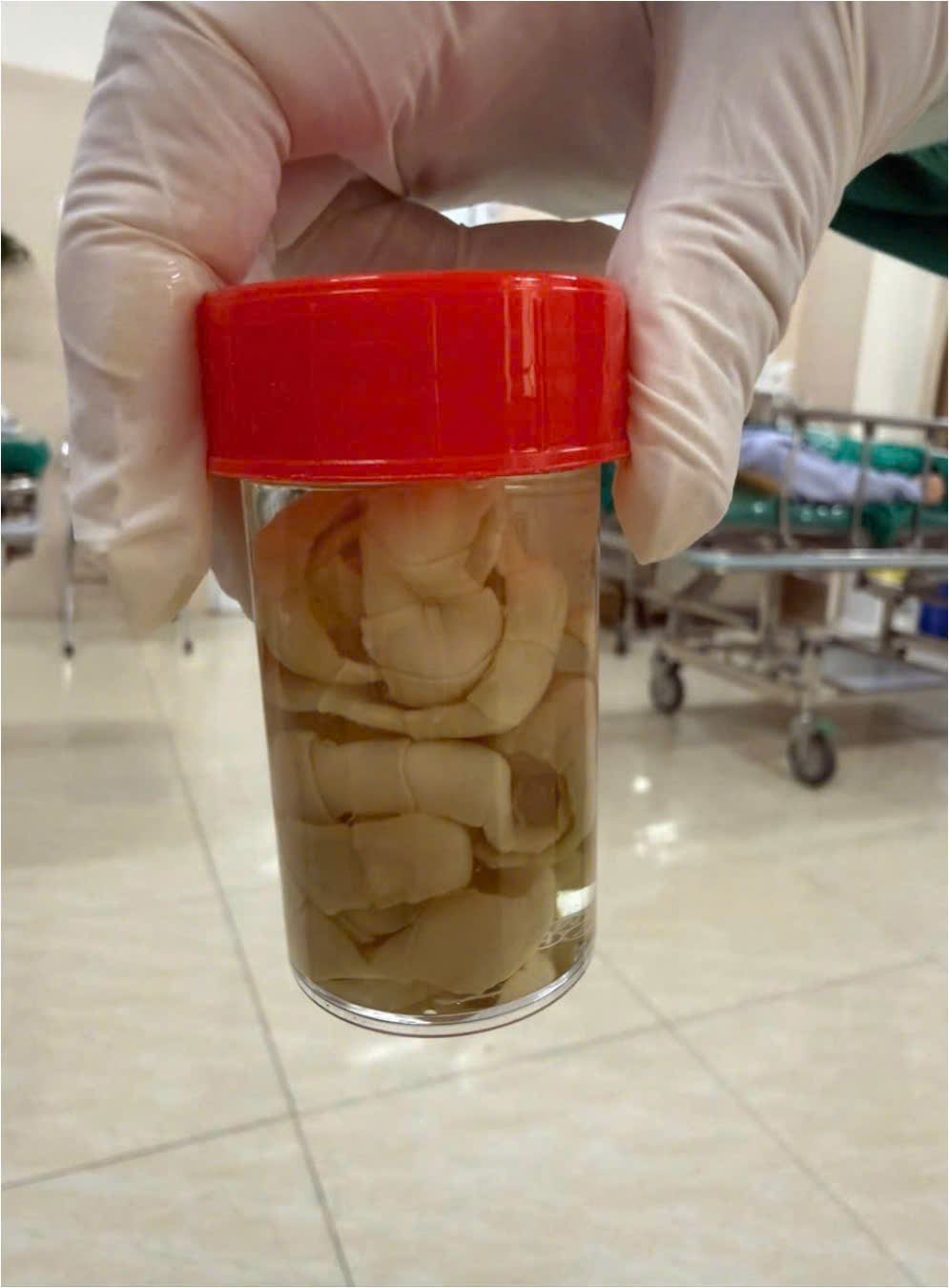 |
The 1.2-meter tapeworm found in the man's abdomen. Photo: *Doctor provided* |
The disease often progresses silently with subtle symptoms such as dull abdominal pain, bloating, or excessive salivation in the morning. If left untreated, beef tapeworm can lead to dangerous complications like intestinal obstruction, bowel perforation, or acute appendicitis, acute cholangitis, acute pancreatitis, directly threatening life.
To prevent infection, doctors recommend adhering to the 'eat cooked, drink boiled' principle and abandoning habits of consuming dishes like rare beef salad (bo tai chanh), beef rolled in mustard greens (bo cuon la cai), or hot pot with rare-dipped beef (lau nhung tai). When preparing whole cuts of beef, the internal temperature must reach a minimum of 63 degrees C, and the meat should rest for 3 minutes before eating. For ground or minced beef, the cooking temperature needs to reach at least 71 degrees C to eliminate pathogens.
Tapeworm larvae are only completely destroyed by high temperatures or by deep freezing at minus 18 to minus 20 degrees C continuously for a minimum of 5 days. Beyond hygienic eating and drinking, individuals should maintain the habit of washing hands with soap, using separate cutting boards for raw and cooked foods, and only purchasing meat that has been inspected. If the body shows signs of unusual weight loss or strange objects are found in stool, people should visit medical facilities for timely examination instead of self-treating at home.
Thuy An