Ms. Dau, who previously enjoyed good health, began experiencing leg and muscle pain, along with a rapid increase in blood pressure, over the past month. Doctor Le Phuc Lien, head of the Female Urology Unit at the Center for Urology, Nephrology, and Andrology, Tam Anh General Hospital Ho Chi Minh City, suspected a 2 cm tumor in her right adrenal gland was secreting the hormone aldosterone.
Aldosterone, a hormone produced by the adrenal cortex, plays a vital role in balancing sodium and potassium, which in turn affects the body's water levels and blood pressure. When an adrenal tumor develops and secretes excessive aldosterone, patients can develop primary hyperaldosteronism (Conn's syndrome). This condition leads to high blood pressure, low blood potassium, and symptoms such as fatigue, muscle weakness, cramps, and irregular heartbeats. If left untreated, the tumor can cause severe hypokalemia, impacting nerve impulses and potentially leading to muscle weakness or even paralysis. Some patients with malignant hypertension are at increased risk of stroke and cerebral hemorrhage.
For hormone-secreting adrenal tumors (functional tumors), suspected malignant tumors, or those causing complications, laparoscopic tumor removal is a definitive treatment. Doctor Lien recommended laparoscopic adrenalectomy for Ms. Dau. Using a magnified view on the endoscopic screen, Doctor Lien and Doctor Cao Vinh Duy were able to clearly visualize the adrenal gland and surrounding structures, allowing for easy dissection and removal of the tumor.
One day after surgery, Ms. Dau recovered quickly, experiencing minimal incision pain. She was discharged three days later. She will require regular follow-up appointments and blood tests to monitor aldosterone and potassium levels, as well as close blood pressure monitoring.
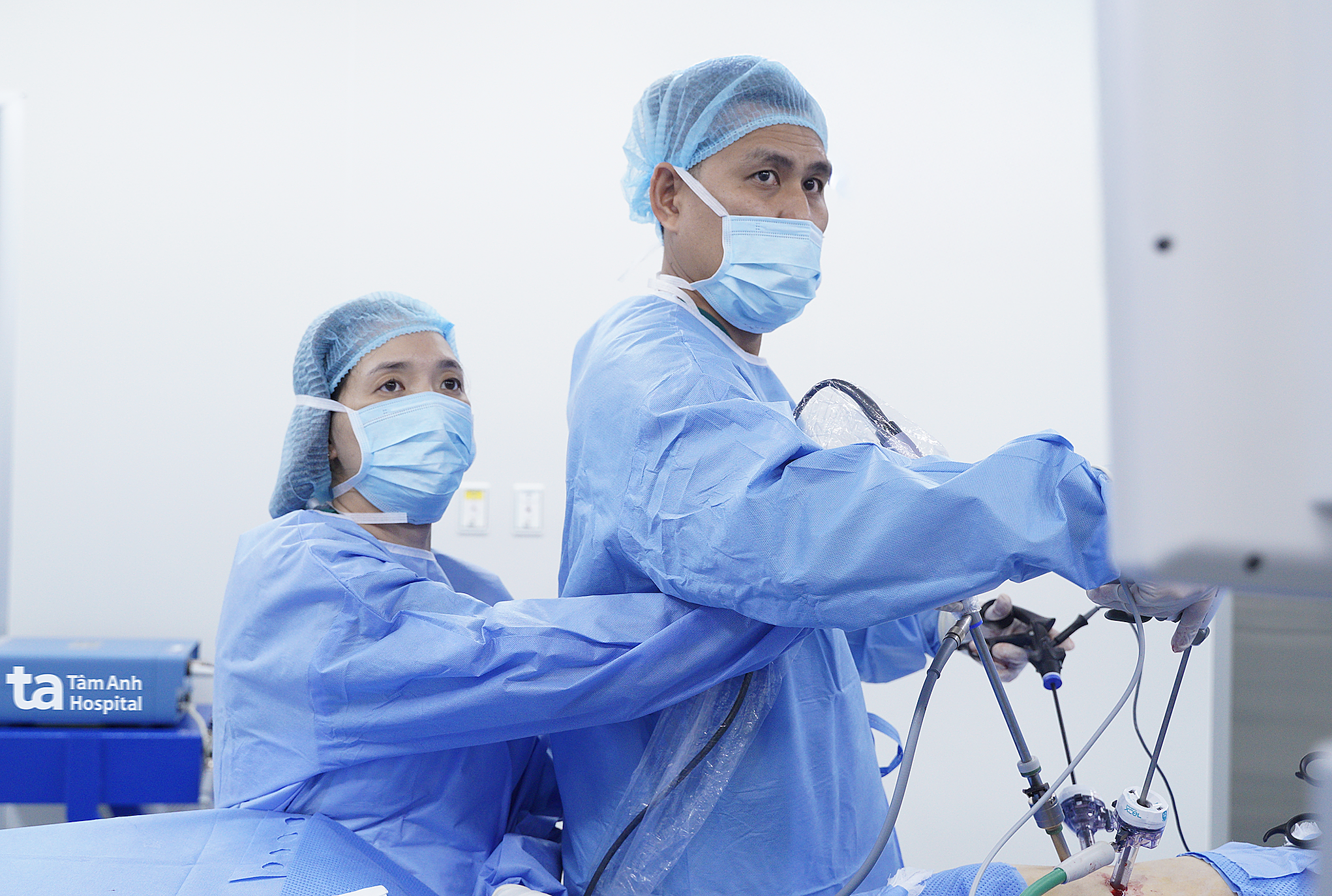 |
Doctor Lien and Doctor Cao Vinh Duy performing laparoscopic adrenalectomy on Ms. Dau. Photo: Tam Anh General Hospital |
Primary hyperaldosteronism is a rare disorder, more common in women, typically diagnosed in individuals aged 30-40. Common symptoms include fatigue, excessive thirst, frequent urination, headaches, muscle cramps, muscle weakness, and blurred vision.
According to Doctor Lien, the cause of the disease often stems from a benign adrenal tumor, as in Ms. Dau's case, or from a genetic disorder such as congenital adrenal hyperplasia. Adrenal cancer is a less common cause.
Treatment for primary hyperaldosteronism usually involves medication to block the effects of aldosterone or surgery to remove the adrenal tumor. Post-surgery, patients may still need medication until their blood pressure returns to normal.
Currently, there is no known way to prevent the disease. Doctor Lien advises everyone to reduce their risk by increasing physical activity, limiting alcohol consumption, reducing dietary salt intake, and quitting smoking. Individuals who frequently experience high blood pressure or low potassium levels should undergo regular health check-ups and tests for timely detection and treatment of the condition.
Ha Thanh
*Patient's name has been changed