On 18/6, Dr. Do Duy Tien, head of the surgery department at Tam Tri Saigon General Hospital, announced an 81-year-old patient was admitted due to prolonged dull abdominal pain and several days of bloody stools. A colonoscopy revealed a fungating tumor in the sigmoid colon. Specialized tests confirmed a malignant lesion, requiring prompt treatment to prevent progression and metastasis.
Following a multidisciplinary consultation, doctors performed a laparoscopic sigmoid colectomy combined with D3 lymph node dissection. This is a standard treatment for many cases of colon cancer, aiming to thoroughly remove the tumor and associated lymph node system, thereby reducing the risk of recurrence.
During the operation, doctors removed approximately 20 cm of the sigmoid colon containing the tumor and performed lymph node dissection according to cancer treatment principles. Post-surgery, the patient was closely monitored, with no complications recorded.
According to Dr. Tien, compared to traditional open surgery, laparoscopic surgery is less invasive, requiring only small incisions. This reduces pain, limits blood loss, and lowers the risk of infection, while also shortening recovery time. The patient also benefited from an enhanced recovery after surgery (ERAS) program, which includes various coordinated pre-, intra-, and post-operative measures such as optimized nutrition, pain control, and early mobilization. As a result, digestive function recovered smoothly, her health stabilized, and she was discharged after 5 days.
 |
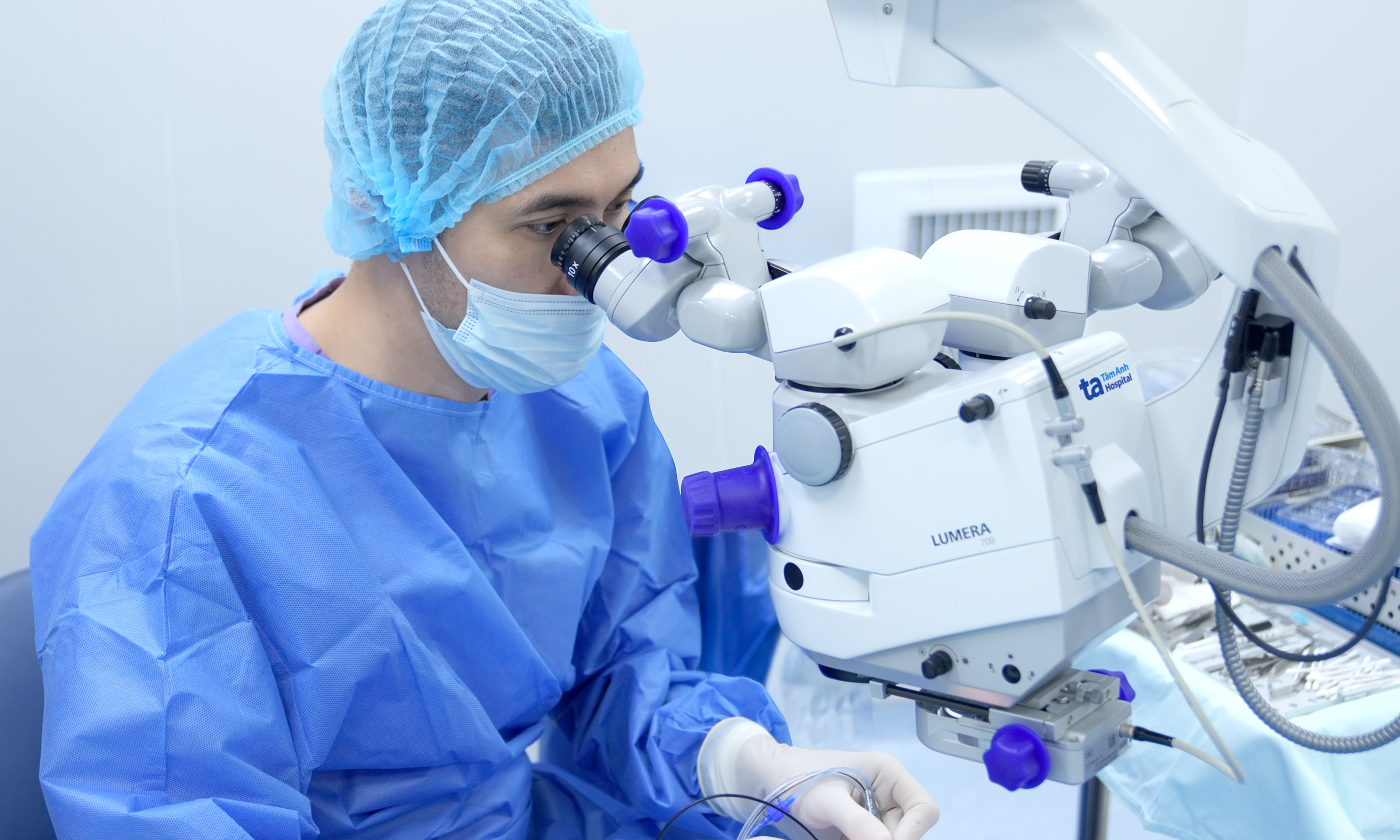
Doctors performing laparoscopic surgery on the patient. Photo: Provided by the hospital
Colorectal cancer is a common type of cancer, often progressing silently for an extended period. The prognosis is better if detected at an early stage.
Doctors advise individuals to undergo regular colorectal cancer screenings after 40 years of age, or earlier if risk factors are present, such as a family history of the disease, colon polyps, or chronic inflammatory bowel disease. Screening colonoscopies help detect polyps, precancerous lesions, or early-stage cancer, thereby increasing the chances of successful treatment and ensuring a good quality of life.
One should not be complacent about unusual digestive symptoms like prolonged abdominal pain, changes in bowel habits, bloody stools, unexplained weight loss, or persistent anemia.
Le Phuong