On 5/3, Doctor Nguyen Duc Minh from the Emergency Department at the Central Hospital for Tropical Diseases, reported that the patient suffered severe septic shock, necessitating relatively high doses of vasopressors. Her left hand had a 5x6 cm black necrotic blister, surrounded by significant swelling, inflammation, and pain. Within 48 hours, the inflammation from the necrotic area spread rapidly, causing swelling across her entire hand and extending up to her forearm.
Tests revealed multi-organ failure, affecting her lungs, liver, kidneys, and cardiovascular system. Microbiology tests identified Serratia marcescens as the causative bacteria. This opportunistic gram-negative bacterium is commonly found in the environment, such as water and soil, and can cause severe sepsis and cellulitis if it enters the bloodstream.
After two days of treatment, the patient's condition showed positive improvement.
According to doctors, while necrosis appeared at the injection site, there was insufficient evidence to directly attribute it to the injection itself. In reality, the injection site created a small skin lesion, an "open door" for bacteria. During daily activities, this skin area could have come into contact with contaminated water, dirt, or raw food, allowing Serratia marcescens to enter and cause infection.
 |
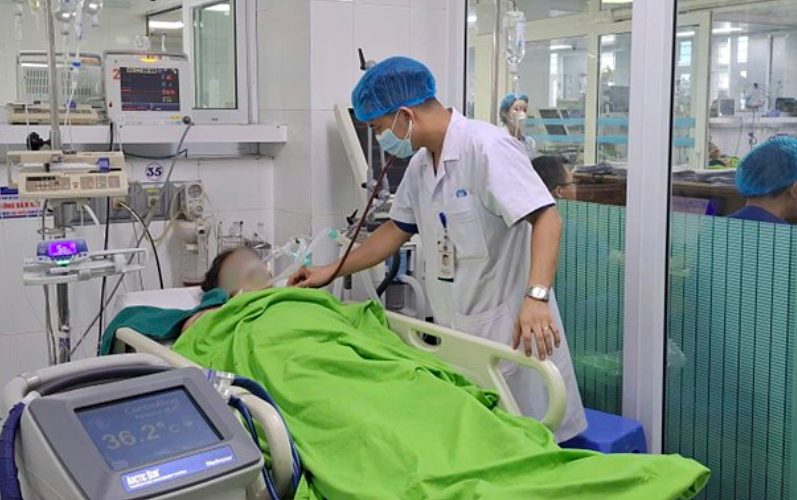
Doctors continuously monitor the patient's condition. Photo: Hospital provided
Doctors stated that for such widespread necrotic lesions, treatment extends beyond resuscitation and antibiotics, requiring surgical intervention. Patients may need repeated debridement of necrotic tissue to control the infection, prevent further inflammation, and maximize hand function preservation.
Doctors advise ensuring sterility during procedures like injections and infusions, and emphasize proper care of the injection site after returning home. It is crucial to keep the area clean and dry, avoiding contact with unclean water or soil until the needle puncture has fully closed. If the injection site swells, becomes painful, changes skin color, or is accompanied by fever or fatigue, immediate medical attention is necessary for examination and timely treatment.
"From a small skin lesion, if not properly controlled, the infection can rapidly spread into the bloodstream, leading to sepsis, septic shock, and multi-organ failure, directly threatening life," the doctor stated.
Thuy An