On 14/1, a representative from Friendship Hospital Quang Binh announced the patient's condition had stabilized after 10 days of intensive treatment. Doctors surgically debrided the necrotic tissue, drained the pus, and administered high-dose antibiotics to control the infection. The injured area is showing signs of new skin growth and good recovery.
Previously, on 5/1, the patient, residing in Phong Nha commune, was admitted with a high fever, extreme fatigue, and severe back pain. Laboratory test results indicated very high infection markers.
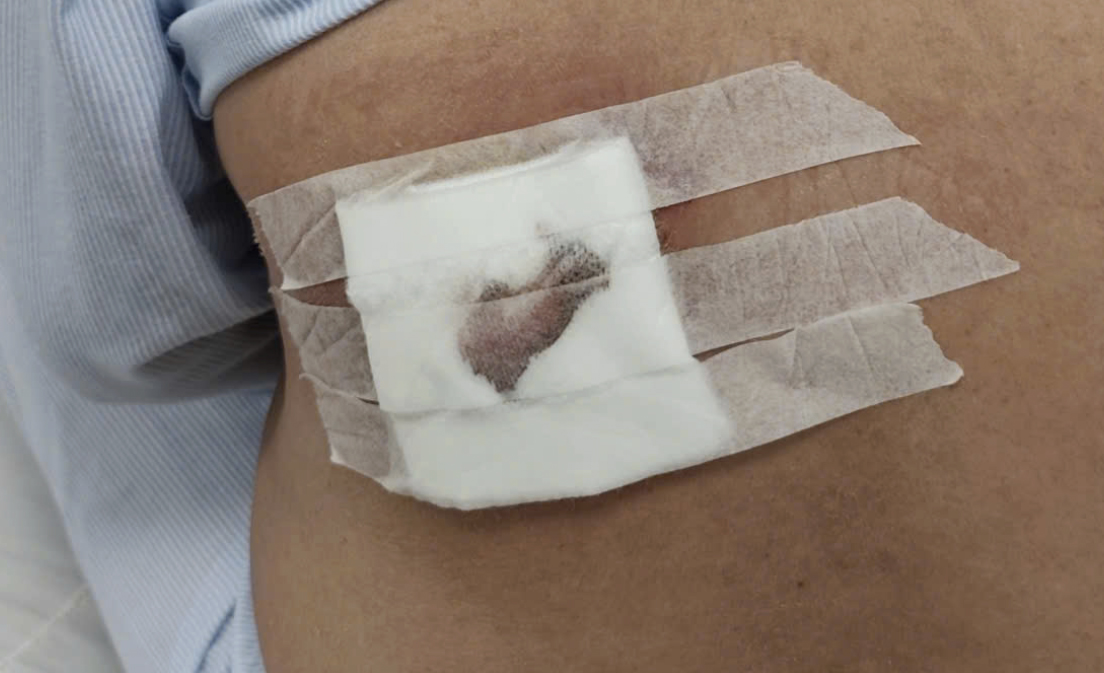 |
The necrotic skin on the patient's back recovering after treatment. *Photo: Thach Ngoc* |
At the site of the injury, doctors observed a deep necrotic ulcer measuring 4x4 cm, surrounded by a widespread inflamed area of 10x10 cm that showed signs of spreading. The treatment team determined that without timely intervention, the infection would spread into the bloodstream, leading to multi-organ failure (liver, kidneys, brain) and threatening the patient's life.
According to the family, the patient initially developed only a small boil on her back. Although the communal health station had provided antibiotics, after only two days of taking the medication, she arbitrarily stopped the prescribed treatment to switch to a folk remedy. She gathered various garden leaves, mixed them with garlic and coarse salt, crushed them, and applied the paste directly to the boil. Two days after applying the homemade poultice, the patient's back rapidly swelled, ulcerated, discharged pus, and the pain spread throughout her body. Her family rushed her to the emergency room when her condition worsened.
Doctor Vo Nhat Nam, from the Department of Surgery – Anesthesia and Resuscitation, advised people against using unverified leaves or traditional remedies on open wounds. This practice creates an entry point for bacteria, worsening simple conditions, complicating treatment, and leading to numerous health sequelae.
Dac Thanh