Mr. Tung visited Tam Anh General Hospital Hanoi, where blood tests revealed elevated CA 19-9 and CEA markers. Doctor Vu Truong Khanh, Head of the Department of Gastroenterology - Hepatobiliary - Pancreatology, suspected cancer. A biopsy showed a tumor with a complex structure. While primarily a benign cavernous liver hemangioma, the tumor also contained small bile duct tubules with abnormal cells featuring large nuclei and some necrotic regions, suggesting a potential malignant lesion.
Immunohistochemistry confirmed Mr. Tung had cholangiocarcinoma, coexisting within the benign cavernous liver hemangioma. Oncology department doctors are now staging the cancer and planning appropriate treatment for the patient.
 |
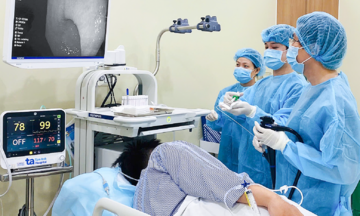
A technician operates an immunohistochemistry staining machine. *Photo: Tam Anh General Hospital*.
According to Doctor Khanh, a liver hemangioma is a common benign lesion caused by proliferating blood vessels, typically asymptomatic, and rarely impacts health. However, in some rare instances, malignant lesions can appear interspersed within the hemangioma, making it difficult to distinguish between healthy and diseased tissue on imaging, especially in early stages. When malignant tumors are small and do not cause clear clinical symptoms, the disease is easily missed.
Intrahepatic cholangiocarcinoma (ICC) accounts for approximately 8-10% of all cholangiocarcinoma cases and about 10-20% of primary malignant liver tumors. "Cases where intrahepatic cholangiocarcinoma appears interspersed or is masked by benign liver lesions like hemangiomas are rare," Doctor Khanh stated.
In early stages, signs of cholangiocarcinoma, such as elevated liver enzymes, right upper quadrant pain, or jaundice, can be subtle or not yet clearly apparent. Doctor Khanh advises against complacency with any unusual bodily symptoms, even transient ones. Regular health check-ups are recommended, or seeking medical attention when experiencing abnormal symptoms. Early detection and timely treatment increase the chances of radical cure, while also reducing the risk of complications and recurrence.
Maintaining a healthy lifestyle, including a diet rich in green vegetables, limiting alcohol, managing weight, and regular physical activity, supports liver protection and reduces the risk of malignant biliary diseases.
Ly Nguyen
*Patient's name has been changed.
| Readers can send questions about digestive diseases here for doctors to answer |