On 5/1, Dr. Phan Lien Khuong, a specialist from the Urology Department at Nguyen Trai Hospital, reported that MRI results revealed a large, deeply invasive bladder tumor. A bladder endoscopy with tumor biopsy confirmed the patient's cancer diagnosis. This case presented challenges because the patient also had chronic obstructive pulmonary disease (COPD) and hypertension, increasing the risks during anesthesia and surgery.
Following a consultation, the medical team decided on a radical cystectomy, bilateral pelvic lymphadenectomy, and urinary diversion using the Bricker technique – a method implemented for the first time at the hospital. This technique utilizes a segment of the patient's own small intestine to create an external conduit for urine, rather than directly connecting the ureters to the skin as was previously done.
The surgery lasted over 6 hours, with assistance from a Ligasure device to effectively control bleeding during tissue dissection and lymphadenectomy. Post-surgery, the patient recovered well, the incision was dry, urine flow was stable, and the patient was discharged after one week.
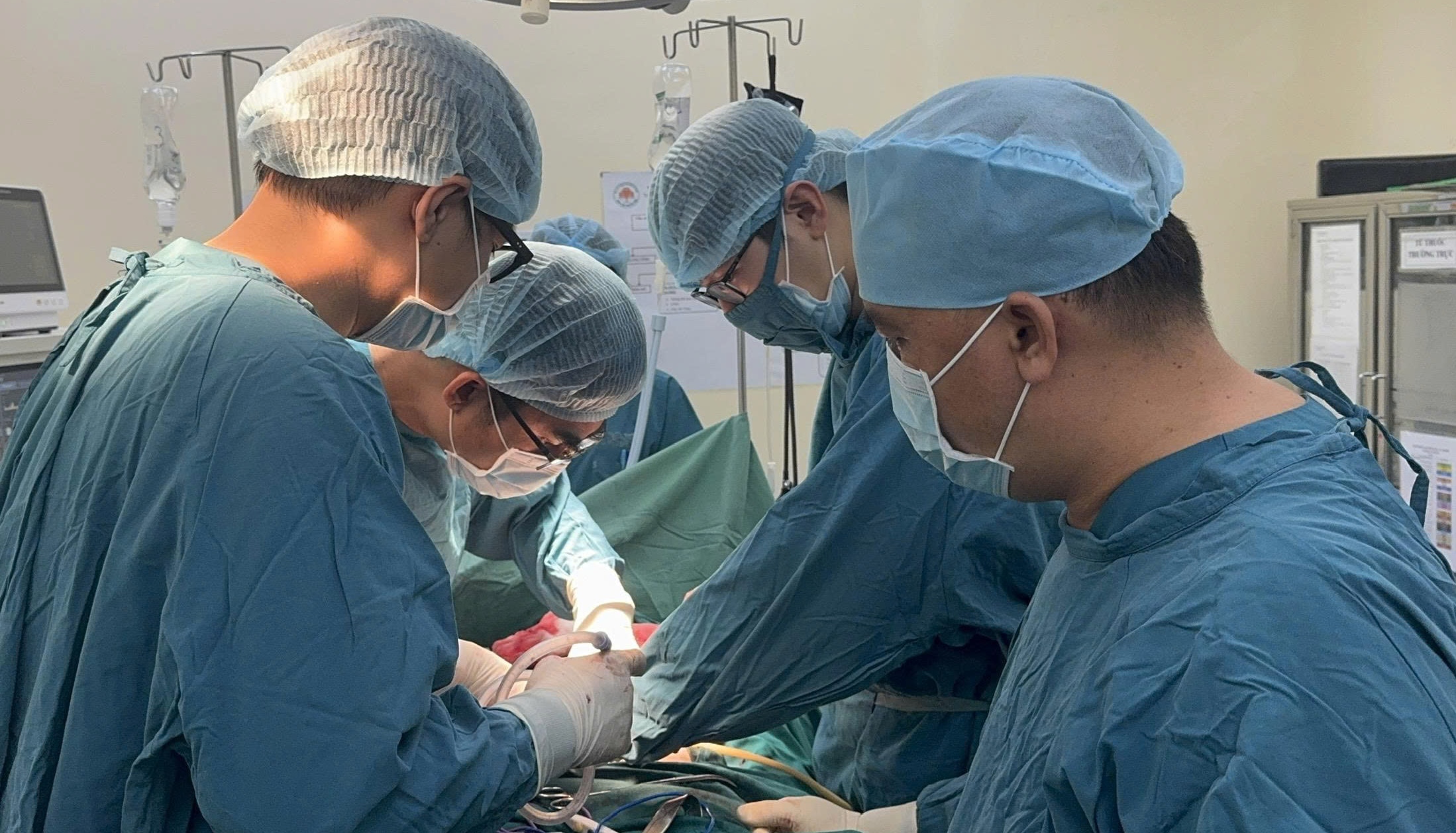 |
Doctors performing surgery on the patient. *Photo: Nguyen Trai Hospital* |
Dr. Nguyen Luong Vu, a member of the surgical team, stated that radical cystectomy, which involves removing the bladder, prostate, and seminal vesicles, is a curative treatment for muscle-invasive bladder cancer or cases with a high risk of metastasis. Compared to the technique of directly connecting the two ureters to the skin, the Bricker method still achieves the goal of radical treatment while offering a better quality of life for patients.
Bladder cancer is more common in men, with smoking being a leading risk factor. Individuals working in environments exposed to chemicals, dyes, rubber, or metals also face increased risks and must strictly adhere to occupational safety regulations.
Pay attention to suggestive symptoms like hematuria, especially persistent and recurrent hematuria, and seek early medical examination for necessary evaluations. Additionally, regular health check-ups are essential for early screening and diagnosis of the disease in its early stages, enabling prompt treatment and increasing the likelihood of curative treatment while potentially preserving the bladder.
Le Phuong