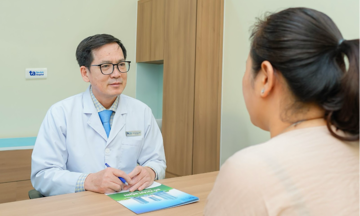
A 61-year-old woman, Ms. Chi, sought treatment at Tam Anh General Hospital Ho Chi Minh City for severe symptoms of lower limb venous insufficiency, including heavy, tired, burning legs, pain, and nocturnal leg cramps. She had managed the condition for four years with medication and compression stockings, but her symptoms recently worsened. According to Doctor Le Chi Hieu of the Center for Thoracic and Vascular Surgery, prolonged sitting or standing increases pressure in the lower limb veins, causing blood to pool and leading to irreversible varicose veins and weakened venous valves. Ms. Chi's three decades of office work likely contributed to the progression of her condition.
Doctor Hieu diagnosed Ms. Chi with stage 3 lower limb varicose veins, characterized by swelling. Medical treatment was no longer sufficient, necessitating intervention to remove the diseased vein. Two viable options were endovenous laser ablation, which uses heat waves to destroy the affected vein, and biological glue injection, which inactivates the compromised vein's function. Given Ms. Chi's preference for a less invasive procedure, the doctor recommended biological glue injection, as it only requires local anesthesia or light sedation.
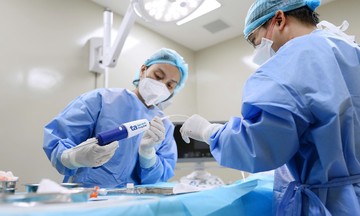
During the procedure, doctors utilized an endovenous ultrasound system to guide the insertion of a device into the affected vein. Biological glue was then injected to seal the vessel, preventing blood pooling in the lower limb and effectively stopping disease progression. Performed with local anesthetic and light sedation, the patient remained awake throughout the treatment.
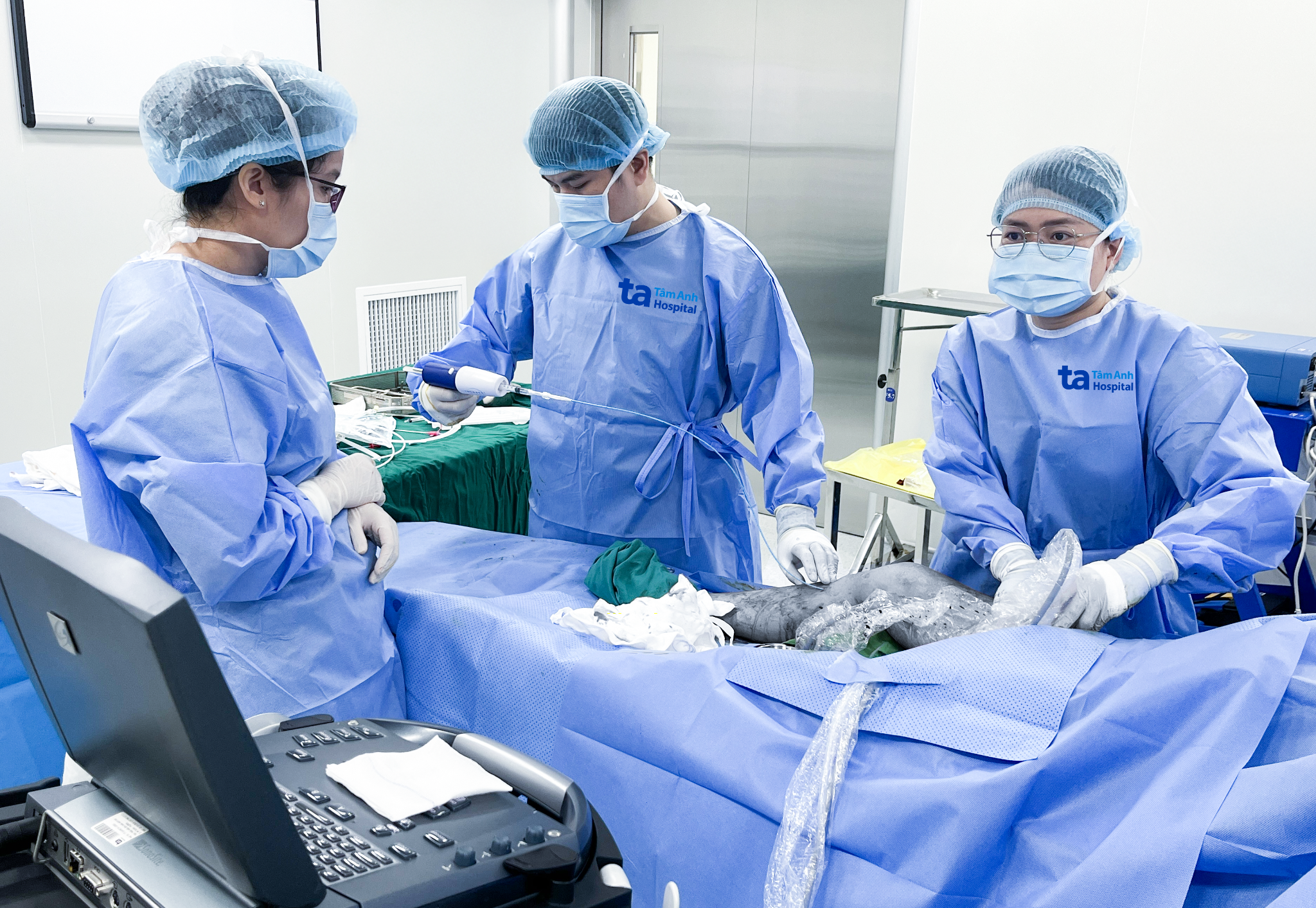 |
Doctors performing a biological glue injection to treat varicose veins. Photo: Tam Anh General Hospital |
Just one day post-procedure, Ms. Chi experienced no pain and could walk normally. Her legs felt lighter, swelling subsided, and she was discharged. She received guidance on wearing compression stockings and implementing lifestyle adjustments, such as: avoiding prolonged standing or sitting, elevating her legs during sleep, exercising regularly, and managing her weight, to prevent the condition from recurring.
Doctor Le Thi Ngoc Hang, from the Center for Thoracic and Vascular Surgery at Tam Anh General Hospital Ho Chi Minh City, highlighted biological glue injection as an advanced treatment for varicose veins. This technique offers significant advantages over traditional laser or radiofrequency ablation, including no need for general or spinal anesthesia, absence of thermal damage, minimal invasiveness to surrounding tissues, reduced pain, and lasting efficacy. Patients experience faster recovery and early ambulation. This method is especially beneficial for high-risk patients who face complications with general anesthesia, such as those with cardiovascular, respiratory, or metabolic conditions.
Lower limb varicose veins commonly affect women over 50, pregnant individuals, and those who are overweight or obese, or who smoke. The condition is also prevalent among young people who frequently wear high heels, stand for extended periods, or maintain prolonged sitting positions, such as teachers and office workers. Early medical consultation is advised for anyone experiencing symptoms like calf tightness, heavy or tired legs, leg cramps, swollen feet, itching, skin discoloration, ulcers, or infection.
By Thu Ha
*Patient's name has been changed
| Readers can submit cardiovascular questions here for doctors to answer |