Dr. Le Phuc Lien, Head of the Female Urology Unit at the Center for Urology - Nephrology - Andrology, Tam Anh General Hospital TP HCM, reported Mr. Phuoc's systolic blood pressure reached 220 mmHg, significantly higher than the normal 120 mmHg. This indicated a hormonal abnormality caused by excessive endocrine hormone production, leading to hypertension.
CT scan results revealed a tumor approximately 3 cm in size, and endocrine tests detected abnormalities. Doctors diagnosed an adrenal medulla tumor. This condition leads to overproduction of the hormone normetanephrine, causing continuous vasoconstriction and acute hypertension that conventional medication cannot control.
According to Dr. Lien, surgery is the optimal treatment, but it carries significant risks. The adrenal gland is deep within the abdominal cavity, close to major blood vessels. The tumor itself is highly vascular, posing a risk of severe blood loss if damaged. During surgery, excessive manipulation of the tumor before controlling its blood supply can trigger a surge in hormone release, causing blood pressure to spike dangerously and increasing the risk of cerebral hemorrhage. After tumor removal, blood pressure can drop suddenly, leading to cardiovascular collapse. Consequently, the medical team conducted a multidisciplinary consultation and divided the surgery into three stages.
In stage one, endocrinologists administered medication to Mr. Phuoc to dilate the blood vessels constricted by the tumor, stabilizing his body before intervention. Anesthesiologists inserted an arterial catheter to continuously monitor blood pressure throughout the operation.
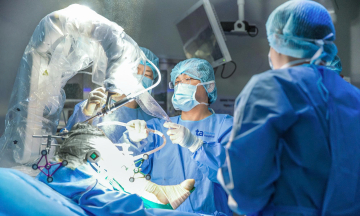
Stage two involved Dr. Lien operating the Da Vinci Xi robot. Its 3D camera system magnified the surgical field 10-15 times, providing a clear view of even minute blood vessels. The robot's flexible arms rotated 540 degrees in narrow spaces, enabling precise tumor dissection while minimizing manipulation or compression of the growth.
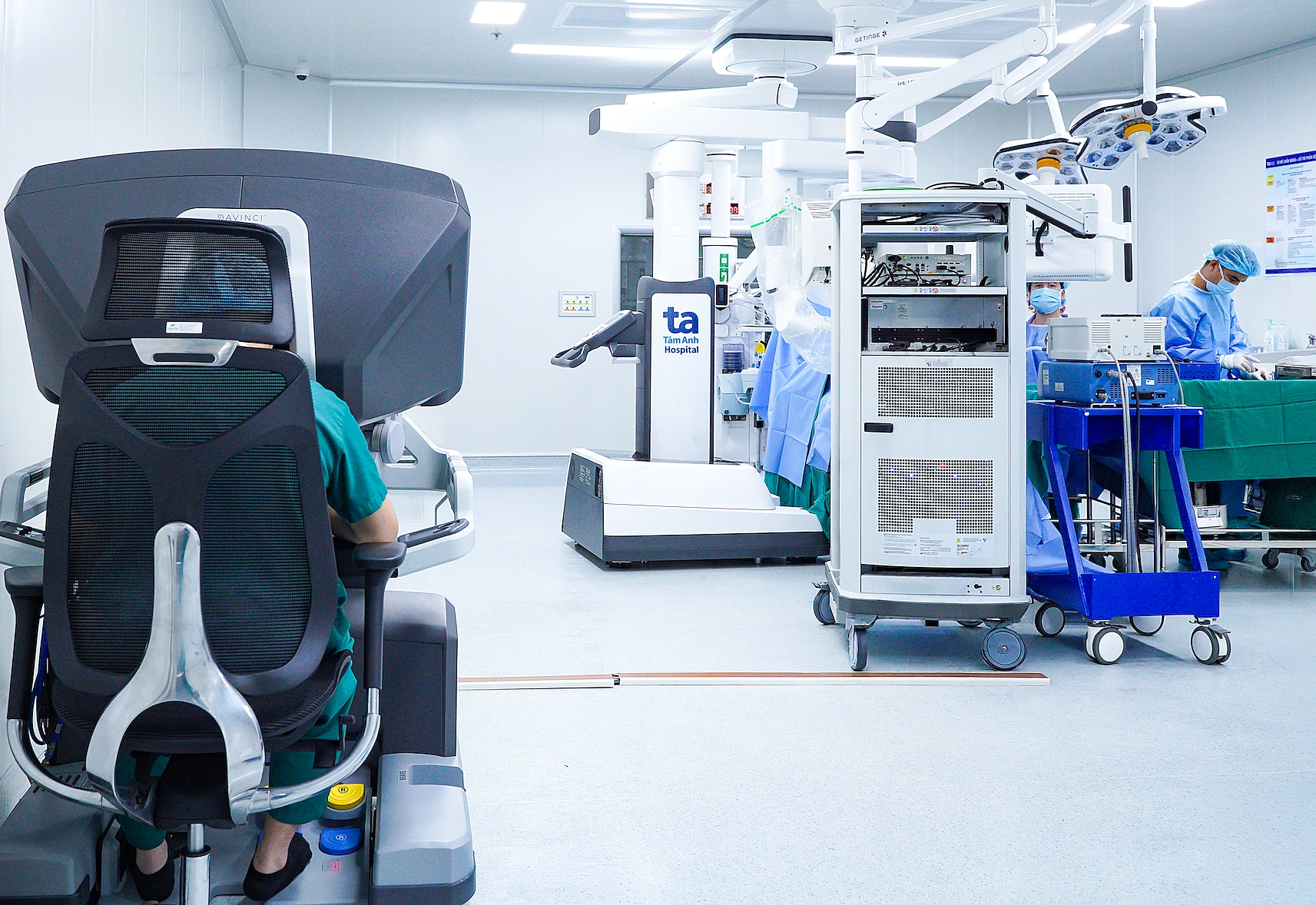 |
Dr. Lien (seated) controls the Da Vinci Xi robot to remove Mr. Phuoc's tumor. Photo: Tam Anh General Hospital. |
Dr. Lien (seated) controls the Da Vinci Xi robot to remove Mr. Phuoc's tumor. Photo: Tam Anh General Hospital.
Mid-surgery, the patient's blood pressure suddenly surged to 260 mmHg. The team immediately paused the operation and administered rapid-acting intravenous antihypertensive medication. Within 30 seconds, blood pressure stabilized, allowing Dr. Lien to continue controlling the robot to complete the dissection.
After more than 2 hours, the tumor was completely removed, and the biopsy confirmed it was benign. Mr. Phuoc then entered stage three, continuing to receive vasopressor medication to support vital organ function. Cardiologists closely monitored his heart rate to ensure he did not develop renal failure or a stroke post-surgery.
Following the operation, Mr. Phuoc's health stabilized. He was able to walk gently after one day and was discharged after three days.
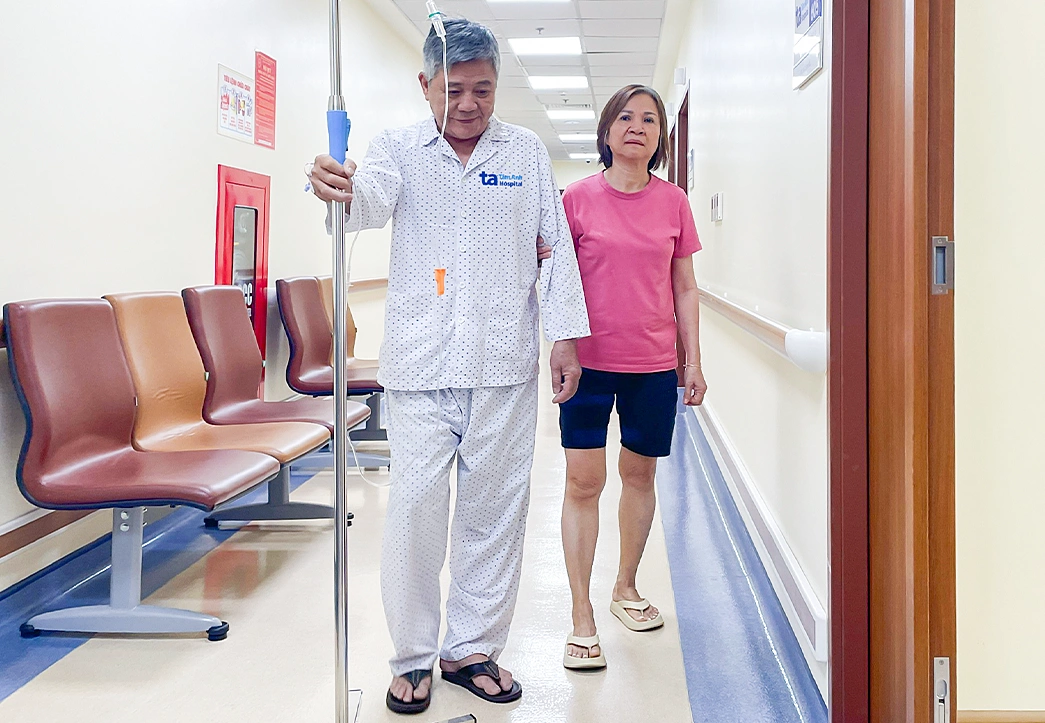 |
Mr. Phuoc and his wife practicing walking in the corridor of Tam Anh General Hospital one day after Da Vinci Xi robot-assisted surgery. Photo: Dinh Lam. |
Mr. Phuoc and his wife practicing walking in the corridor of Tam Anh General Hospital one day after Da Vinci Xi robot-assisted surgery. Photo: Dinh Lam.
Dr. Lien explained that adrenal medulla tumors are relatively rare, typically developing from cells within the adrenal medulla. Normally, the adrenal medulla produces catecholamine hormones, which help the body respond to stress. When a tumor is present, these cells overproduce these hormones, leading to persistent high blood pressure.
Common symptoms of the condition include severe headache, sweating, and a rapid heartbeat. Some cases, like Mr. Phuoc's, present with no distinct symptoms but high blood pressure that is difficult to control with conventional medication, with the disease only discovered incidentally during a medical examination.
The condition can be associated with genetic syndromes such as multiple endocrine neoplasia type 2, neurofibromatosis type 1 (NF1), and paraganglioma syndrome. Dr. Lien advises patients to seek hospital examination for any unusual symptoms to undergo screening tests and receive timely treatment.
Dinh Lam