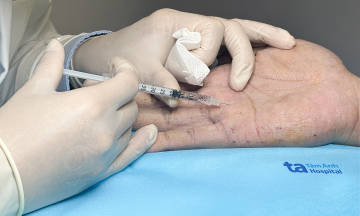
On 15/5, Hung Yen Province's Food Safety and Hygiene Sub-department released a detailed report on the incident. Currently, medical facilities are treating 27 patients, while four individuals with milder symptoms are monitoring their health at home. Statistics show that a total of 43 diners consumed this raw duck blood dish, and 31 of them subsequently fell ill.
The incident originated on 29/4 at two restaurants, Linh Thao (La Van 1 hamlet) and Phuong Phuong (Luong Cu Bac hamlet), both in Quynh Phu commune. Investigating agencies determined that the raw duck blood dish, containing bacteria, was the cause of the illness. Both restaurants sourced the blood from a household in Binh Ngoc hamlet within the same commune.
To control the situation, authorities instructed hospitals to review individuals with related epidemiological factors to categorize, admit, and apply appropriate treatment protocols for poisoning.
The health sector warns that duck blood pudding is inherently raw blood, containing many dangerous pathogens such as streptococcus suis, tapeworms, roundworms, serratia liquefaciens bacteria, and even avian influenza virus. Consumers cannot eliminate these microorganisms by adding fish sauce, alcohol, or lemon juice; only cooking at high temperatures can completely destroy them. Infected patients typically exhibit fever, vomiting, abdominal pain, diarrhea, headaches, or necrotic skin rashes.
Therefore, health experts advise people to abandon the habit of eating duck blood pudding and rare dishes, consuming only thoroughly cooked livestock and poultry meat. People should wear protective gear and wash their hands with soap before and after slaughtering and processing meat. They should also seek medical attention promptly if unusual symptoms appear after eating.
Thuy An