Mr. Hoang, 77, recently sought treatment at Tam Anh General Clinic, District 7, for severe pain in his left knee. Dr. Truong Huu Bao, a Master of Medicine and Level I Specialist who heads the orthopedic trauma department, diagnosed him with end-stage knee osteoarthritis. His joint cartilage was almost completely gone, causing the bones to rub against each other during movement. This condition was exacerbated by a previous right knee replacement surgery 13 years ago, where the artificial joint was ill-fitting and protruded, making the joint feel detached from the bone and causing pain. The uneven weight distribution resulting from the problematic right knee placed increased pressure on his left leg, leading to more severe damage.
Dr. Bao recommended a left knee replacement for Mr. Hoang. This procedure utilized the new-generation AI Cuvis-Joint robot and a tourniquet-free technique. This advanced surgical approach offers high precision, aiming to prevent complications similar to those experienced after his previous right knee surgery.
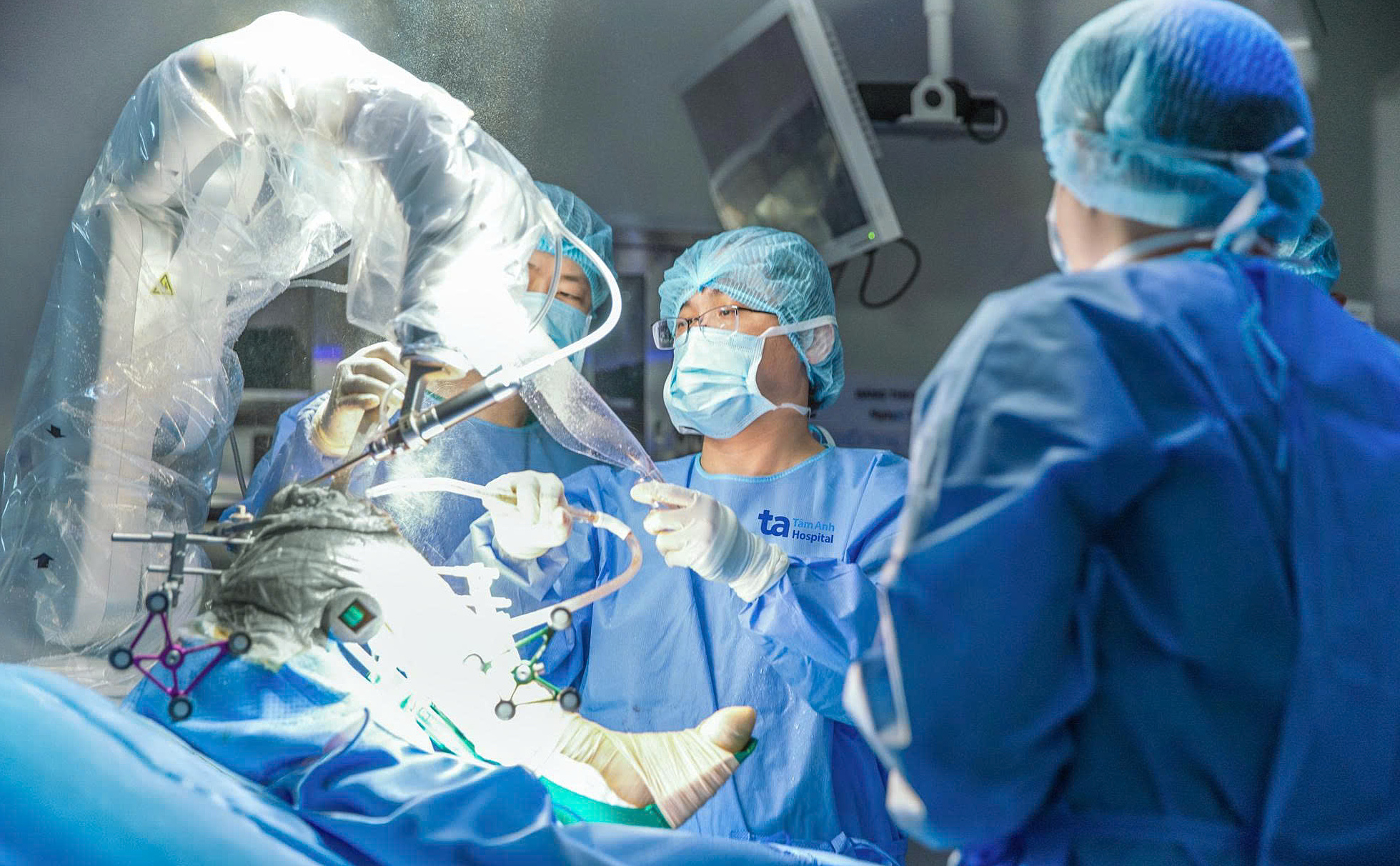 |
Dr. Bao (center) performing knee replacement surgery with the assistance of the AI Cuvis-Joint robot. Photo: Tam Anh General Hospital.
The robot's integrated software reconstructs the knee joint anatomy using 3D CT scans. This allows for personalized surgical planning, including precise placement of the artificial joint and bone cuts. The robot calculates the exact size of the artificial joint with nearly 100% accuracy, enabling patients to experience natural and flexible movement after surgery.
During the surgery, the tourniquet-free technique was employed. This method promotes better blood circulation, reducing the risk of deep vein thrombosis, pulmonary embolism, and other peripheral nerve damage. Avoiding a tourniquet also prevents ischemia and compression on the quadriceps muscle, contributing to less pain and a better joint range of motion for patients in the first few days post-surgery.
Just a few hours after the procedure, Mr. Hoang could perform light movements. By the first day, his pain had significantly decreased, and he was able to begin walking exercises.
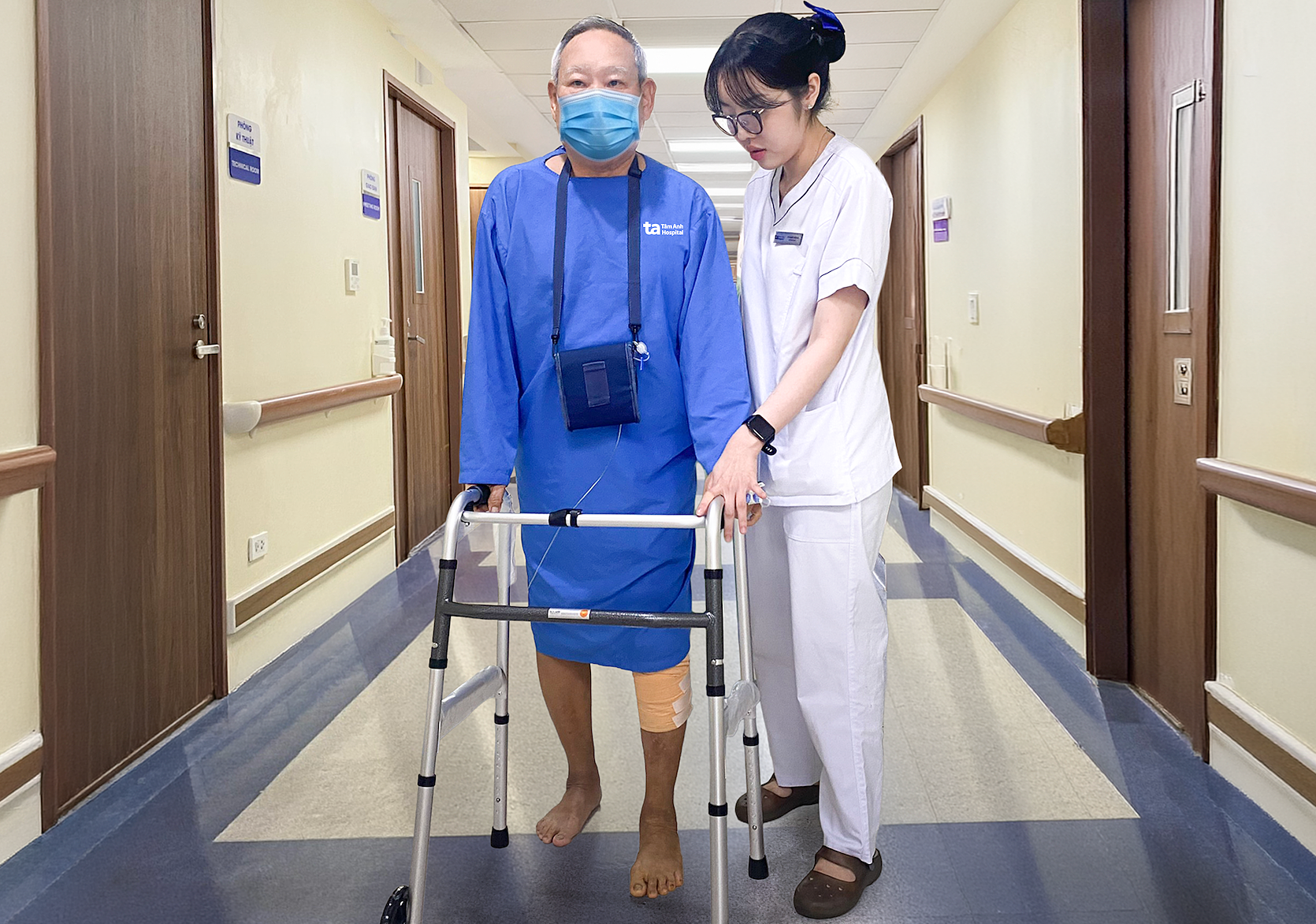 |
The patient practicing walking on the first day after surgery. Photo: Tam Anh General Hospital.
Dr. Bao emphasized that all surgeries, including knee replacements, carry inherent risks. Therefore, patients should seek immediate medical attention if they experience any abnormal post-operative signs, such as persistent pain, swelling, stiffness, looseness of the knee joint, or inability to walk.
Phi Hong