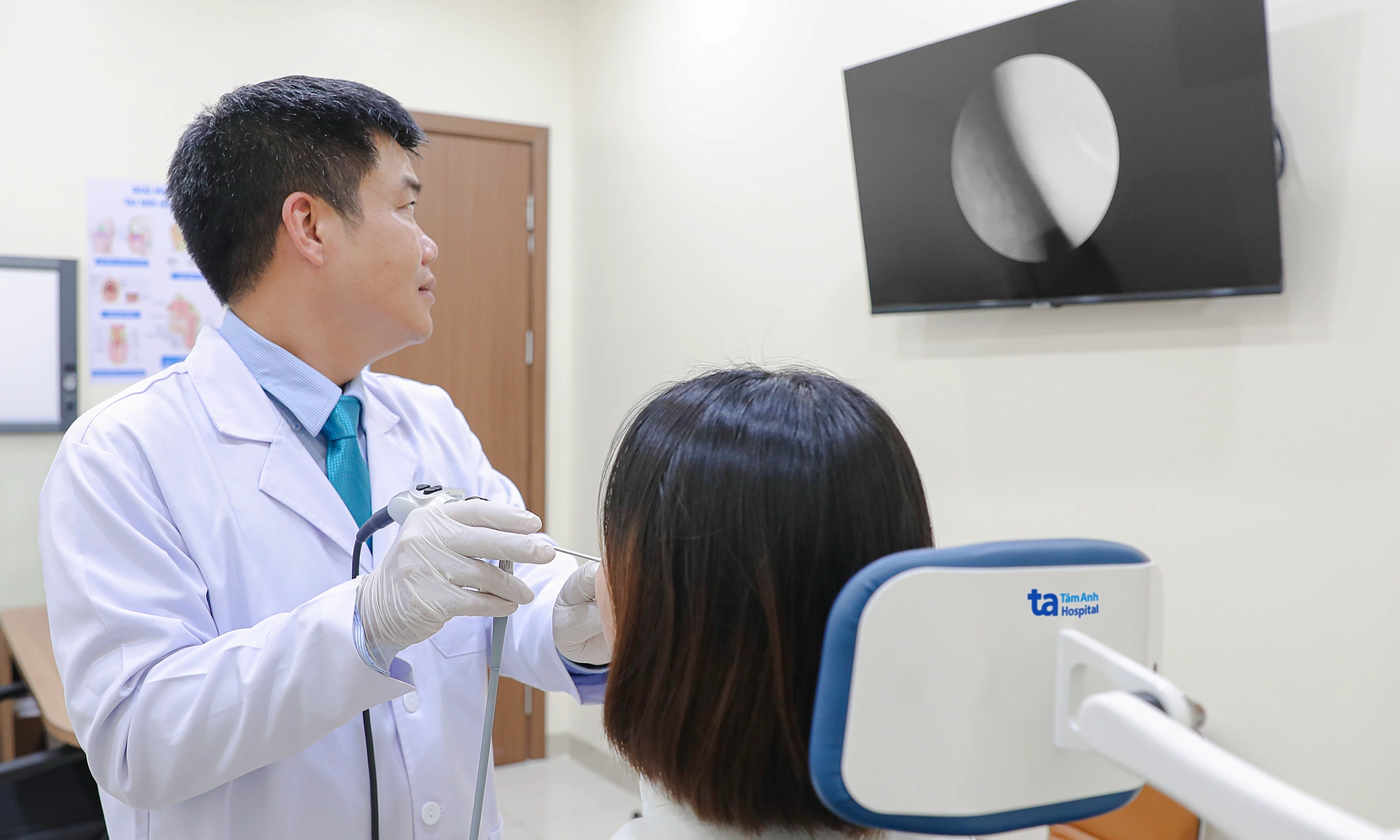
Mr. Tri, who has had diabetes for about 10 years, initially thought his gradually weakening left eye was due to a diabetes complication. He sought examination at Tam Anh General Hospital Ho Chi Minh City. Dr. Pham Thi Thanh Truc, from the Neurology Department at the Neuroscience Center, stated that the patient did not exhibit typical symptoms such as limb weakness or paralysis, facial drooping, or speech difficulty. However, sudden unilateral vision loss can indicate brain damage, necessitating an MRI scan for diagnosis.
A 3 Tesla brain MRI revealed signal abnormalities in Mr. Tri’s right occipital lobe, consistent with a new cerebral infarction. Further specialized examination found that Mr. Tri suffered from complete left homonymous hemianopia, meaning he could not see the left portion of his visual field.
Dr. Truc diagnosed Mr. Tri with an ischemic stroke. He was admitted to the hospital in the 4th hour after symptom onset. The neurological deficit, caused by prolonged stress and overload on the cerebral cortex leading to nervous system dysfunction, significantly affected his visual function, mobility, daily activities, and work capability.
 |
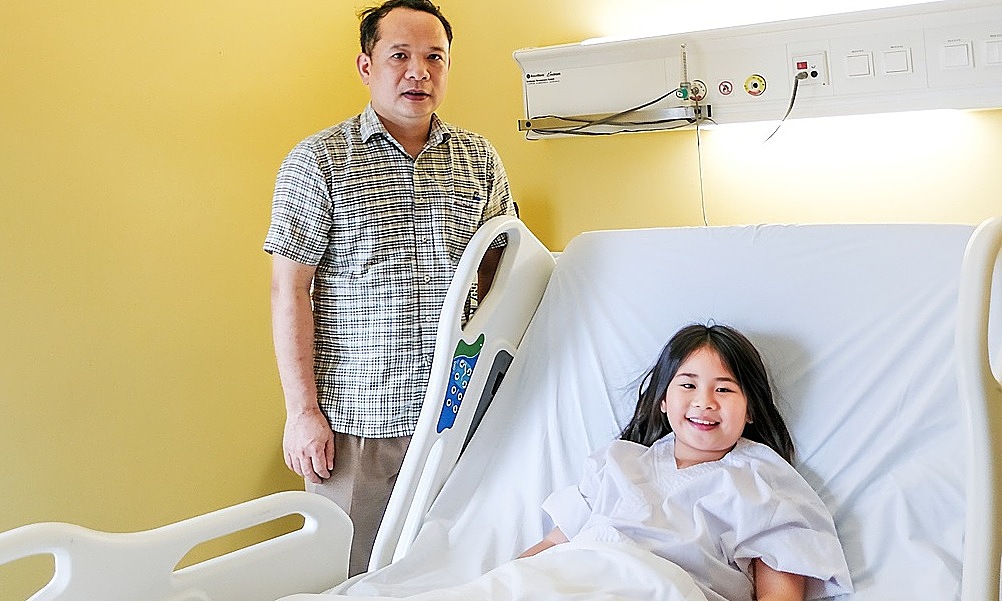
Doctors examining Mr. Tri after thrombolytic treatment. *Photo: Tam Anh General Hospital*
Mr. Tri was prescribed intravenous thrombolytic medication to restore blood flow, limit brain damage, and reduce the risk of sequelae. Doctors also administered anticoagulants and managed his blood pressure and blood sugar with subcutaneous insulin injections. After 5 days of treatment, Mr. Tri’s vision improved significantly. He experienced no limb weakness or paralysis, and his NIHSS score decreased to 0, indicating no remaining signs of neurological deficit, allowing him to resume normal activities.
"The risk of recurrent stroke remains if Mr. Tri does not effectively manage his risk factors," said Dr. Truc. She added that patients need to maintain long-term blood sugar control, as persistently high HbA1c increases the risk of vascular damage and cardiovascular or cerebrovascular events.
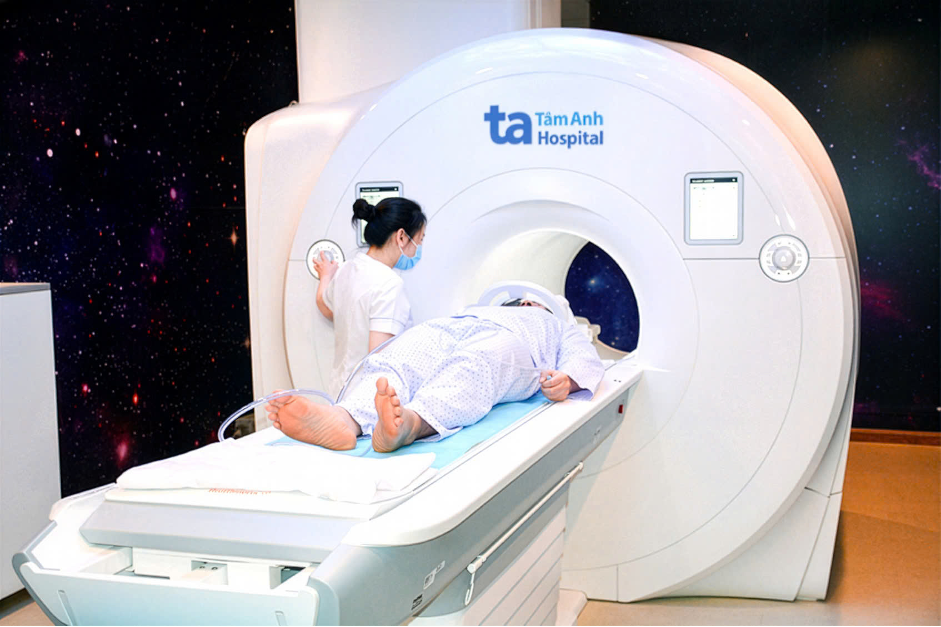 |
3 Tesla MRI helps screen for and detect brain lesions and vascular abnormalities associated with stroke risk. *Photo: Hospital provided*
According to Dr. Truc, in individuals with long-standing diabetes like Mr. Tri, blurred vision symptoms are often mistaken for diabetic eye complications. This can cause patients to delay seeking medical attention, potentially missing the "golden hour" for treatment. Stroke does not always manifest with facial drooping, speech difficulty, or limb weakness or paralysis. For example, damage to the occipital lobe, the brain region responsible for visual processing, can cause patients to experience only visual disturbances, such as blurred vision or partial field of vision loss.
Individuals with diabetes, hypertension, dyslipidemia, obesity, atrial fibrillation, or a history of stroke must effectively manage their underlying conditions. This includes adhering to prescribed medications, attending regular follow-up appointments, and undergoing medical examinations as advised by their doctor. Early detection and control of risk factors help reduce the likelihood of future strokes.
If someone suddenly experiences facial drooping, weakness or numbness on one side of the body, speech difficulty or slurred speech, blurred vision or partial vision loss, dizziness, loss of balance, or an unusually severe headache, they should be taken to a medical facility capable of providing stroke emergency care or 911 should be called, even if the symptoms are mild or improve on their own.
Patients with ischemic stroke who receive early detection and timely intervention have a higher chance of recovery and a reduced risk of post-stroke sequelae.
Trong Nghia
| Readers can ask questions about neurological conditions here for doctors to answer. |