


ThS. Doctor Nguyen Huu Hieu, from the Pediatrics Department at Tam Anh General Hospital Hanoi, diagnosed 13-year-old Cuong with acute bronchitis and an allergic rash due to infection. Upon admission, the boy had a mild fever of 37.5 degrees Celsius, a productive cough, a red throat, and bronchial rales in both lungs. His CRP inflammatory marker was significantly elevated.
Before being admitted to the hospital, Cuong's family initially believed he had a simple allergy and administered desloratadine. Following this, the boy became restless, and his cough progressively worsened.
Doctor Hieu explained that typically, children with bronchitis exhibit respiratory symptoms. However, in Cuong's case, the pathogen triggered a systemic immune response beyond the respiratory tract. Instead of solely producing antibodies to eliminate the pathogen, his body generated "immune complexes"—combinations of antigens (the disease-causing agents) and antibodies (produced by the body to fight them). These complexes circulated in his blood and deposited in the subcutaneous capillaries. This process caused a secondary inflammatory response, leading to vasodilation and increased vascular permeability, which manifested as hives, edema, and itching across his entire body.
"The itchy rash can only resolve once the underlying infection is treated", Doctor Hieu stated. He added that without appropriate treatment, Cuong's condition could prolong, with a risk of widespread infectious complications such as pneumonia or sepsis.
The medical team developed a treatment plan involving antibiotics and antihistamines to manage both the infection and the inflammatory reaction. After 48 hours of treatment, the patient's fever resolved, he was alert, and the hives completely subsided. His breathing stabilized, his lungs were well-ventilated, and he experienced no difficulty breathing. Cuong was discharged after five days.
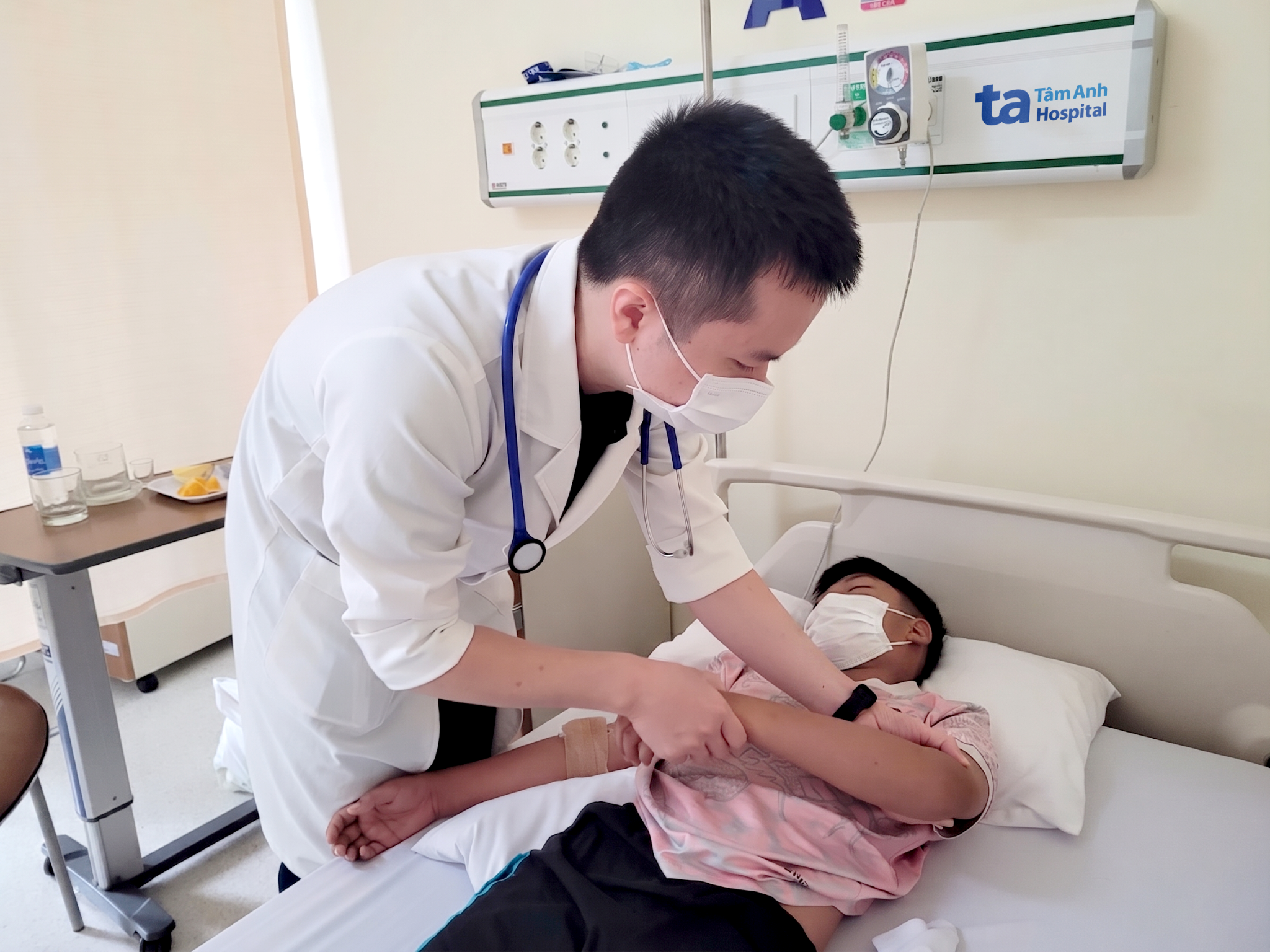 |
Doctor Hieu examines Cuong. Photo: Hai Au |
Doctor Hieu advises that allergic rashes due to infection in children are easily confused with simple allergies, viral rashes, hand-foot-mouth disease, or dengue fever. Parents should seek early medical attention if a child develops a systemic itchy rash accompanied by a high fever, severe fatigue, no improvement with allergy medication, or exhibits wheezing, abdominal pain, or joint pain. Self-medication or prolonging old prescriptions at home should be avoided to prevent delayed diagnosis and the risk of the illness progressing severely.
To prevent such conditions, parents should keep children warm, especially in the early mornings and at night. Ensuring a complete and balanced diet, encouraging physical activity, and adequate sleep are crucial for boosting immunity. Regular nasal and throat hygiene, sufficient water intake, and maintaining a well-ventilated, clean living environment are also important. Children should develop proper handwashing habits before eating, after using the restroom, and after touching public surfaces. Limiting unnecessary visits to crowded places and wearing appropriate masks when outdoors are also recommended.
Trinh Mai
| Readers can submit questions about neonatology here for doctors to answer. |


