


Following yesterday's announcement of free medical examination services, Doctor Ha Anh Duc, Director of the Department of Medical Examination and Treatment Management, elaborated on the implementation roadmap at a healthcare cooperation event on 13/5 in Hanoi.
Duc stated that medical professionals will perform internal medicine examinations, ear-nose-throat checks, blood and urine tests, and chest X-rays. This aims to facilitate early screening for common conditions such as diabetes, cardiovascular disease, and liver and kidney failure. Should any abnormalities be found, healthcare facilities will promptly guide and refer patients to specialized departments for advanced treatment.
The healthcare sector selected communal and ward health stations as primary service providers to ensure maximum accessibility for residents. If grassroots facilities lack equipment or personnel, higher-level institutions will provide direct support and professional assistance. Priority for the program's initial phase will be given to the 5% of the population without health insurance cards—many of whom have never had a regular check-up—as well as policy families and individuals who have rendered meritorious service.
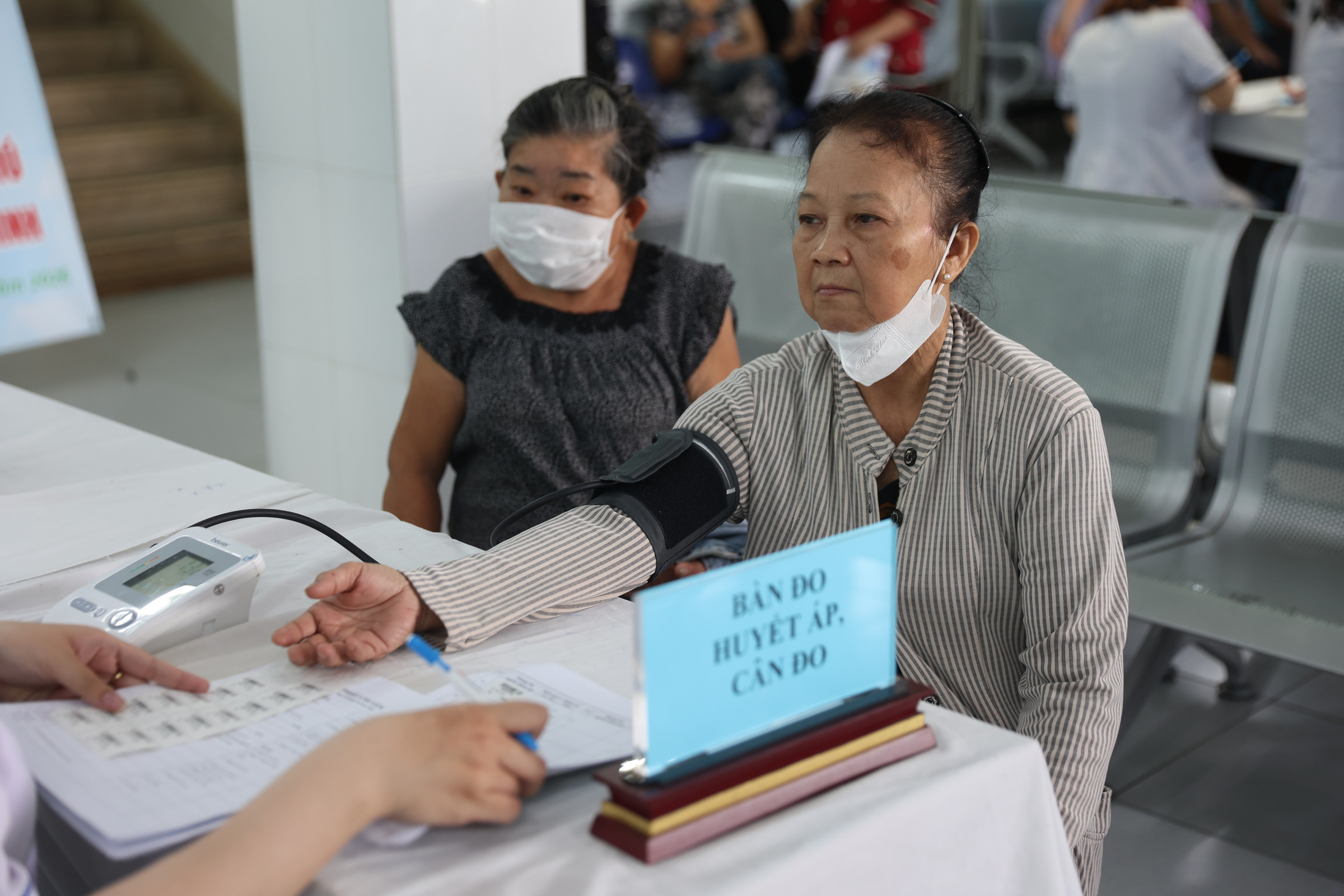 |
Residents receiving free medical examinations at Tang Nhon Phu ward health station, TP HCM, April 2026. Photo: Quynh Tran
Many localities have proactively initiated early efforts. For instance, TP HCM is planning examinations for approximately 15 million residents and workers within its jurisdiction.
To ensure sustainable funding for the program, the Ministry of Finance will allocate the national budget based on proposals from provinces and cities. Concurrently, the Department of Disease Control is calculating specific costs for inclusion in the implementation guidelines of the Law on Disease Prevention. Authorities will also leverage data gathered from these examinations to finalize nationwide electronic health records by the end of this year.
This widespread disease screening strategy is fundamental to Vietnam's goal of achieving basic hospital fee exemption by 2030. To bolster medical resources for this initiative, the Ministry of Health recently inked a five-year agreement with international partners. The agreement focuses on developing solutions for chronic disease management, digitizing medical records, and monitoring policy effectiveness in real-world settings.
Le Nga


