Mai's pain became more pronounced in the early morning and did not subside with pain medication, leading her to seek examination at Tam Anh Cau Giay General Clinic. A 3.0 Tesla MRI scan revealed a large tumor in the left frontal lobe of her brain.
Doctor Nguyen Duc Anh, Head of Neurosurgery and Spine Department, explained that the tumor was located in a "silent zone" of the brain. This is an area where tumors can grow unnoticed for many years, often without causing symptoms. Once they reach a significant size, these tumors increase intracranial pressure, leading to headaches. In contrast, tumors in functional areas such as the brainstem, occipital lobe, or temporal lobe can cause symptoms like weakness, blurred vision, or seizures even when they are just a few millimeters in size.
 |
Mai's brain tumor on an MRI scan. *Photo: Tam Anh General Hospital*
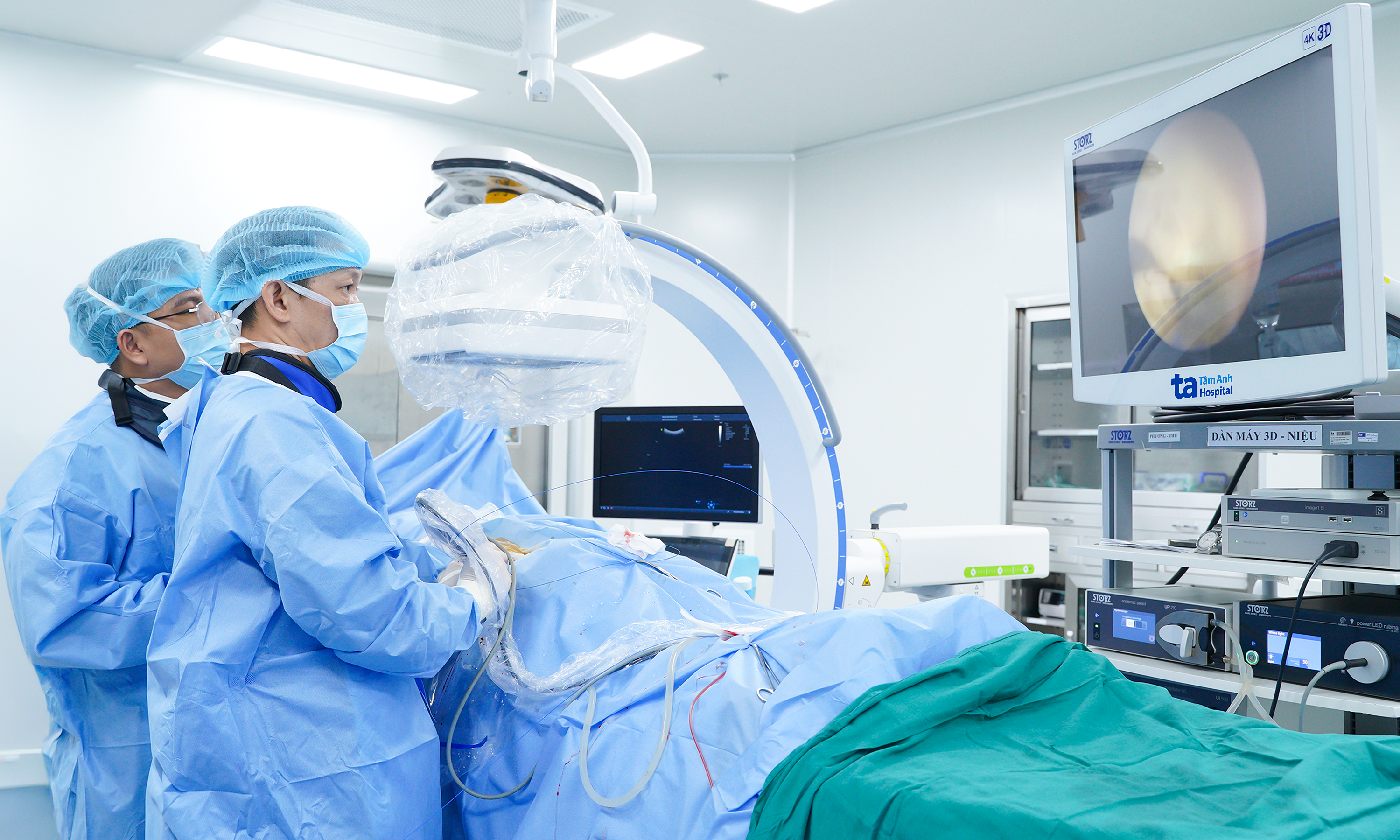
Doctor Duc Anh recommended microsurgery to remove the tumor. After administering endotracheal anesthesia, the surgical team precisely located the tumor and selected the craniotomy site. During the operation, an intraoperative neurophysiological monitoring system (IONM) recorded cortical electroencephalograms, helping the doctors clearly define the tumor's boundaries, distinguish it from functional areas needing preservation, and warn of risks to adjust surgical maneuvers accordingly.
Using an AI-powered surgical microscope, Doctor Duc Anh completely removed Mai's tumor with minimal invasiveness, reducing damage to healthy tissue and shortening operating time.
Post-surgery, the patient recovered quickly, without weakness or paralysis, exhibiting good symmetrical limb coordination, and was able to speak and eat. On the second day after surgery, Mai could sit up to begin rehabilitation. After 7 days, she was discharged and scheduled for follow-up appointments for adjuvant radiation therapy.
The post-operative pathological analysis confirmed an anaplastic astrocytoma, a grade III malignant glioma according to the World Health Organization (WHO) classification, which develops from star-shaped cells in the brain.
 |
Doctor Duc Anh (right) performing surgery on Mai. *Photo: Tam Anh General Hospital*
Master of Science Doctor Vuong Ngoc Duong, Deputy Head of the Radiation Therapy Department at Tam Anh Hanoi General Hospital, stated that molecular biological tests revealed the tumor cells had an IDH1 R132H mutation, which is linked to early tumor onset.
Four weeks after surgery, Mai's incision was dry and healed well, with no motor, language, or sensory sequelae. Doctor Duong prescribed a 3D CT simulation scan, fused with an MRI scan, to plan the adjuvant radiation therapy.
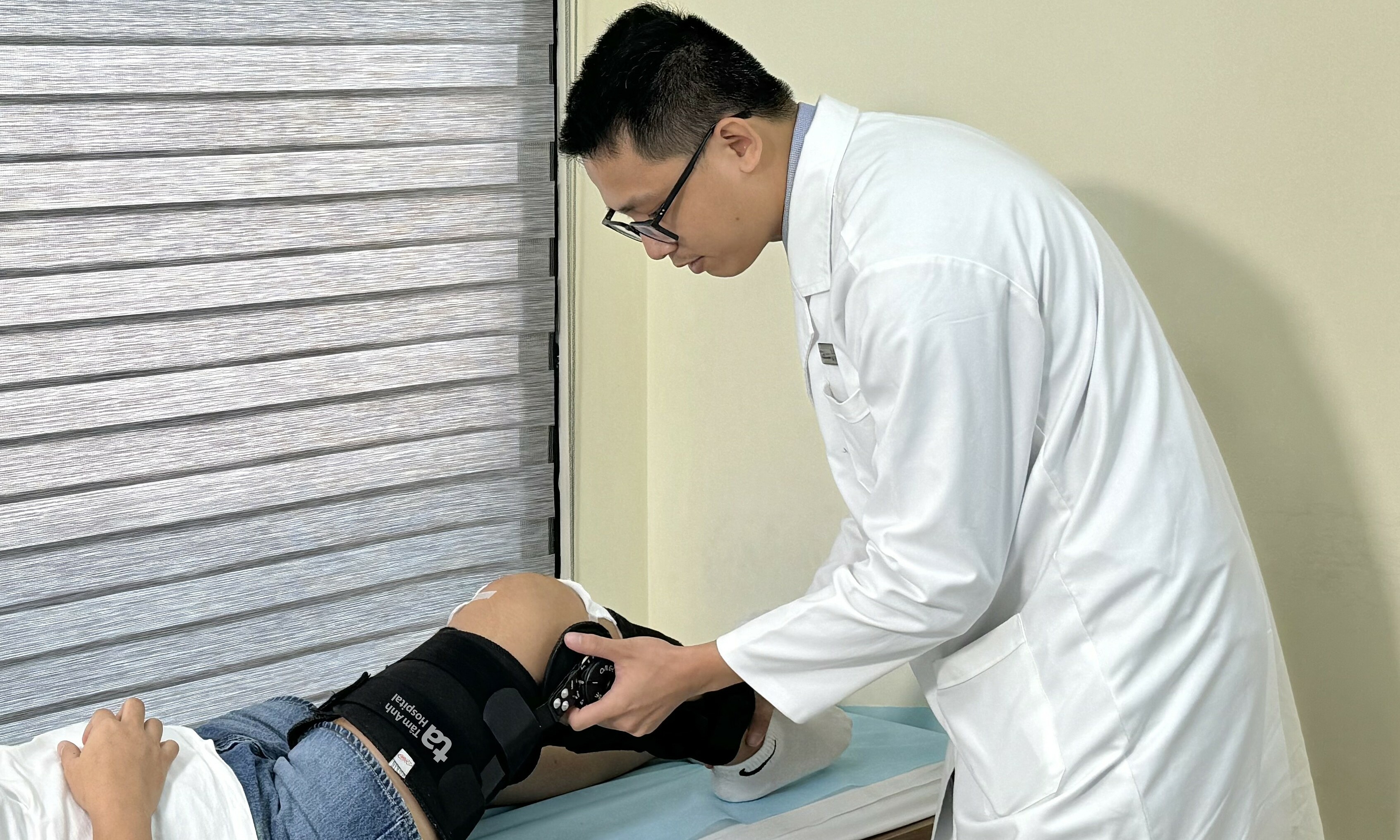
The patient underwent 30 sessions of volumetric modulated arc therapy (VMAT), a technique that precisely conforms the radiation beam to the target volume, destroying residual and invasive microscopic cancer cells while reducing the dose to surrounding areas to protect vital neurological structures.
Throughout the entire treatment course, the patient experienced no complications or side effects from the radiation therapy and continues with follow-up appointments and treatment according to the protocol.
 |
Mai receiving adjuvant radiation therapy. *Photo: Tam Anh General Hospital*
Doctor Duc Anh noted that headaches are a very common symptom, potentially caused by stress, migraines, sinusitis, or neurological conditions. However, headaches that persist for many consecutive weeks, gradually worsen over time, often occur in the early morning, and do not respond to pain medication may indicate a brain tumor.
Headaches caused by brain tumors are often accompanied by symptoms such as vomiting, seizures, blurred vision, double vision, or weakness. Nevertheless, when tumors develop in "silent zones," patients may experience subtle symptoms that are difficult to recognize, such as forgetfulness, decreased concentration, personality changes, or increased irritability.
When experiencing suspicious headache symptoms, patients should seek timely examination and diagnosis at a hospital. Early detection of brain tumors increases the likelihood of complete surgical removal, effective adjuvant treatment, and improved long-term prognosis for patients.
Thanh Long
*The patient's name has been changed
| Readers can submit questions about neurological diseases here for doctors to answer. |