Response:
Autologous fat grafting is an aesthetic procedure that involves removing excess fat from one area of the body, such as the abdomen or thighs, processing it, and then injecting it into other areas like the face, breasts, or buttocks. This technique aims to fill sunken areas, making the face appear fuller and more youthful. Because it uses the patient's own fat tissue, autologous fat grafting carries a low risk of allergic reactions and often provides more harmonious results compared to synthetic fillers.
HIFU, or high-intensity focused ultrasound, is a non-invasive skin rejuvenation technology. It utilizes high-intensity focused ultrasound waves to selectively target deep layers of the skin. The ultrasound energy is concentrated on the superficial musculoaponeurotic system (SMAS) layer, which includes facial muscles, fat tissue, collagen, and elastin fibers, as well as the dermis and hypodermis. These structures are crucial for supporting soft tissues in the face. At the points of impact, heat is generated, causing the target tissue to contract and stimulating the production of collagen and elastin. This process enhances firmness, reduces sagging, and diminishes wrinkles. HIFU provides natural lifting without surgery and typically requires minimal downtime.
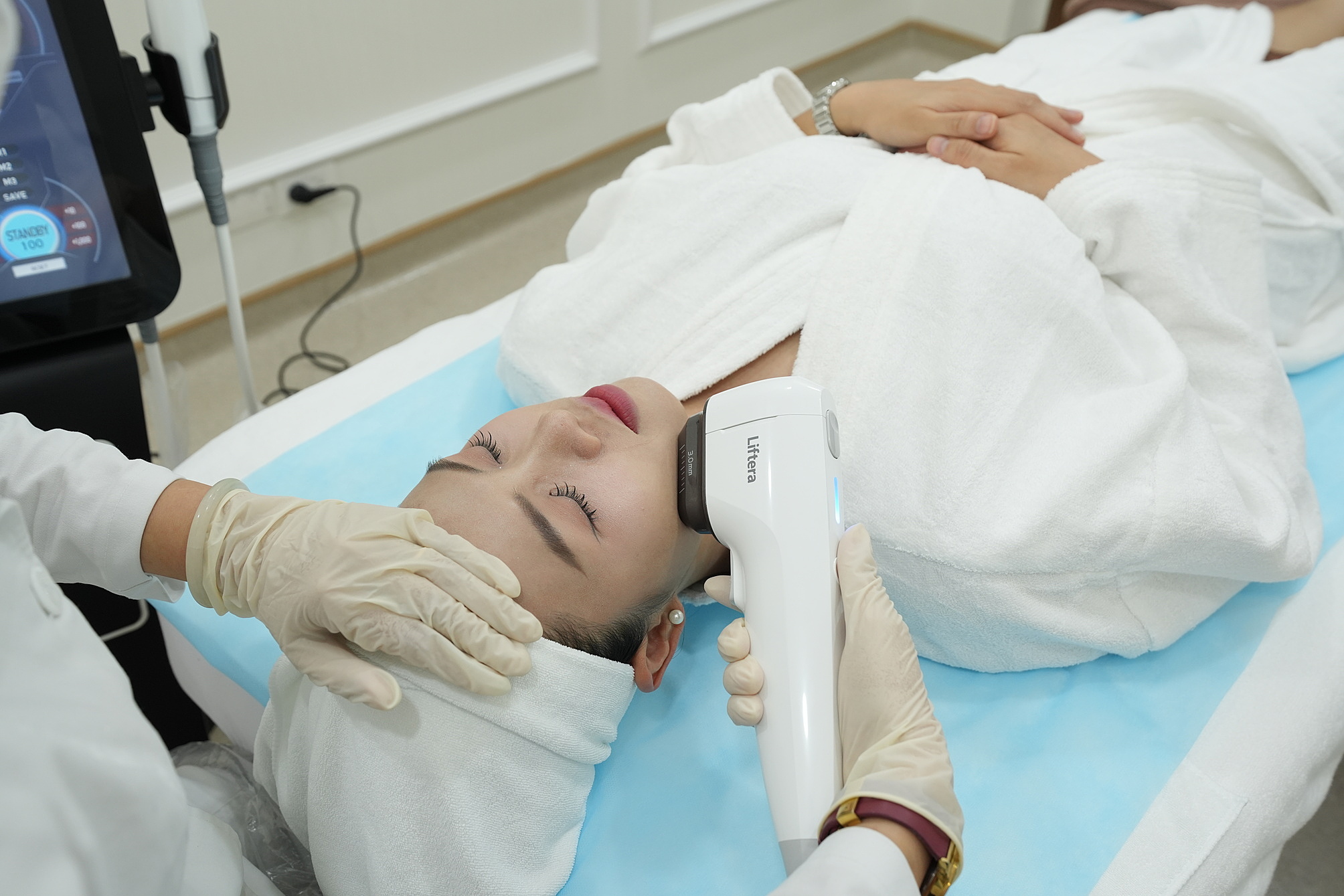 |
A doctor uses HIFU technology for skin rejuvenation on a woman. Illustration: Tam Anh General Hospital |
If you have undergone facial fat grafting, you can still have HIFU for rejuvenation, provided you adhere to the correct timing and professional guidance. After fat grafting, autologous fat cells require about 6 months to stabilize completely. If HIFU is performed too soon, the ultrasound energy acting on the deep layers of the skin could affect the survival of the fat tissue. Therefore, ensuring the grafted fat has fully stabilized before intervention is crucial.
Typically, doctors recommend waiting a minimum of 6 months after fat grafting for the fat tissue to reach a stable state. If some fat has dissolved over time or due to aging, HIFU can still be used to improve skin firmness without significantly impacting the results of the previous fat grafting, provided it is performed with proper indications and technique.
Before any intervention, you must consult a specialist for a thorough evaluation of the fat's location, volume, and skin firmness to identify areas that can be safely treated. Doctors often focus HIFU on sagging skin or wrinkles, avoiding areas where fat has not yet stabilized to minimize risks. After treatment, adequate moisturizing and sunscreen use are essential to help the skin recover well and optimize the lifting and rejuvenating effects.
Doctor of First Degree Specialization Be Thu Thuy,
Department of Aesthetics,
Tam Anh General Hospital Hanoi
| Readers can send questions about dermatological diseases and skin care here for a doctor's answer. |