Minh enjoys keeping dogs. His four dogs are fully vaccinated against rabies, are not allowed to roam freely, and their living area is cleaned daily. However, he has been bitten by his dogs multiple times while caring for them. The first time he was bitten on the leg, drawing blood, was in 2018 while cleaning the animal's enclosure. Due to the deep, bleeding wound, doctors prescribed a rabies immunoglobulin shot and 5 vaccine doses. Subsequently, he was bitten again in 2024 and 2025, and most recently on 8/1. After completing the full rabies regimen for the first bite, doctors prescribed 2 vaccine doses for each subsequent incident.
Each bite was unexpected, occurring during activities like feeding, cleaning the enclosure, or playing with the animals. He finds it inconvenient to get vaccinated and take time off work due to his injuries after each bite, but acknowledges it is necessary for his health protection.
 |
Free-roaming dogs without muzzles are a common cause of bites. *Photo: Dieu Thuan* |
Doan Phuong, 41, of Phu Thanh ward, Ho Chi Minh City, was bitten three times in 2025, requiring a total of 9 rabies vaccine doses: 5 for the first incident and 2 for each of the subsequent two incidents at VNVC Celadon. Phuong does not understand why he is repeatedly bitten by dogs. Many advised him against frequent rabies vaccinations due to concerns about neurological or memory effects. However, he diligently completed the full vaccination course because the bites were from three different dogs encountered while walking or exercising in the park. The dogs were of unknown origin and free-roaming, posing a high risk of rabies transmission. Before vaccination, he received thorough counseling on the vaccine's protective efficacy and manufacturing technology, and reported no health issues after the shots.
Doctor Tang Anh Dung, chief physician at VNVC Celadon Center, stated that in addition to the two cases mentioned, the VNVC Vaccination System has recently recorded numerous children and adults repeatedly bitten or scratched by dogs and cats, requiring multiple rabies vaccine doses. These include cases of individuals bitten three times in two months, or having received over 40 rabies vaccine doses over several years.
Based on pre-vaccination screenings, Doctor Dung observed that frequent dog bites often result from: owning many dogs or cats, teasing animals, starving them, being near them when they are panicked or scared, or competing for food. According to a study by scientists from the University of Liverpool (UK), published in the Journal of Epidemiology and Public Health, children under 15, males, and individuals with psychological instability are more prone to dog bites. Individuals with higher levels of neuroticism are 22% more likely to be bitten by a dog than those who are more emotionally stable. For example, such individuals might exhibit behaviors that attract a dog's attention and make them a target.
Therefore, Doctor Dung advises people not to tease or provoke animals. When encountering unfamiliar dogs, remain calm and keep arms and legs extended comfortably.
According to Doctor Dung, current rabies vaccines are produced from purified vero cells using a closed process, capable of activating the immune system to create antibodies that identify and destroy the virus, thereby protecting the body. With new technology, rabies vaccines do not affect memory or the nervous system. Administering rabies immunoglobulin and rabies vaccine after a bite or scratch from a warm-blooded mammal is the only preventive measure. Examination and prophylactic treatment for rabies with a vaccine must be initiated as soon as possible after a bite.
Currently, Vietnam has two types of rabies vaccines: Verorab (France) and Abhayrab (India), administered intramuscularly or intradermally. In cases of bites or scratches, for a first-time rabies vaccination, or if vaccination history is unknown, 5 doses should be administered intramuscularly on days 0, 3, 7, 14, and 28, or 8 doses intradermally on days 0, 3, 7, and 28 (two doses each time). For severe wounds, those near the central nervous system or extremities, or if the animal shows signs of rabies or cannot be observed, doctors may prescribe additional rabies immunoglobulin. If a full regimen was previously completed, subsequent bites or scratches only require two doses on days 0 and 3, without the need for immunoglobulin.
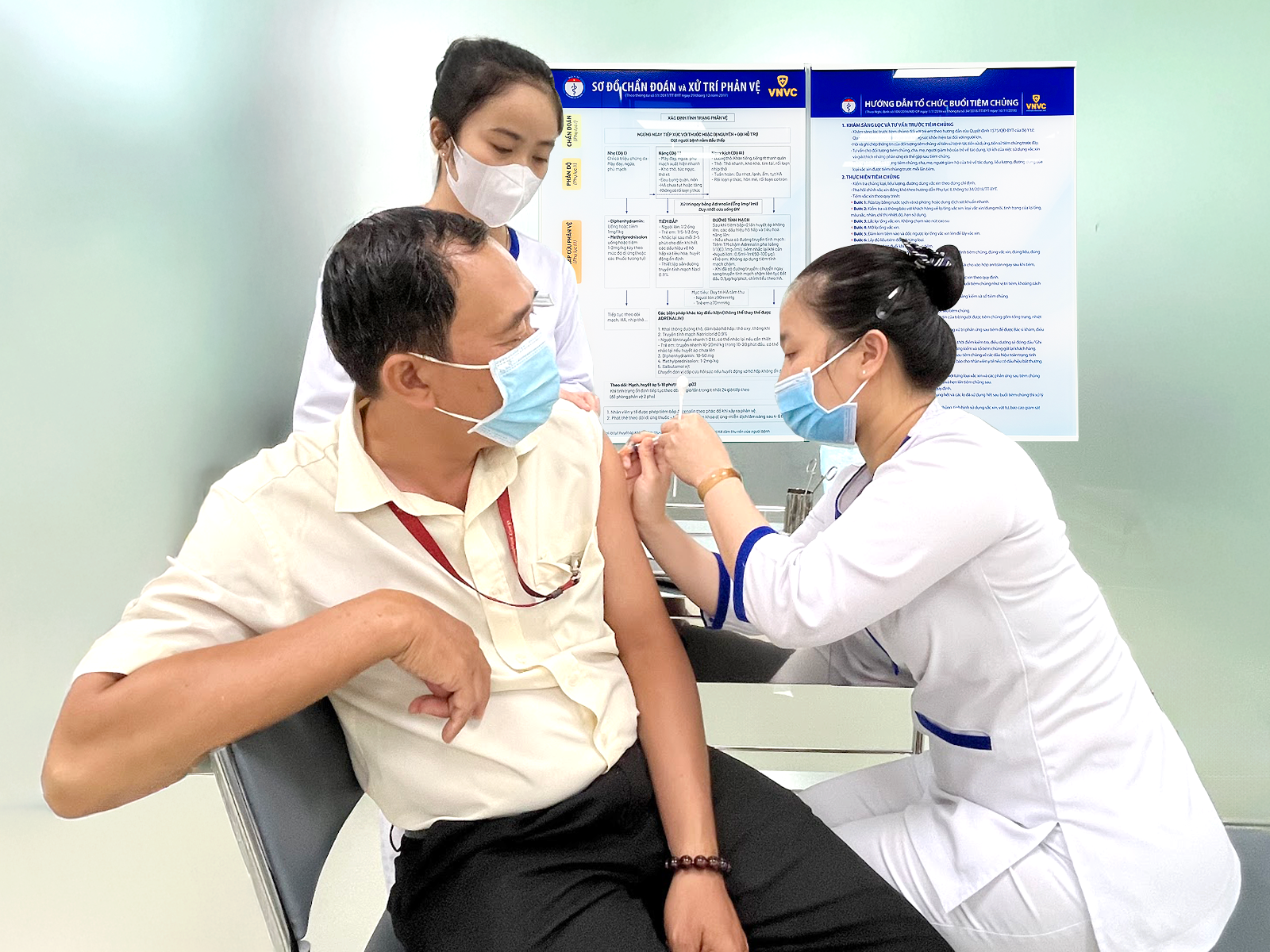 |
Patients receive rabies vaccinations after being bitten by dogs while walking, at the VNVC Vaccination System. *Photo: Dieu Thuan* |
Rabies vaccine can be administered for pre-exposure prophylaxis, with 3 doses given on days 0, 7, and 21 or 28, either intramuscularly or intradermally. If bitten, scratched, or licked, and a full regimen was previously completed, only two booster doses on days 0 and 3 are needed, without immunoglobulin.
Furthermore, Doctor Dung emphasizes the importance of proper wound care after dog or cat bites/scratches, following standard procedures: wash the wound thoroughly under running water for 15 minutes, then disinfect with 45-70% alcohol or iodine alcohol to minimize the amount of rabies virus at the bite site. People should absolutely not worsen the wound, apply folk remedies, or use traditional herbal medicine to treat rabies.
Rabies, caused by the rabies virus, has a nearly 100% fatality rate once symptoms appear. The rabies virus is present in the saliva of warm-blooded mammals such as dogs, cats, monkeys, rabbits, bats, rats, squirrels, and is transmitted to humans through bites, scratches, or licking of open wounds or mucous membranes of the eyes, nose, or mouth. Upon entering the body, the rabies virus replicates locally without causing symptoms. Only when the virus attacks the nervous system, brain, and spinal cord do patients exhibit symptoms such as hydrophobia, aerophobia, and photophobia.
Cong Nguyen