On 15/8, a representative from Lang Son General Hospital stated the child was admitted for emergency care 20 minutes after eating the longan. The peeled longan became lodged in the patient's trachea, leading to cardiac and respiratory arrest. Resuscitation efforts were unsuccessful.
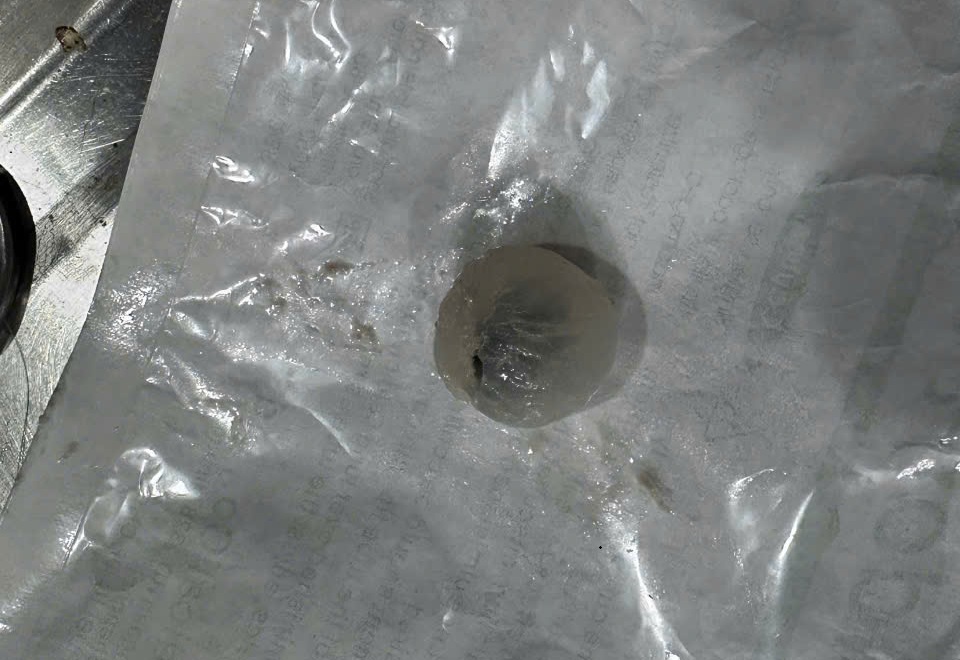 |
The longan fruit lodged in the patient's trachea. Photo: *Hospital provided* |
Airway foreign body obstruction is a common emergency, especially in children under five years old. Foreign objects can include food, fruit pits, candy, or small toys. When lodged in the larynx or trachea, these objects can cause respiratory and cardiac arrest within minutes if not managed correctly.
Simple first aid techniques exist for choking. However, many parents, unaware of proper methods, attempt to use their fingers to clear the child's throat. This can push the object deeper, scratch the throat, and further endanger the child by worsening breathing difficulties.
First aid for children under two years old who are choking:
- Place the child face down on the rescuer's forearm, with the head lower than the body. Securely hold the child's head and neck to prevent slipping. Then, use the heel of the other hand to deliver five strong blows to the child's back, between the shoulder blades.
- Next, turn the child onto the right arm and observe if their color has returned to pink, if they are breathing and crying. Simultaneously, check the child's mouth for any foreign objects and remove them. If the object remains or the child is still unable to breathe, perform five chest thrusts using two fingers. Press firmly on the epigastric region (above the navel and below the sternum) in a continuous downward motion. Repeat this action until emergency medical services arrive.
For children over two years old who are choking and still conscious:
- Have the child stand. The rescuer should stand behind the child or kneel, wrapping two arms around the child's front. Make one hand into a fist and place the other hand over it, positioning both on the child's epigastric region. Deliver five strong upward thrusts.
- If the child is still unable to breathe and the foreign object has not been expelled, continue performing this maneuver 6-10 times.
In cases where a child is choking and unconscious:
- Lay the child on their back. The rescuer should kneel, resting their two legs on either side of the child's thighs. Make two fists and press firmly upwards into the child's epigastric region five consecutive times.
- Administer two rescue breaths. If the foreign object is still not dislodged and the child is not breathing, continue first aid until the object is expelled and the child resumes crying.
Parents must observe and supervise young children, limiting their unsupervised access to toys, fruit pits, or small items. Additionally, it is essential to be equipped with basic first aid knowledge to handle such situations immediately before transporting the child to the nearest medical facility.
Thuy Quynh