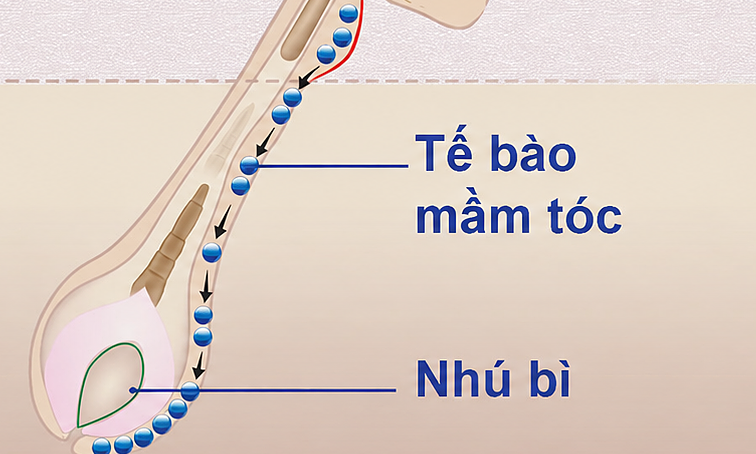
The Kiesselbach's plexus, also known as Little's area, is a delicate mucosal region located on the anterior-inferior part of the nasal septum, about 1-1,5 cm from the nostril opening. This area is a convergence point for numerous arteries, forming a rich network of blood vessels beneath the thin mucous membrane.
Master of Science, Doctor, Level one Specialist Truong Tan Phat, Head of the Ear, Nose, and Throat Department at Tam Anh General Clinic, District 7, explains that Little's area receives blood supply from connecting branches of both the internal and external carotid artery systems. These vessels lie superficially, with minimal support from cartilage and bone tissue, and have a dense concentration, making them prone to bleeding even from minor trauma like nose picking or dry air.
 |
Doctor Phat is consulting a patient. Photo: Tam Anh General Clinic, District 7 |
According to Doctor Phat, several factors contribute to nosebleeds during airplane takeoff and landing.
During takeoff or landing, cabin air pressure changes abruptly. Pressure drops significantly upon ascent and increases again during descent. This pressure differential stresses the small, superficial blood vessels in the Kiesselbach's plexus, causing them to distend and rupture, leading to nosebleeds.
Cabin humidity levels are typically low, ranging from 10-20%, significantly lower than indoor levels of 40-60%. Doctor Phat notes that dry air causes the nasal lining to lose moisture and elasticity. Even a slight pressure change can cause the superficial blood vessels in the Kiesselbach's plexus to crack or rupture, resulting in bleeding.
Individuals with a history of chronic rhinosinusitis or dry nose often have congested, swollen nasal linings and dilated blood vessels in the Kiesselbach's plexus, increasing their risk of inflammation. When exposed to dry cabin air, this already weakened mucosa becomes even more vulnerable. For those with a history of nosebleeds, healed mucosal damage often results in new blood vessels that are superficial, thin, and less resilient than the original ones, heightening the risk of recurrent bleeding with pressure changes.
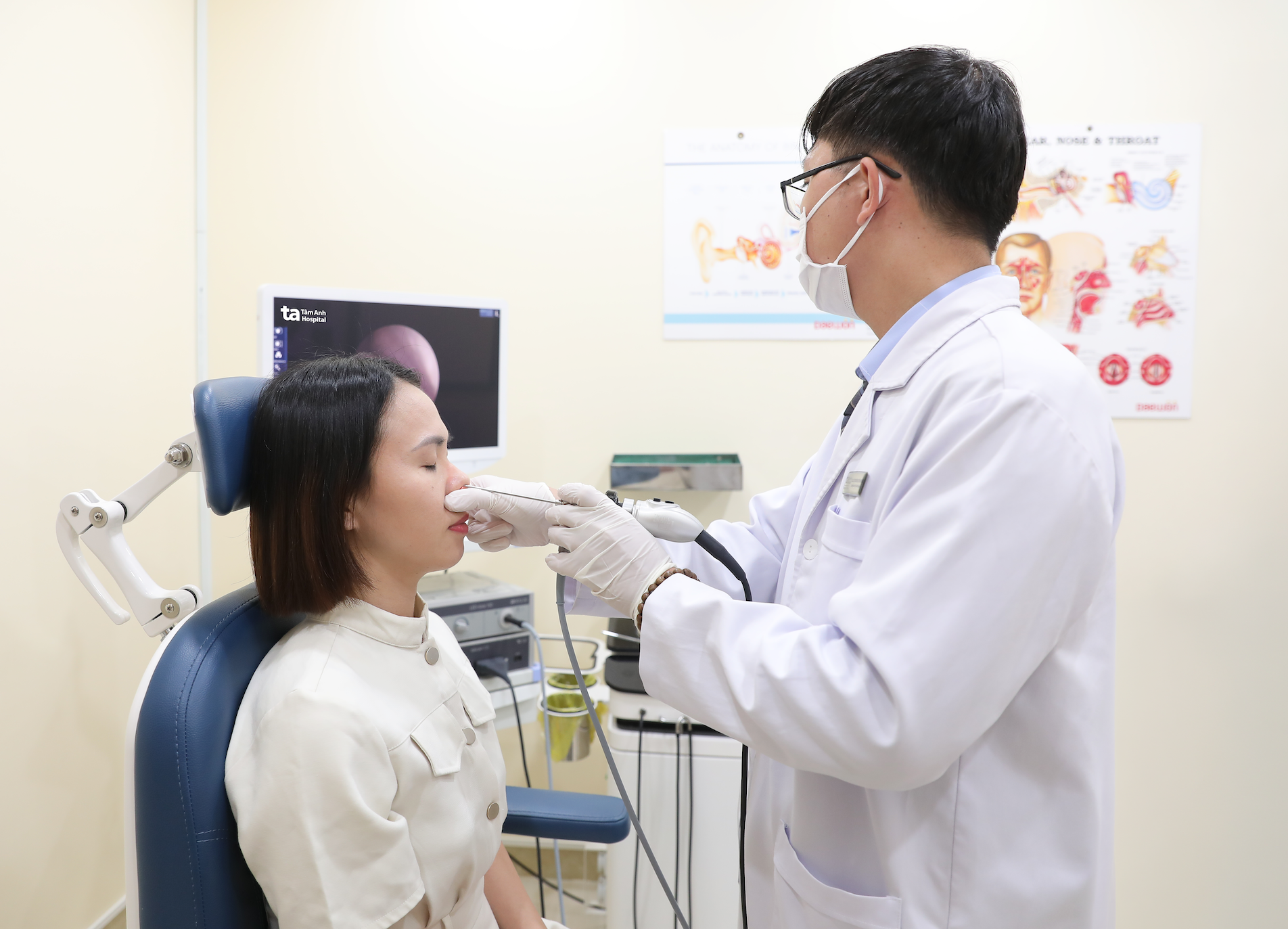 |
Doctor Phat is performing a nasal endoscopy on a patient. Photo: Tam Anh General Clinic, District 7 |
Nosebleeds can be categorized into anterior and posterior types. In posterior nosebleeds, blood flows down the throat instead of exiting through the nostrils. Swallowed blood, combined with the gag reflex stimulated by blood irritating the throat and stomach lining, can lead to vomiting blood.
To prevent nosebleeds during air travel, Doctor Phat advises staying well-hydrated before and during the flight to maintain nasal lining moisture. It is advisable to limit alcohol, beer, and caffeine before flying, as these habits can dehydrate the body. Daily nasal rinsing with physiological saline also helps moisturize and clean the nasal lining, reducing the risk of dryness and crusting during flights. If nasal dryness is experienced, alternating breathing through the mouth can reduce direct airflow over the sensitive nasal mucosa.
Patients with acute rhinosinusitis or allergic rhinitis should stabilize their symptoms according to their treatment plan and consult a doctor if adjustments are needed before their flight. Individuals using anticoagulants or antiplatelet medications should discuss their travel plans with an Ear, Nose, and Throat specialist for appropriate advice and preventive measures.
By Uyen Trinh
| Readers can submit questions about ear, nose, and throat conditions here for a doctor's response. |