Quang Dang experienced pain and fatigue in his right shoulder joint for nearly 10 years. This time, an MRI scan revealed a torn rotator cuff in his right shoulder. He experienced significant pain and was unable to move his shoulder and arm normally, especially when performing abduction and external rotation movements.
"This is a typical case of accumulated microtrauma in the joints during physical activity," stated Master, Doctor, Level I Specialist Ho Van Duy An from the Orthopedic Trauma Center, Tam Anh General Hospital, Ho Chi Minh City, adding that the inherent risk stemmed from Quang Dang's high frequency of movement.
For the shoulder joint, quick, forceful overhead arm movements are performed frequently. This, combined with an acromion that curved more significantly than in a normal person, caused the rotator cuff tendons to rub frequently and continuously against the edge of the acromion, eventually leading to tendon inflammation and shoulder tendon tears (subacromial impingement syndrome).
Initially, when muscles and tendons were strong enough, they could compensate for minor injuries, so movement ability was not significantly affected. However, over time, as injuries accumulated, the shoulder gradually weakened, causing pain during strenuous activity and restricting movement.
If Quang Dang's injury was not surgically treated early, it risked widening, reducing shoulder joint function, causing chronic pain, degeneration, and impacting his work as a dancer and choreographer.
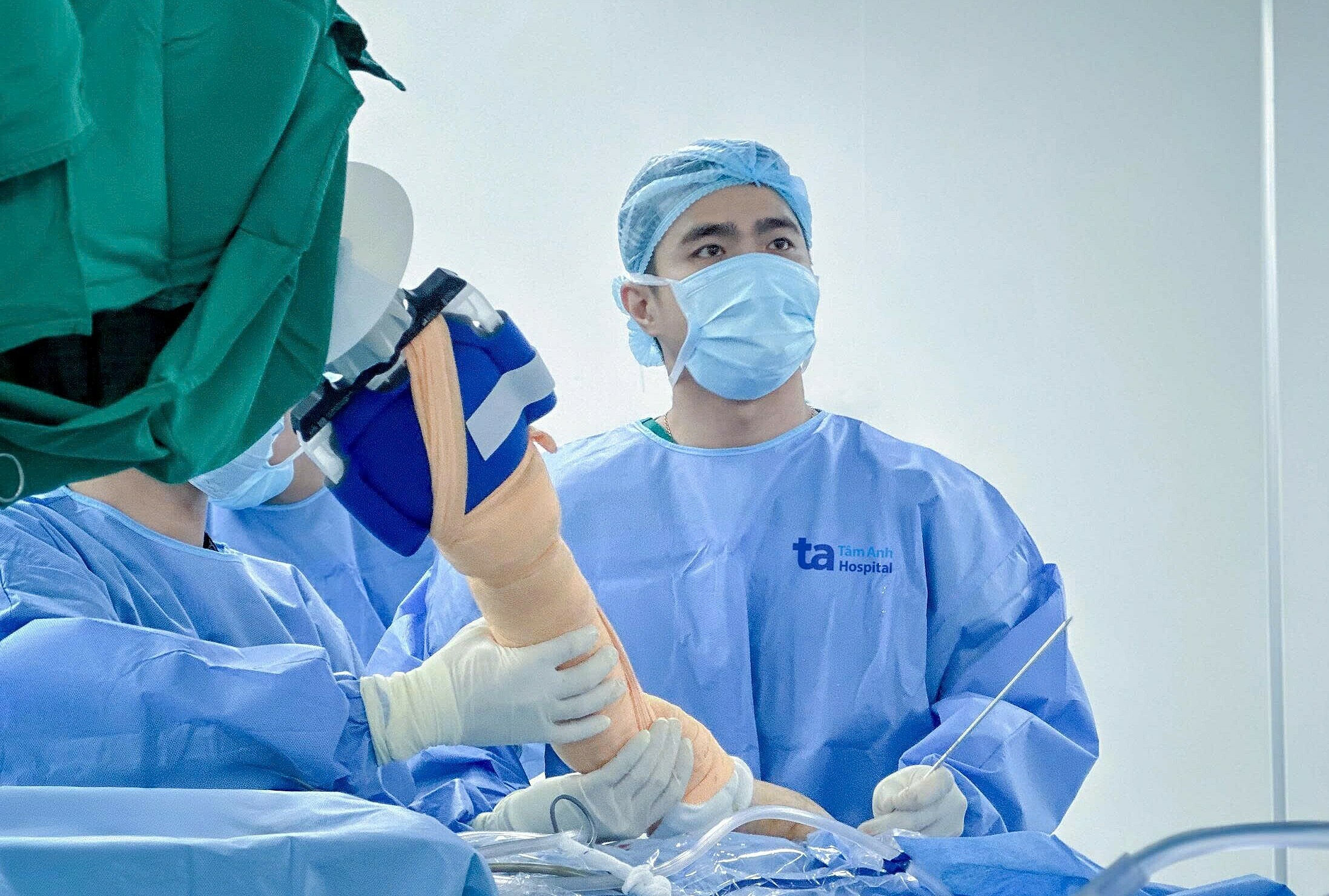 |
Doctor An performs shoulder tendon reconstruction surgery for the patient. Photo: Tam Anh General Hospital |
Doctors prescribed endoscopic surgery for the patient. They made several small access ports in the right shoulder, through which the acromion was flattened. Finally, the torn tendon was sutured using a double-row technique to ensure secure stitches and reduce the risk of re-tearing. This minimally invasive surgical technique preserves healthy tissues, limits unnecessary damage, and optimizes the shoulder joint's natural recovery of movement after surgery.
The male choreographer began physical therapy early. On the second day after surgery, he was no longer in pain, could make slight movements, and was preparing for discharge. During a follow-up visit one month later, Quang Dang was prescribed platelet-rich plasma (PRP) injections – a preparation made from the patient's own blood after processing – to stimulate faster and more stable tendon repair and healing.
Doctor An predicted that Quang Dang could resume training and return to his artistic work after 3-6 months.
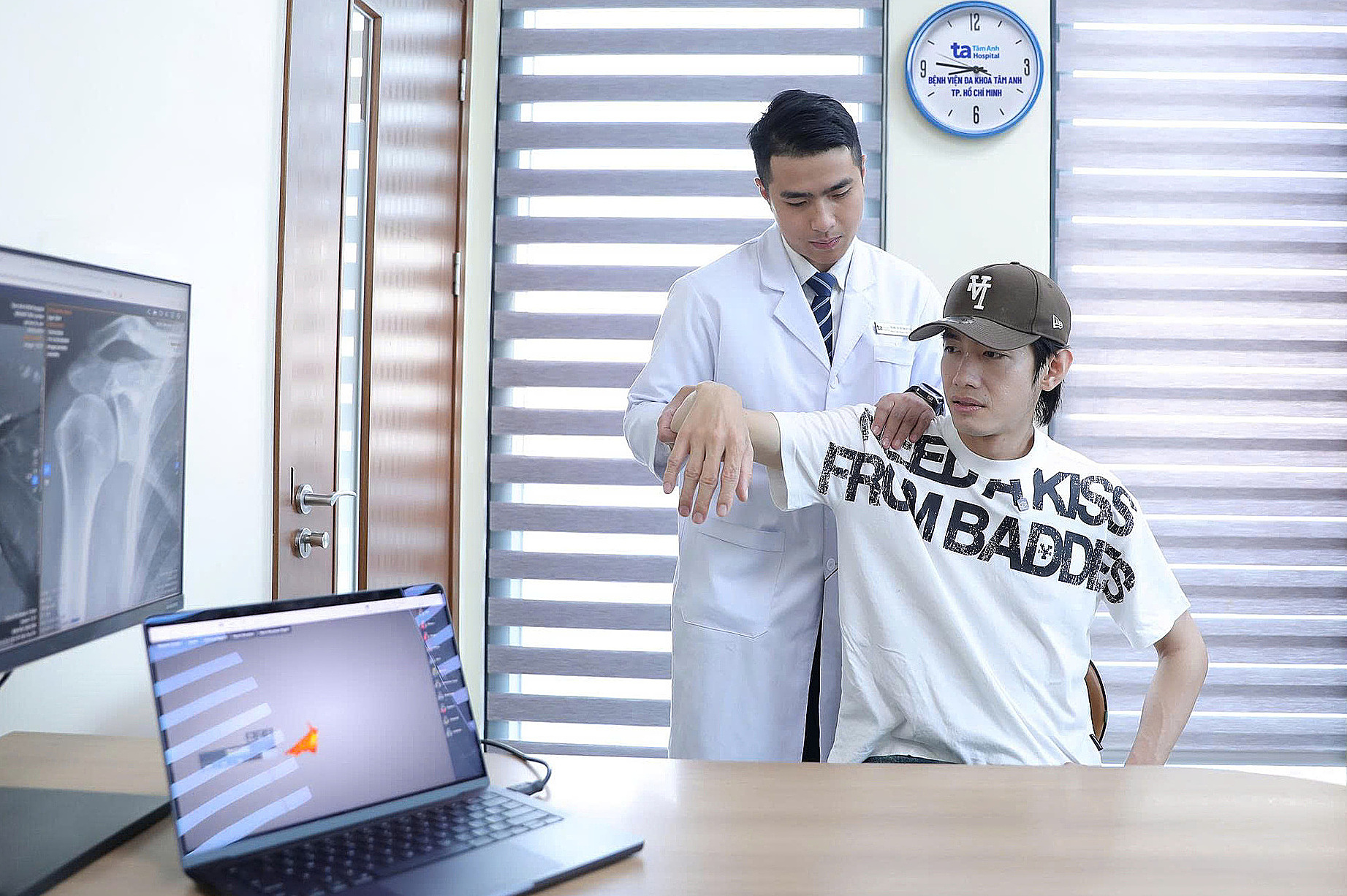 |
Doctor An assesses Quang Dang's shoulder joint recovery one month after surgery. Photo: Tam Anh General Hospital |
According to Doctor An, rotator cuff tears are often the result of overuse from activities like sports, heavy lifting, or severe impacts from accidents or falls. If the condition is mild and the individual has low to moderate activity demands, it can be treated with medication and physical therapy to reduce pain and improve shoulder function. However, rotator cuff tears typically have a very low rate of spontaneous healing.
To prevent this injury, doctors recommend maintaining proper posture in daily activities and performing exercises to strengthen shoulder blade muscles. Individuals with previous injuries should adhere to doctor's instructions, especially during rehabilitation exercises, to avoid returning to high-intensity activities too soon.
Quang Dang, born in 1989, is a dancer and choreographer who won runner-up in the 2012 So You Think You Can Dance Vietnam. He became widely known for his "hand-washing dance" during the Covid-19 pandemic, set to the song Ghen Co Vy.
Phi Hong