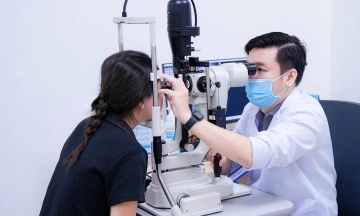
After the accident, Mr. Doan's right eye became red, blurry, and painful. He used unspecified eye drops for pain relief, but his vision only worsened. Recently, with his right eye unable to see clearly, the iris cloudy white, and severe pain, he sought medical attention.
Associate Professor Dr. Nguyen Thanh Nam, Director of the High-Tech Eye Center at Tam Anh General Hospital in Ho Chi Minh City, diagnosed Mr. Doan with a retinal detachment, glaucoma, and a swollen traumatic cataract in his right eye. His right eye had lost all light perception, indicating complete vision loss, while his left eye's vision was 5/10.
In-depth examination results revealed the right eye's lens was swollen, completely opaque white, with posterior vitreous hemorrhage (bleeding in the vitreous humor). His intraocular pressure measured 56 mmHg, significantly higher than the normal range of 11-21 mmHg.
According to Associate Professor Nam, a strong impact can suddenly deform the eyeball and create retinal tears. This can cause blood to leak into the vitreous chamber, leading to vision impairment or sudden vision loss, requiring emergency intervention within 24-72 hours. However, Mr. Doan's delayed hospital visit and treatment resulted in irreversible vision loss in his right eye.
In older individuals, the eye lens naturally begins to cloud. Eye trauma accelerates this process; internal proteins denature and absorb water, causing the lens to thicken and swell. When the lens enlarges, the anterior chamber angle narrows, impeding the flow of aqueous humor and triggering an acute angle-closure glaucoma attack. Patients experience severe eye pain, occasionally accompanied by headache and nausea, due to optic nerve damage.
Associate Professor Nam stated that a swollen traumatic cataract is one of the most challenging conditions to treat. The enlarged lens complicates surgery, increasing the risk of damage to eye structures and both intraoperative and postoperative complications.
Mr. Doan was prescribed specialized eye drops to stabilize his intraocular pressure. Subsequently, Associate Professor Nam performed phacoemulsification surgery to remove the damaged lens. However, an artificial intraocular lens was not implanted as vision could not be restored.
"The surgery at this point was not aimed at restoring vision but at alleviating pain and preventing complications from glaucoma," Associate Professor Nam explained.
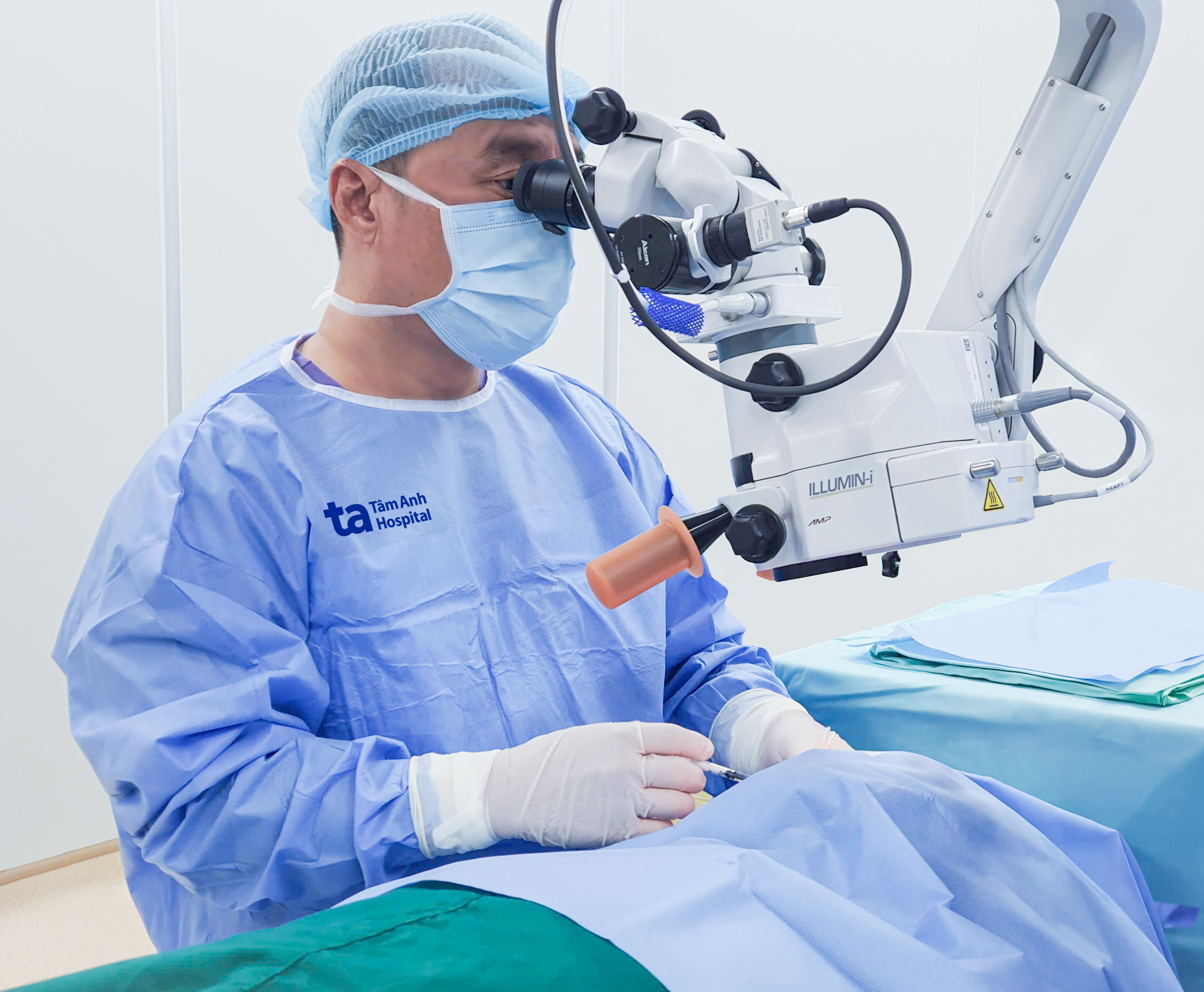 |
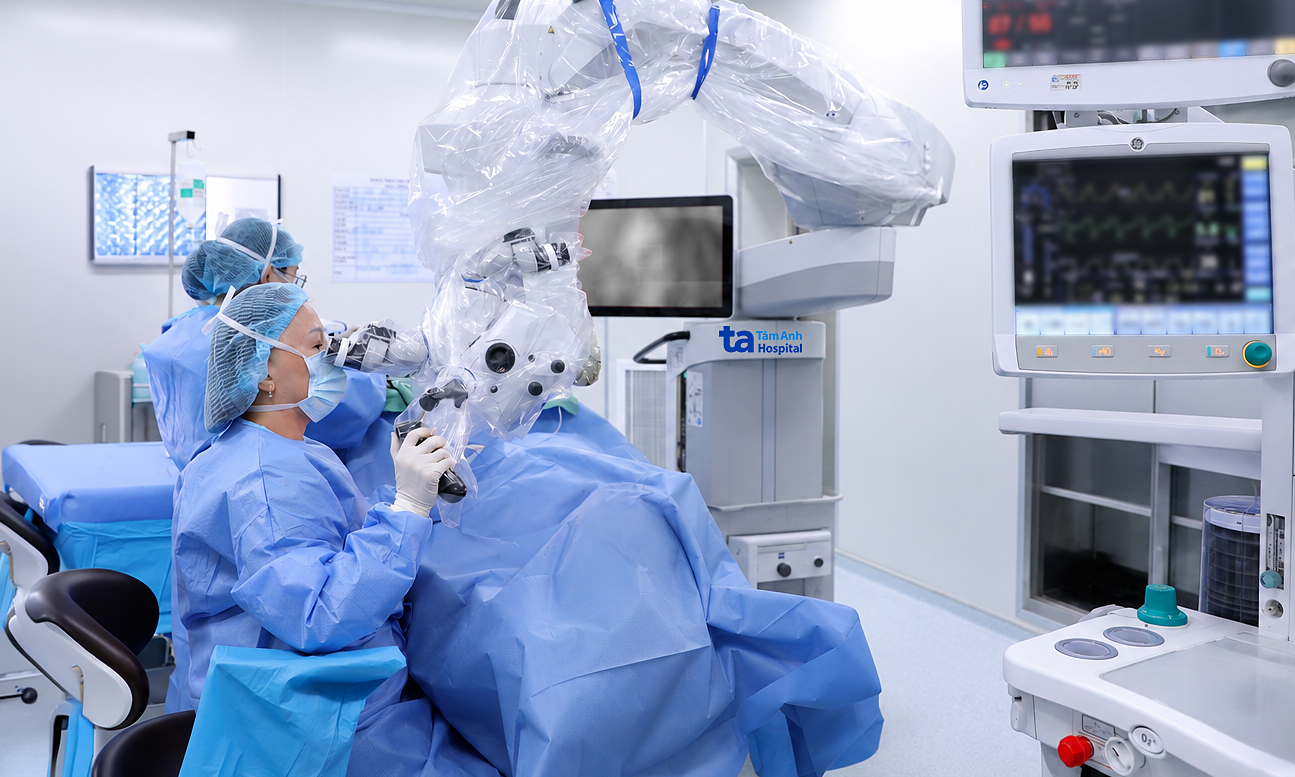
Associate Professor Nam performs surgery to remove Mr. Doan's damaged lens. *Photo: Tam Anh General Hospital* |
One week later, at a follow-up appointment, Mr. Doan's surgical wound was recovering well, and his eye was no longer painful or watery. The doctor advised the patient to care for his remaining eye and to have regular check-ups to monitor vision and screen for abnormalities.
A swollen traumatic cataract represents an advanced stage of cataract disease, typically associated with aging but also capable of occurring after eye trauma. Associate Professor Nam advises individuals who suffer head, face, or orbital area injuries to seek early examination at an ophthalmology department, even if symptoms are mild. Workers or those participating in outdoor activities with a risk of impact should use protective eyewear and gear to minimize eye injuries.
Ngoc Kim Tham
*Patient's name has been changed
| Readers can send questions about ophthalmological diseases here for doctors to answer. |