Ms. Kim's colonoscopy at Tam Anh General Hospital Ho Chi Minh City revealed a fungating tumor in her sigmoid colon. The tumor's surface bled easily and caused significant narrowing of the bowel lumen, preventing the endoscope from passing. A biopsy confirmed moderately differentiated adenocarcinoma of the sigmoid colon, stage 4C.
Doctor Pham Huu Tung, deputy director of the Center for Endoscopy and Endoscopic Gastrointestinal Surgery, stated that the cancer cells had metastasized to the liver and other locations, forming multiple secondary tumors. The presence of numerous lesions in the liver severely affected its function. Given the multi-organ metastasis, the patient was no longer a candidate for curative surgery.
According to doctor Tung, the tumor's growth within the colon lumen narrowed its diameter, obstructing stool passage. To push waste through the constricted area, the colon had to contract more forcefully, causing abdominal cramps, bloating, and constipation. If this condition persisted, prolonged stool retention could lead to partial or complete bowel obstruction.
Following a consultation, doctors decided to place an endoscopic metal stent to decompress the colon and restore digestive tract flow for Ms. Kim.
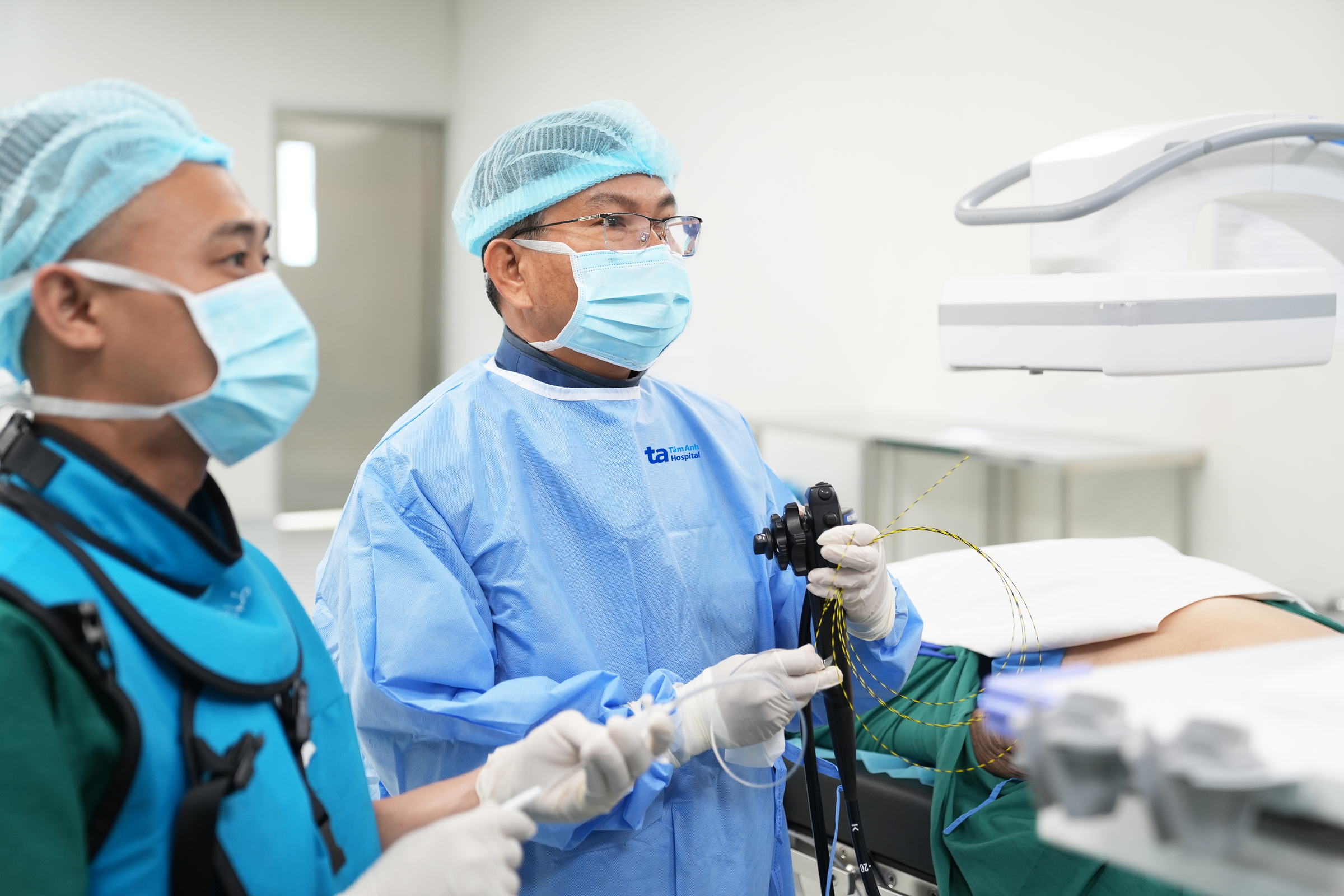 |
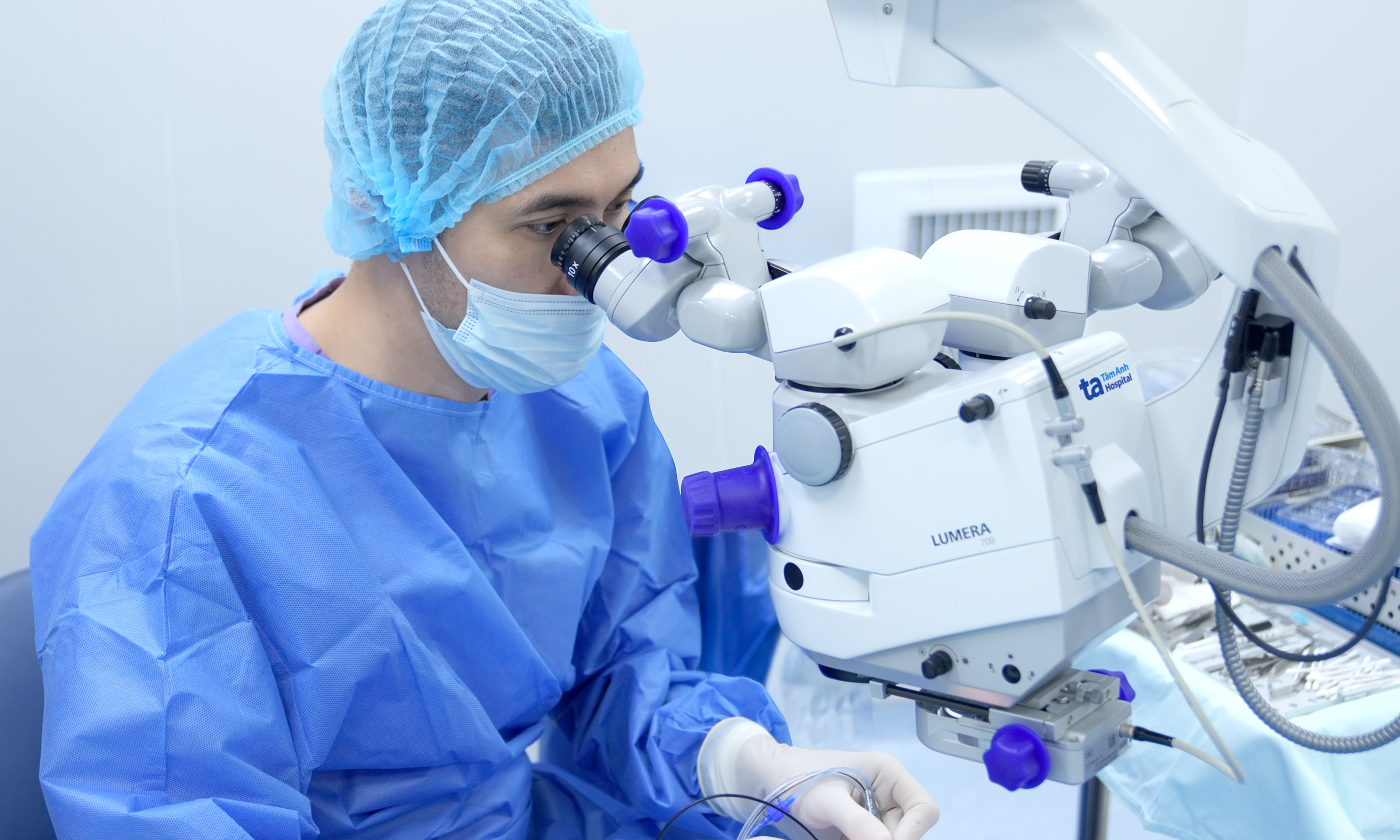
Doctor Tung placing a stent for Ms. Kim. *Photo: Tam Anh General Hospital* |
Doctors used a guidewire to pass through the narrowed area, then injected a contrast agent to identify a stricture approximately 6 cm long. A self-expanding metal stent, 22 mm in diameter and 120 mm long, was then placed under the guidance of a C-arm system (real-time X-ray imaging device). They further secured the stent with clips to minimize the risk of displacement.
Immediately after the procedure, Ms. Kim's abdominal pain decreased, her digestive function was restored, and she was able to eat normally.
According to doctor Tung, previously, late-stage colon cancer cases causing bowel obstruction often required an ileostomy or colostomy to divert stool. However, patients would then live with an artificial anus, which was difficult to care for, carried a high risk of infection, and reduced their quality of life. Endoscopic colon stent placement is less invasive, helps restore digestive flow, and avoids the need for an artificial anus.
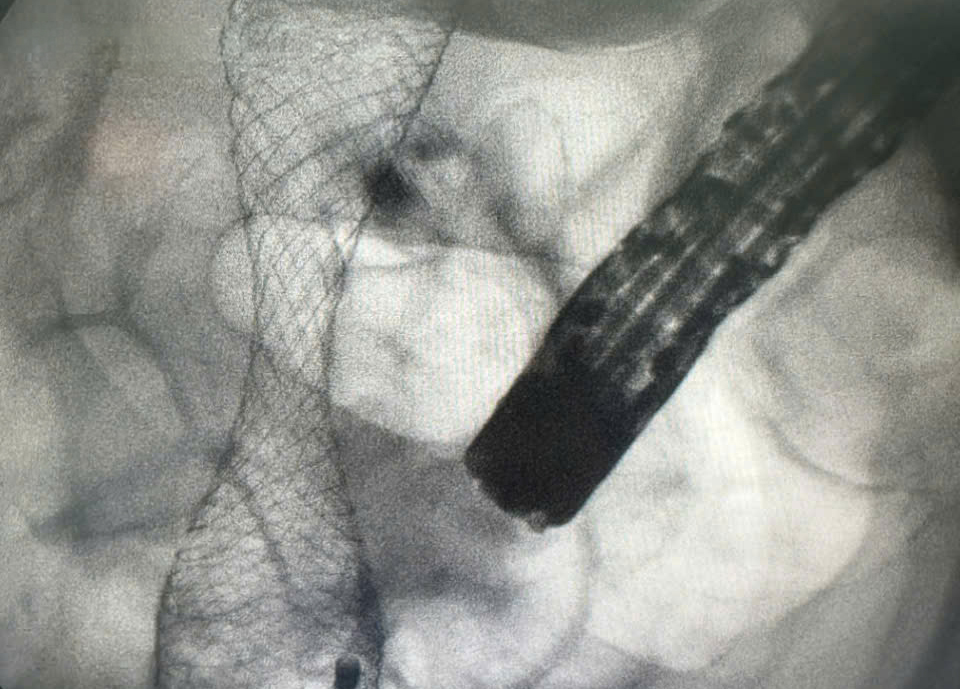 |
The metal stent segment placed in the bowel lumen has been reopened, restoring digestive flow. *Photo: Tam Anh General Hospital* |
Colorectal cancer is common and has shown an increasing trend in recent years. The disease often progresses silently with vague early symptoms, making it easily mistaken for common digestive disorders.
Doctor Tung advises patients experiencing symptoms such as: persistent constipation, changes in bowel habits, abdominal pain, bloody stools, or weight loss to seek medical examination for diagnosis. Individuals over 45 or those with a family history of colorectal cancer should undergo regular colonoscopy screenings as advised by a doctor. Consuming plenty of fiber, green vegetables, and fruits, along with adequate hydration; and limiting red meat, processed foods, tobacco, and alcohol can help reduce the risk of developing the disease.
Quyen Phan
* Patient's name has been changed
| Readers can send questions about digestive diseases here for doctors to answer. |