This is a common phenomenon, especially among middle-aged and older individuals. Many people notice that their knee, hip, wrist, or finger joints often ache, stiffen, or become more difficult to move before rain or when the seasons change. Repeated symptoms lead many to believe that joint pain can "predict" the weather.
In reality, joints do not "predict the weather." Weather changes only make existing joint damage or inflammation more apparent. This phenomenon may relate to changes in atmospheric pressure, temperature, and humidity. When rain is approaching, atmospheric pressure often decreases, causing joint capsules, ligaments, and surrounding tissues to expand slightly. This stimulates sensitive areas within already damaged or degenerated joints, causing pain to emerge or intensify. Concurrently, falling temperatures and rising humidity can cause muscles around the joints to contract more, making the sensation of pain and joint stiffness more pronounced.
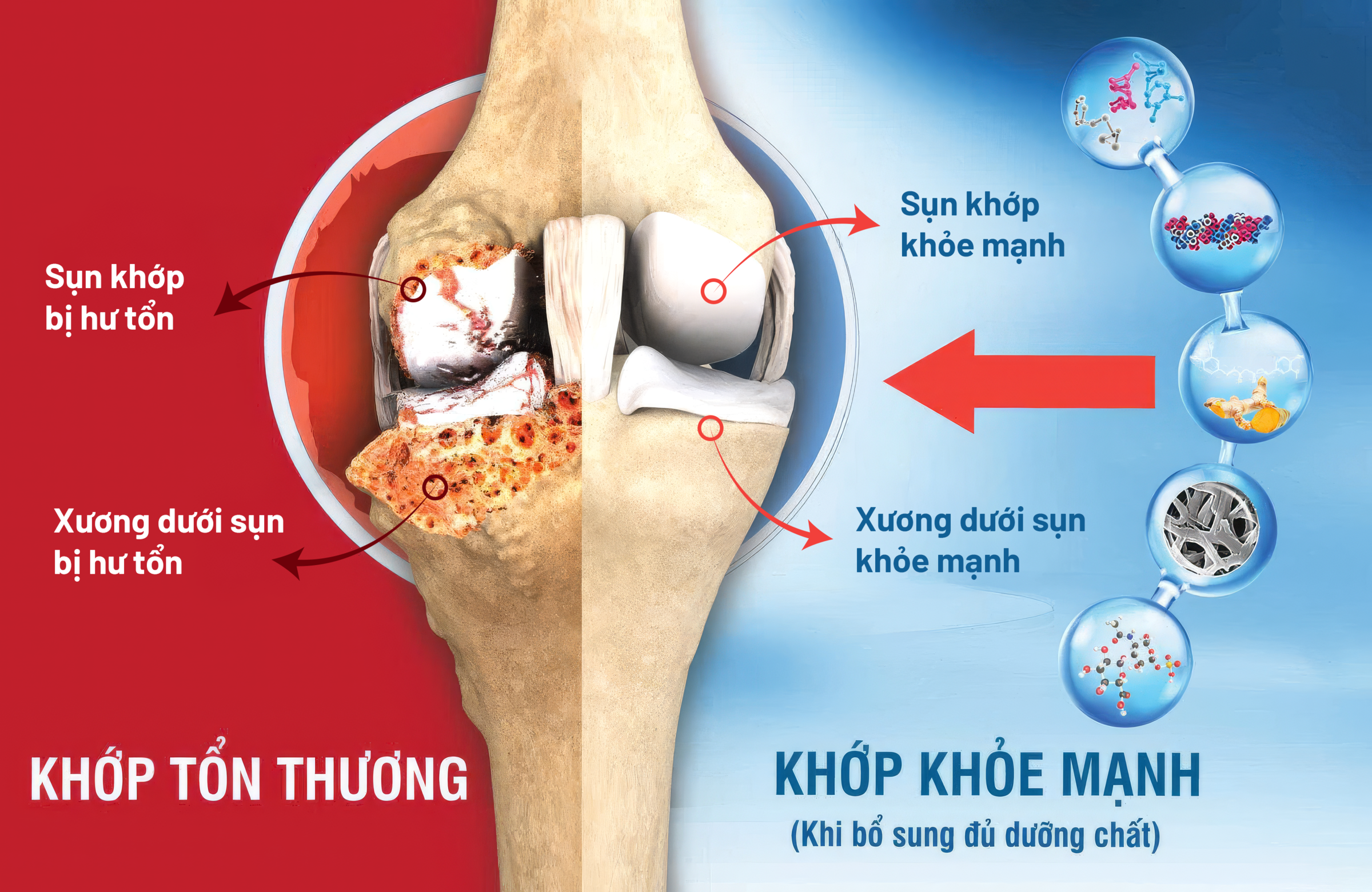 |
Illustration of a healthy joint and a joint degenerating over time. Photo: Eco Pharmaceutical Joint Stock Company
Among all joints, the knee joint is often the most noticeably affected because it bears significant weight when standing, walking, and climbing stairs. In individuals with knee osteoarthritis, the cartilage layer is worn or damaged, and its surface is no longer smooth. Consequently, the joint's ability to absorb force and reduce friction diminishes, making its internal structures more sensitive to environmental changes.
Individuals with osteoarthritis or arthritis may perceive pain more distinctly when atmospheric pressure changes. However, the degree of impact varies among people. Those with healthy joints typically perceive these changes less or do not experience pain during weather shifts.
If pain repeatedly occurs with seasonal changes, accompanied by morning stiffness, clicking sounds during movement, limited mobility, swelling, or persistent pain, it is advisable to seek early medical attention. These could be signs of osteoarthritis, arthritis, or cartilage damage.
Pain can be alleviated by applying hot or cold compresses, gentle massage, soaking feet in warm water before sleep, and engaging in appropriate exercise. Supplementing with specialized essences such as: undenatured collagen type 2, hydrolyzed collagen peptide, eggshell membrane, turmeric root extract, and chondroitin sulfate can help increase joint flexibility, contribute to cartilage regeneration, reduce inflammation, and slow the progression of osteoarthritis.
Doctor Hoang Quyet Tien
Medical Information Center
Tam Anh General Hospital, TP HCM
| Readers can submit questions about musculoskeletal diseases here for a doctor's response. |