An MRI scan revealed Ms. Huong's liver tumor measured 56x63x51 mm and had invaded the portal vein. Despite residual transarterial chemoembolization material, blood vessels supplying the tumor continued to proliferate. Her alpha-fetoprotein (AFP) liver cancer marker was over 31,000 ng/ml, more than 3,000 times the normal level.
Master, Doctor Nguyen Thanh Trung, from the Oncology Department at Tam Anh General Hospital Hanoi, diagnosed Ms. Huong with advanced-stage liver cancer that had become resistant to local treatments. He explained that methods like transarterial chemoembolization and radiofrequency ablation focus on specific tumor sites but do not prevent progression. He emphasized the need to transition the patient to systemic treatment before severe liver failure occurs, to avoid missing a crucial treatment window and increasing the risk of metastasis.
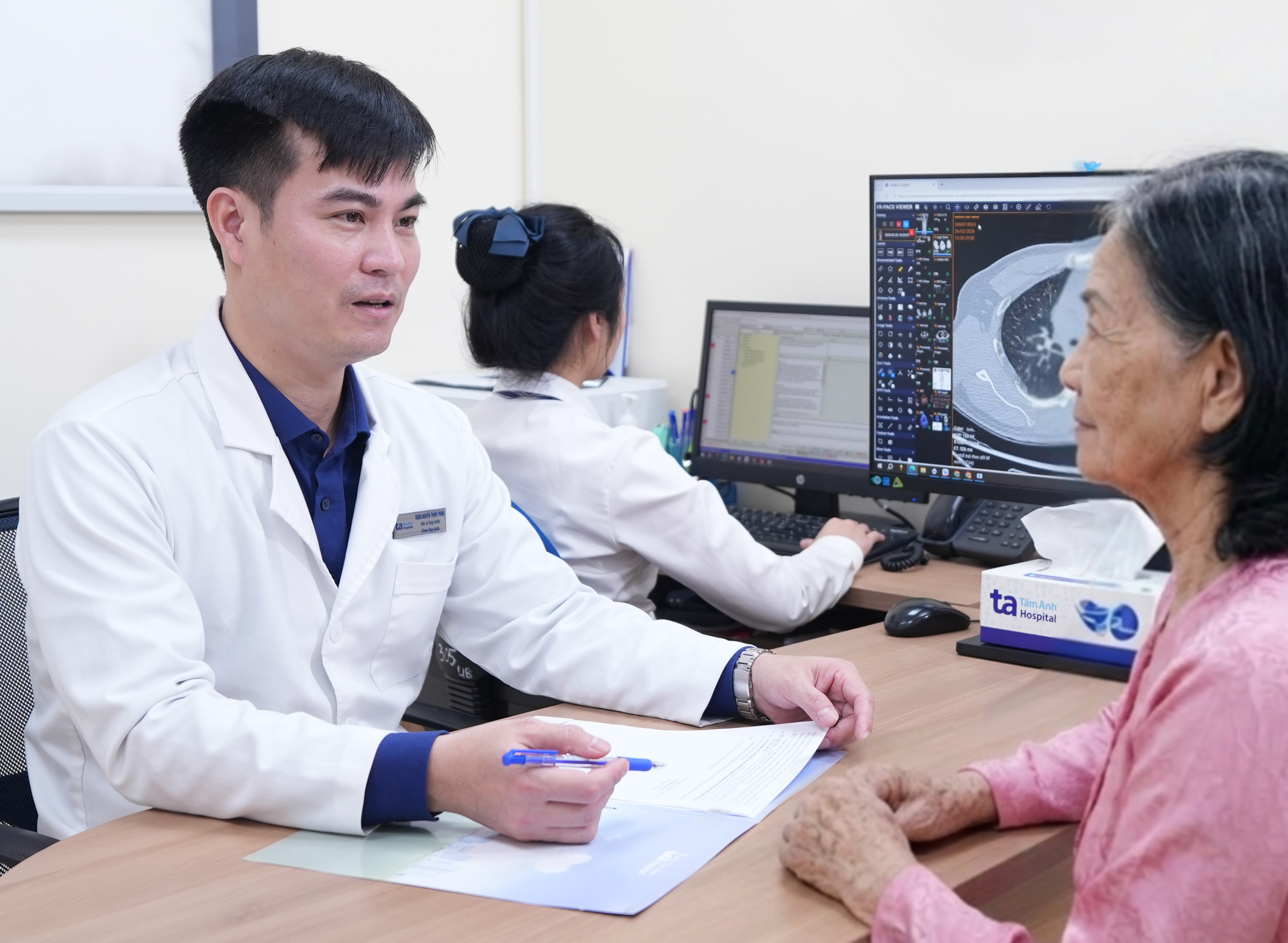 |
Doctor Trung consults with Ms. Huong. Photo: Tam Anh General Hospital |
Ms. Huong was advised to undergo combination treatment involving targeted and immunotherapy infusions. Doctor Trung explained that targeted therapy attacks vascular growth factors, preventing the liver from forming new blood vessels and cutting off the tumor's nutrient supply. Meanwhile, immunotherapy deactivates the PD-L1 protein on cancer cells, enabling the immune system to recognize and destroy them.
After three rounds of treatment, blood tests showed Ms. Huong's alpha-fetoprotein (AFP) liver cancer marker had decreased to approximately 7,000 ng/ml. "After 6 rounds of treatment, AFP levels were over 200 ng/ml, representing a 99% reduction, indicating a very good patient response", Doctor Trung stated.
Liver cancer is the second most common cancer in Vietnam, with over 24,500 new cases recorded in 2022. It is also the leading cause of cancer-related deaths, accounting for more than 23,300 fatalities annually, which represents 19,4% of all cancer deaths, according to Globocan statistics from 2022.
The disease often progresses silently, with no symptoms in its early stages. By the time symptoms such as jaundice, abdominal pain, or impaired liver function prompt a medical visit, the disease has typically reached an advanced stage. At this point, treatment becomes challenging, and the prognosis is poor.
Doctor Trung advises healthy individuals to undergo annual health check-ups, including liver ultrasounds, to detect abnormalities early. For those in high-risk groups for liver cancer, such as individuals infected with hepatitis B virus, those with cirrhosis, heavy alcohol consumers, or smokers, doctors may recommend additional alpha-fetoprotein (AFP) liver cancer marker tests for screening. Early detection of liver cancer offers patients more treatment options, including less invasive methods like transarterial chemoembolization and radiofrequency ablation.
In later stages, when the disease becomes resistant to local treatments, doctors must use systemic regimens. Currently, the combination of new-generation immunotherapy and targeted therapy helps patients with liver cancer achieve better disease control and improves prognosis compared to older regimens that relied solely on single targeted drugs, according to Doctor Trung.
Thanh Long
*Patient's name has been changed
| Readers can send questions about cancer here for doctors to answer. |