Doctor Duong Quoc Trung, from the Aesthetics Department at Tam Anh General Hospital Hanoi, states that if a device's energy level is not set appropriately for the skin type, especially for individuals with darker or sensitive skin, the heat generated can damage the epidermis, leading to post-inflammatory hyperpigmentation. Here are the signs to recognize this condition:
Prolonged skin redness and burning
Mild redness around hair follicles and slight swelling for a few hours is normal, indicating a treatment response. However, prolonged redness and burning for several days, accompanied by stinging or a burning sensation, signals that the energy used was too high, the pulse duration was unsuitable for the skin type, or insufficient cooling during treatment. This can cause post-inflammatory hyperpigmentation and damage to the skin's protective barrier.
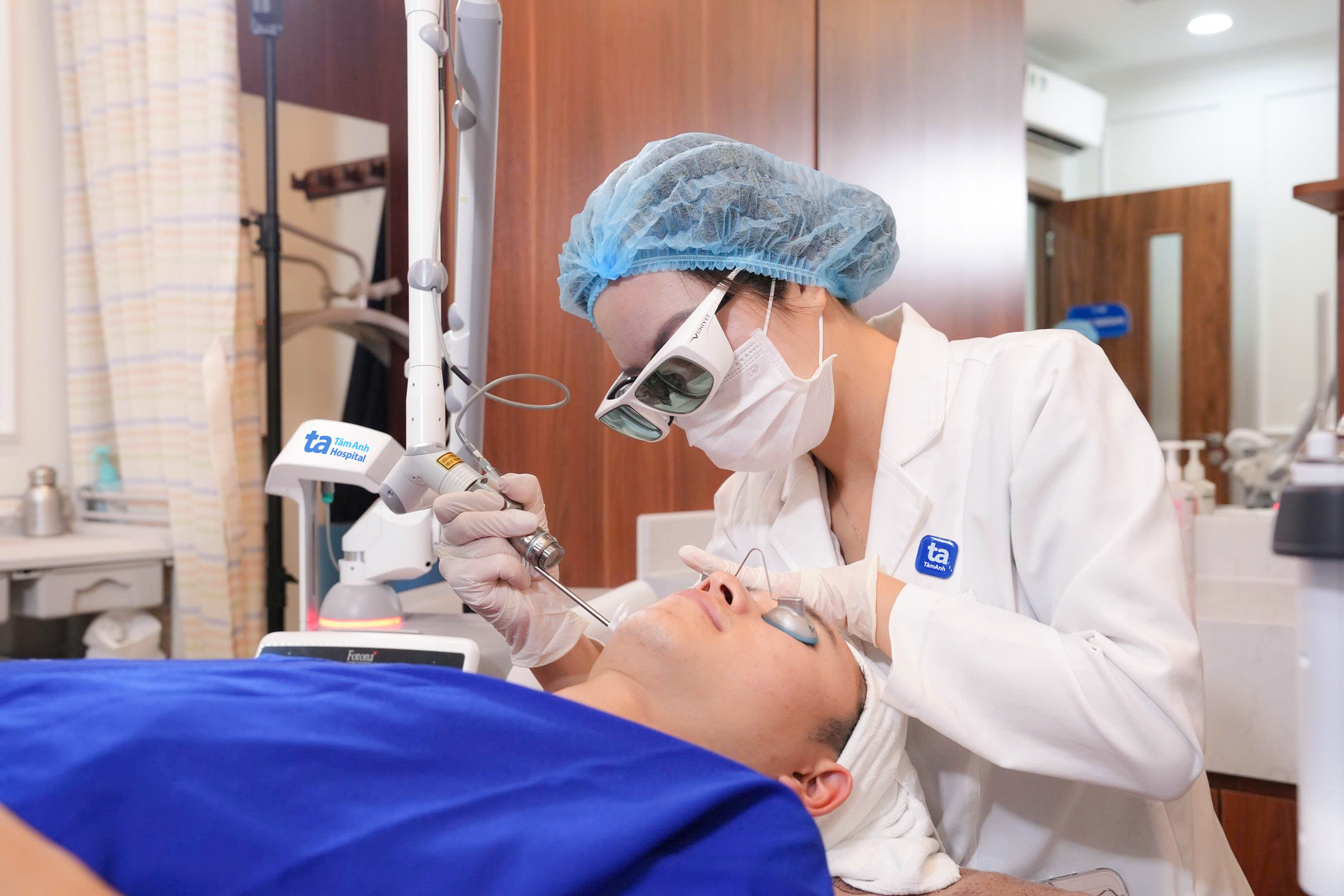 |
A doctor from the Aesthetics Department performs laser beard removal for a man. *Illustration: Tam Anh General Hospital*.
Hair growing back quickly and thicker
One of the main goals of hair removal is slower, sparser, and finer hair growth. If after a few sessions, hair still grows quickly, even feeling thicker and coarser, this indicates an ineffective treatment regimen.
Doctor Trung explains that the cause might be hair removal not aligning with the hair's growth cycle. Hair is only sensitive to light during its growth phase (anagen). If treatment sessions are not scheduled correctly, the light energy will not affect active hair follicles. Using low-power devices or insufficient coverage also reduces effectiveness. In some cases, insufficient heat stimulation can activate dormant hair follicles, leading to more hair growth.
Hyperpigmentation or uneven skin tone
Skin after hair removal, especially in areas like armpits or the bikini line, is often prone to darkening if not cared for properly. A common cause is insufficient sun protection after treatment. At this time, the skin is sensitive and easily affected by UV rays. Overuse of high-intensity light or overly frequent sessions can also cause mild inflammation under the skin, stimulating melanin production and leading to hyperpigmentation. Some individuals continue to shave or wax between sessions, causing repeated skin damage and increasing the risk of hyperpigmentation.
Folliculitis or tiny bumps
Proper hair removal usually improves folliculitis. If after the treatment regimen, many small, red, swollen bumps appear around the hair follicles, this could indicate improper hair removal or inadequate hygiene.
Folliculitis can occur if the treated area is not thoroughly cleaned before the procedure or if contact tools are not sterile. Using unsuitable cosmetics after hair removal, especially products that clog pores, contributes to worsening this condition. If not addressed promptly, prolonged folliculitis can leave behind hyperpigmentation or small scars, affecting long-term aesthetics.
Sensitive, easily irritated skin
Post-treatment skin becomes thin and weak, easily irritated by cosmetics or the environment, prone to redness with weather changes, stinging when using familiar products, or prolonged dryness. This often happens when hair removal is too frequent or high energy is used continuously without recovery time. A weakened skin barrier makes the skin lose its ability to self-regulate, making it susceptible to external factors.
At the Aesthetics Department, Tam Anh General Hospital Hanoi, doctors conduct an examination before hair removal to assess skin color, hair density, and sensitivity. They then select appropriate energy parameters, pulse width, and treatment frequency to optimize effectiveness and skin safety. The hair removal regimen ensures suitable intervals between sessions based on the hair cycle, combined with proper skin recovery care.
Doctor Trung states that Nd:YAG long-pulsed laser technology is one of the effective and safe hair removal solutions, especially suitable for Asian skin. The Nd:YAG long-pulsed laser emits a 1064 nm wavelength that penetrates deep into the skin, directly affecting hair follicles with minimal absorption by melanin in the epidermis, thereby reducing the risk of skin burns or post-inflammatory hyperpigmentation.
Nd:YAG long-pulsed laser is suitable for areas with thick, coarse hair such as legs, arms, intimate areas, or beards in men. The laser energy damages hair follicle structures, causing hair to grow slower, finer, and sparser with each treatment session.
Thanh Ba
| Readers can submit questions about dermatological and aesthetic skin conditions here for doctors to answer. |