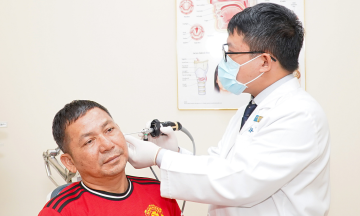
Doctor Nguyen Anh Dung, Head of the Thoracic and Vascular Surgery Department at Tam Anh General Hospital Ho Chi Minh City, reported that Mui's right internal jugular and subclavian veins were abnormally dilated. The arteries and veins extending from her upper body to her arm were compressed by surrounding structures. Impaired blood flow caused the posterior segment of the vein to dilate to 2,5 cm, more than double its normal size. Doctors diagnosed her with thoracic outlet syndrome (TOS).
Thoracic outlet syndrome occurs when nerves or blood vessels traveling from the neck to the arm are compressed by bones, muscles, or ligaments. Patients often experience neck and shoulder pain, hand numbness, arm weakness, or swelling in the arm, hand, or even fingers. These symptoms are easily mistaken for cervical spine or musculoskeletal conditions.
According to Doctor Dung, if Mui had continued treatment for a musculoskeletal condition, the vascular compression would have worsened, increasing her risk of venous thrombosis or limb ischemia.
According to Master of Science, Doctor, Level I Specialist Nguyen Duc Nghia of the Thoracic and Vascular Surgery Department at Tam Anh General Hospital Ho Chi Minh City, approximately 90-95% of thoracic outlet syndrome patients experience compression of the brachial plexus. Mui's case was less common, involving simultaneous compression of both the subclavian artery and vein. This hindered blood flow to her head, neck, and arm, causing prolonged neck and shoulder pain.
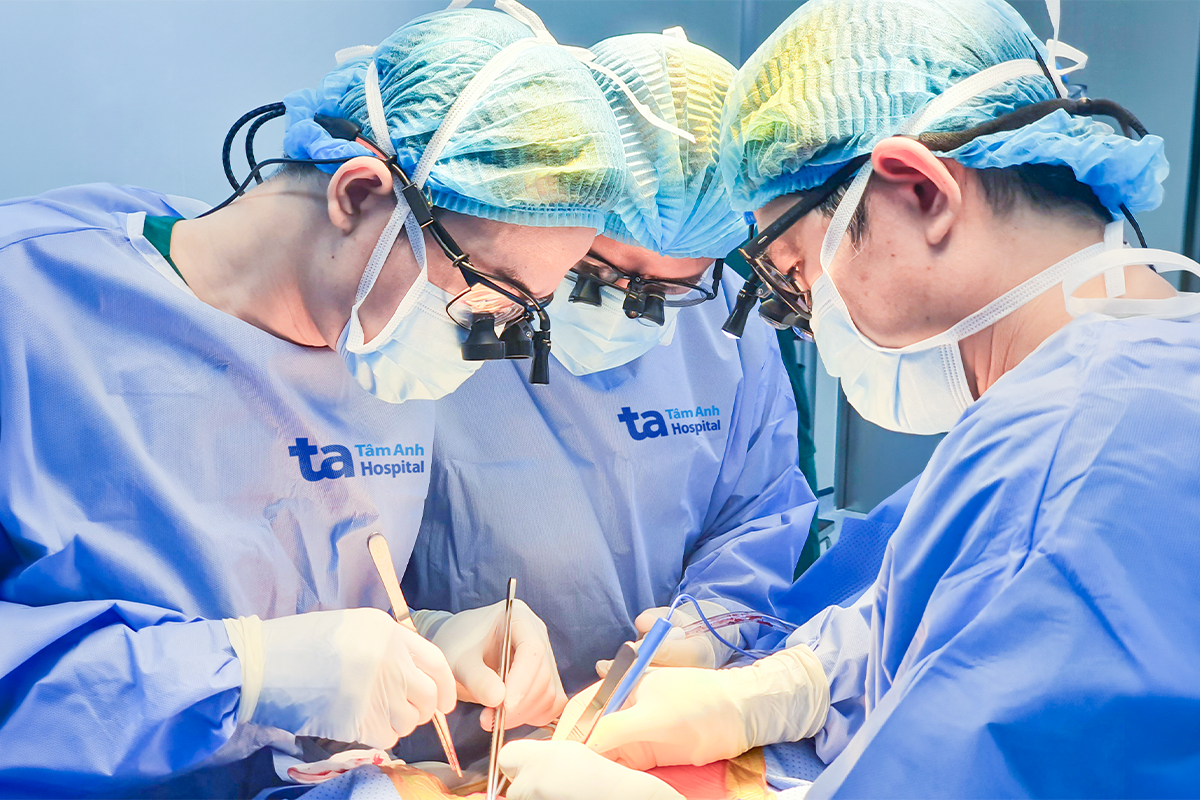 |
Doctor Dung (far right) and his team perform surgery on a patient. *Photo: Tam Anh General Hospital*
The surgical team dissected the compressed tissues and cut the anterior scalene muscle to fully release the subclavian artery and vein. After two hours, blood flow returned to normal.
Mui's hand numbness resolved, and she felt significant relief in her neck and shoulder area. She was discharged after three days. Doctors advised her to adopt a healthy lifestyle to avoid stressing her shoulders and the muscles around the thoracic outlet. Patients should maintain good head and neck posture, avoid prolonged sitting or standing in one position, maintain a healthy weight, practice deep breathing, meditate, and stretch muscles.
Thoracic outlet syndrome is common among individuals who maintain prolonged postures involving a bent neck, rounded shoulders, or raised arms, such as office workers, athletes, musicians, mechanics, and hairdressers. Obesity, congenital anatomical abnormalities, trauma, or pregnancy also increase the risk. "Mui's more than 20 years as an office worker combined with obesity (BMI 30) were contributing factors to her condition," Doctor Dung explained.
Most patients with this syndrome can be treated conservatively with physical therapy exercises, adjustments to work posture, and pain relievers and muscle relaxants as needed. Surgery is considered when symptoms persist for three to six months, conservative treatment does not improve the condition, or complications such as vascular or nerve compression arise.
Thu Ha
* Patient's name has been changed
| Readers can submit questions about cardiovascular diseases here for doctors to answer |