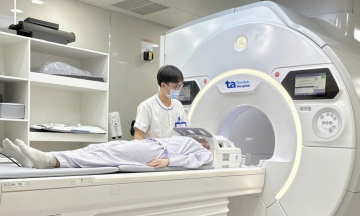
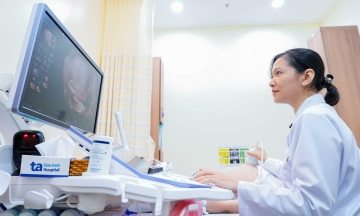
Phyllodes tumors are categorized into three types: benign, borderline, and malignant, according to Master, Doctor Phan Thi Hong Dang, from the Department of Radiation Therapy at the Oncology Center, Tam Anh General Hospital Ho Chi Minh City. Borderline phyllodes tumors are uncommon in the breast, existing on the boundary between benign and malignant. They have an incidence rate of approximately 3-5 new cases per 10 million women annually.
These borderline tumors carry a high risk of recurrence and progression to cancer. If a tumor recurs, patients often require multiple additional surgeries, as malignant phyllodes tumors do not respond effectively to chemotherapy or targeted therapies, as explained by Doctor Dang.
Following surgery, Huong underwent 30 fractions of adjuvant radiation therapy. This treatment aimed to eliminate any remaining phyllodes tumor cells, thereby reducing the likelihood of recurrence and the risk of malignant transformation.
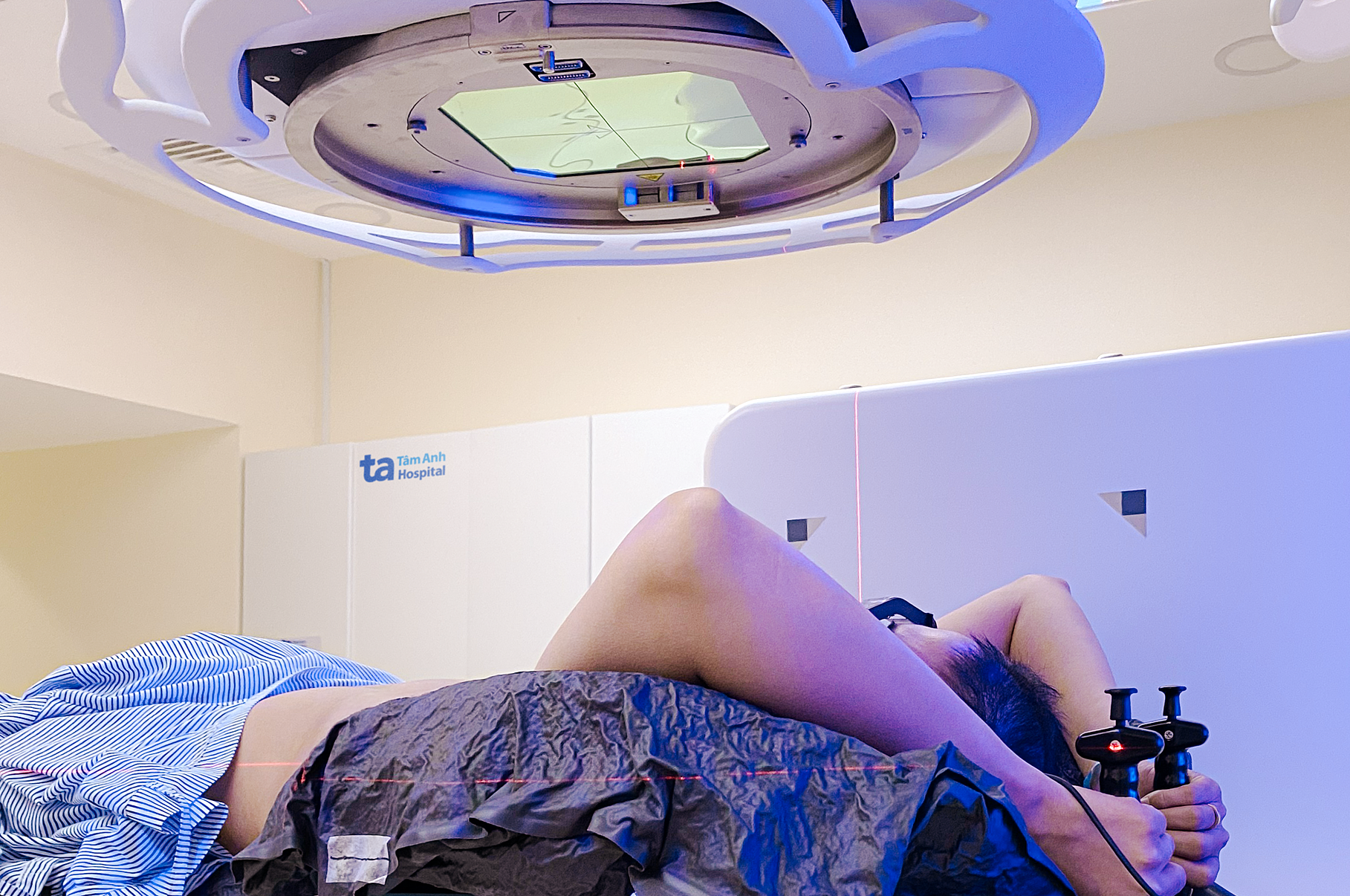 |
Huong received radiation therapy with a high-tech machine system. Photo: Tam Anh General Hospital.
During the procedure, doctors utilized 3D CT images to precisely localize the tumor and surrounding structures. Radiation beams were then shaped to match the tumor's form, ensuring the necessary dose reached the tumor while minimizing exposure to healthy tissue compared to older techniques. This targeted radiation effectively destroys tumor cells, preventing recurrence.
Doctor Dang clarified that during breast cancer radiation therapy, radiation beams are concentrated solely on the breast tissue. Reproductive organs, located in the pelvic region, are far from the irradiated area. Consequently, the radiation does not impact the ovaries, deplete ovarian reserve, or affect the uterus. After completing her treatment, Huong retains the ability to become pregnant and have a baby.
Doctors advise everyone to perform self-breast examinations at home regularly. Routine health check-ups, ultrasounds, and mammograms, depending on age, are crucial for early detection of any abnormalities. Should a lump be discovered, it is recommended to consult an oncologist for specialized ultrasound and mammogram examinations to accurately determine the tumor type and establish an appropriate treatment plan.
Khai Minh
*Patient's name has been changed
| Readers can ask questions about cancer here for doctors to answer. |