Duc was diagnosed with pectus excavatum at 8 years old. Initially, the condition did not significantly affect his heart or lung function, leading to regular monitoring. Recently, Duc experienced fatigue when running. Doctor Nguyen Do Trong, from the Pediatric Surgery department at Tam Anh General Hospital TP HCM, confirmed that the pectus excavatum had progressed severely. Duc's Haller index, which measures the depth of the chest deformity based on CT images, was 3,8; a value above 3,25 indicates severe pectus excavatum. Surgery was necessary for Duc to prevent complications.
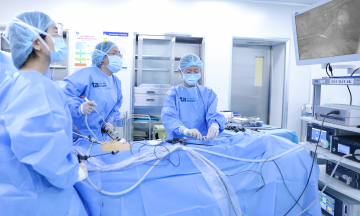
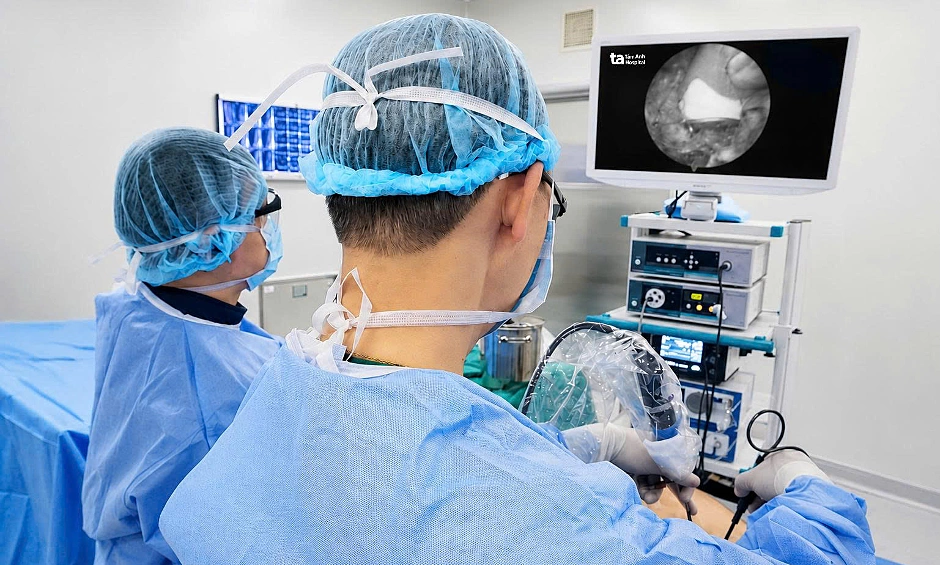
Due to the wide area of the chest depression, the surgical team opted for hai titanium bars instead of mot to ensure even elevation of the entire chest wall and reduce the risk of displacement. After receiving combined general anesthesia and an erector spinae plane block to manage post-operative pain, the team created hai small tunnels to access the pleural cavity, behind Duc's sternum and pericardium. Hai titanium chest bars, precisely measured and bent to fit the contour of Duc's chest, were then inserted through these tunnels by the doctors.
Post-surgery, Duc recovered quickly. He was able to sit up and walk independently, his health was stable, and he was discharged after 5 days. The hai titanium bars will remain in place for about hai years to allow the sternum to stabilize in its new shape before removal. Duc must avoid contact sports for the first ba months, refrain from sleeping on his side, limit heavy lifting, and maintain a straight chest posture to ensure the effectiveness of the treatment.
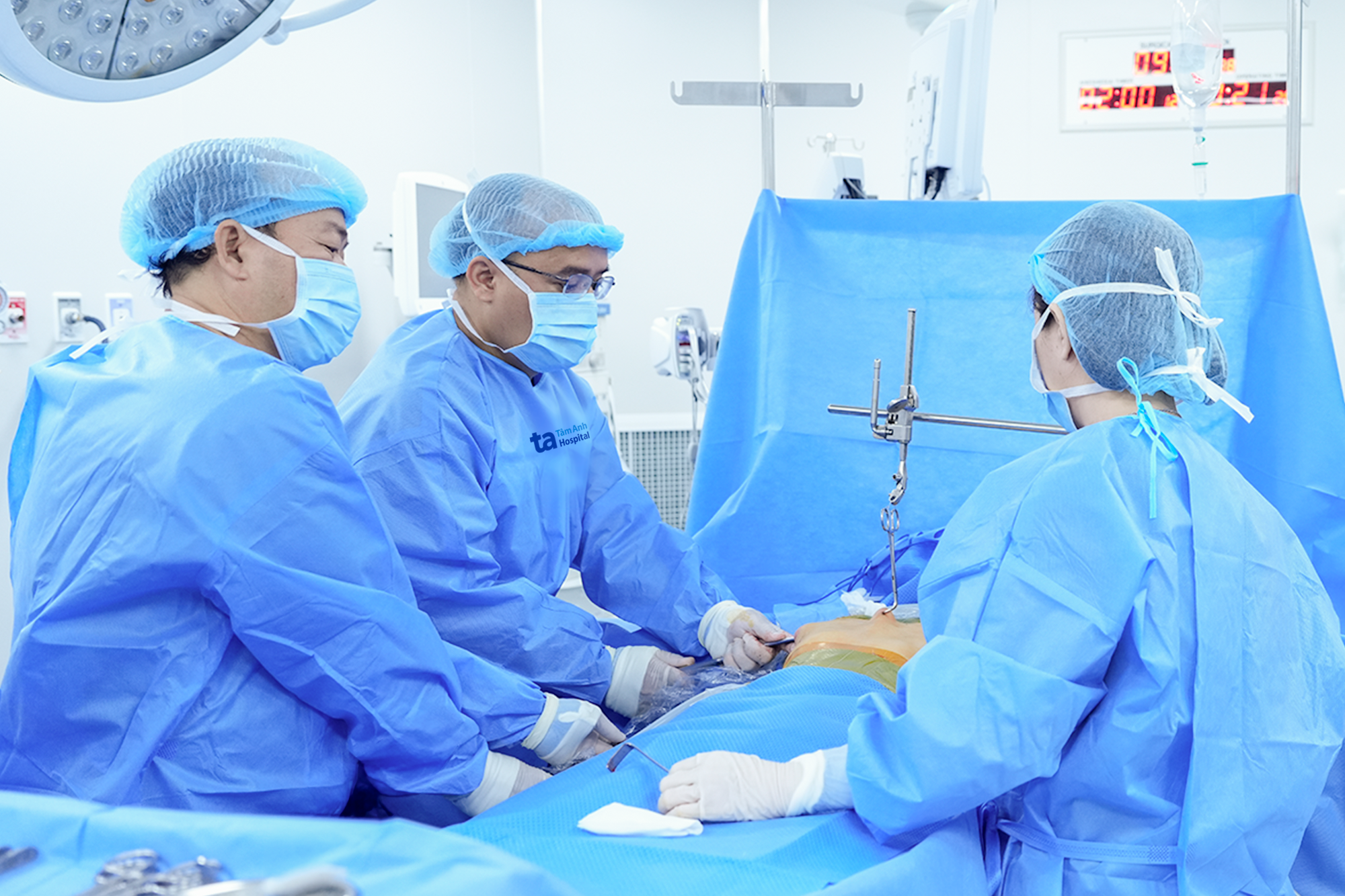 |
Doctor Trong (center) and the Pediatric Surgery team operating on Duc. *Photo: Tam Anh General Hospital* |
Pectus excavatum is a congenital chest wall deformity that occurs when the lower costal cartilages grow excessively or unevenly, pushing the sternum inward. The condition can be detected early in childhood or become more pronounced as a child enters puberty. When the chest is deeply sunken, the reduced volume of the chest cavity can compress the heart and lungs, leading to symptoms such as: shortness of breath, cough, chest tightness, fatigue, dizziness, breathlessness, an increased risk of respiratory infections, arrhythmias, and displacement of the heart from its normal position.
Doctor Trong stated that surgical intervention for pectus excavatum is determined by an individualized assessment, which includes the Haller index, symptom severity, and the rate of bone development for each child. Corrective surgery is typically performed when children are 8-14 years old because the chest bones are still soft and highly elastic, making reshaping easier and less painful.
Doctor Trong advises parents to bring their children to the hospital for examination if they notice any chest abnormalities accompanied by shortness of breath or fatigue during exertion. This allows for early diagnosis and appropriate intervention.
*By Gian Don*
*Patient's name has been changed*
| Readers can submit questions about respiratory illnesses here for doctors to answer. |