A 52-year-old man from Nha Be commune, TP HCM, stated that residents in his neighborhood previously lived in harmony. However, after new neighbors moved in, they acquired four dogs, allowing them to roam unleashed and unmuzzled. On several occasions, these dogs threatened children and adults. The neighborhood committee addressed the issue, but the dog owners made no changes.
During one incident, Mr. Luu was aggressively barked at and threatened by one of the neighbor's dogs. He broke a tree branch to ward off the animal. Upon seeing their dog being threatened, the owners verbally abused and insulted Mr. Luu, accusing him of being cruel and unethical for attempting to strike the dog.
Mrs. Hoa, 64, a fellow resident, also expressed frustration with the same pack of dogs. Mrs. Hoa's family owns two dogs, which she takes to a secluded area daily for their needs to avoid disturbing neighbors. Despite this, the new neighbors' dogs frequently came onto her property to urinate and defecate in front of her door, and they often fought with her dogs. Witnessing these issues, many neighbors decided to get rabies vaccinations as a precautionary measure.
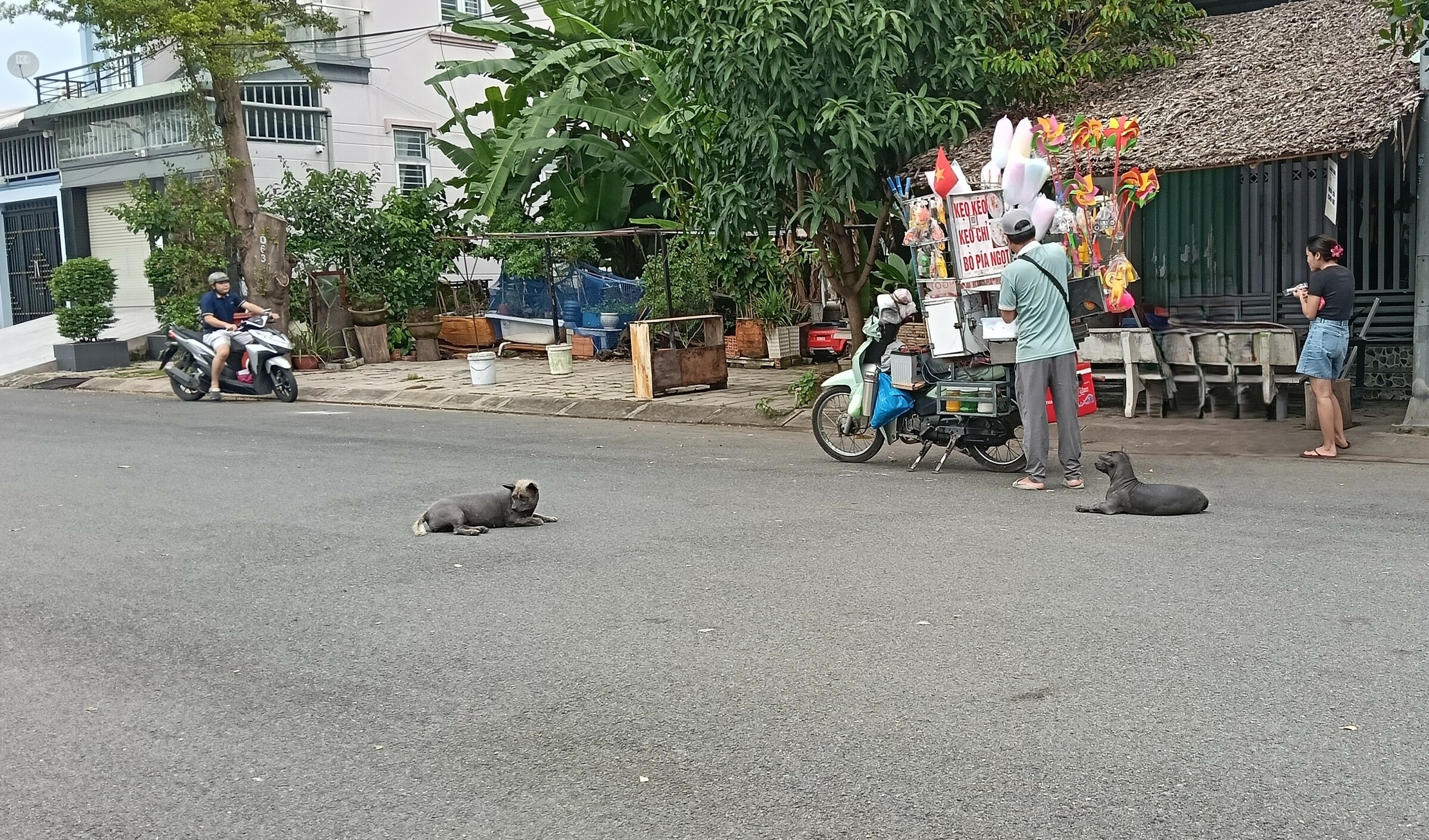 |
Unleashed dogs obstruct traffic, endanger pedestrians, and indiscriminately defecate, impacting residents' living environment. Photo: Hoang Duong |
Unleashed dogs obstruct traffic, endanger pedestrians, and indiscriminately defecate, impacting residents' living environment. Photo: Hoang Duong
Meanwhile, Duc Thinh, 34, living in an apartment complex in Hanoi, faced complaints for preventing his child from playing near neighbors' dogs and cats. one month prior, his son developed a full-face rash and a persistent cough after playing with a kitten from the apartment opposite theirs. A doctor diagnosed the child with pet dander allergy and advised limiting exposure. Since then, whenever he takes his son to the common courtyard, Mr. Thinh keeps him away, maintaining distance when he sees dogs or cats approaching.
On one occasion, a neighbor brought a Poodle to play with his son, but Mr. Thinh gently asked them to keep their distance due to his son's sensitivity. The neighbor appeared annoyed, suggesting that Mr. Thinh was overly cautious and that more exposure would resolve the allergy. A few bystanders agreed, but he declined. From that point, the neighbors stopped greeting his family.
Doctor Le Thi Gam, Medical Manager at VNVC Vaccination System, explained that Vietnamese people often keep dogs and other pets not just for guarding homes or companionship, but also consider them true family members. Pets are often meticulously cared for, fed at regular times, taken for routine health check-ups, and even participate in family activities. For many families, dogs or cats become companions, bringing joy and connection, and serving as a source of emotional comfort, demonstrating the owner's affection and responsibility towards their pets.
However, dogs, cats, or other pets can transmit rabies, worms, or cause allergies. When not properly managed, pets can significantly impact the community.
Vietnamese law stipulates that pet owners must muzzle, leash, or have someone accompany their dogs in public places, or implement other safety measures. The act of allowing dogs to roam freely and endanger others can result in administrative penalties.
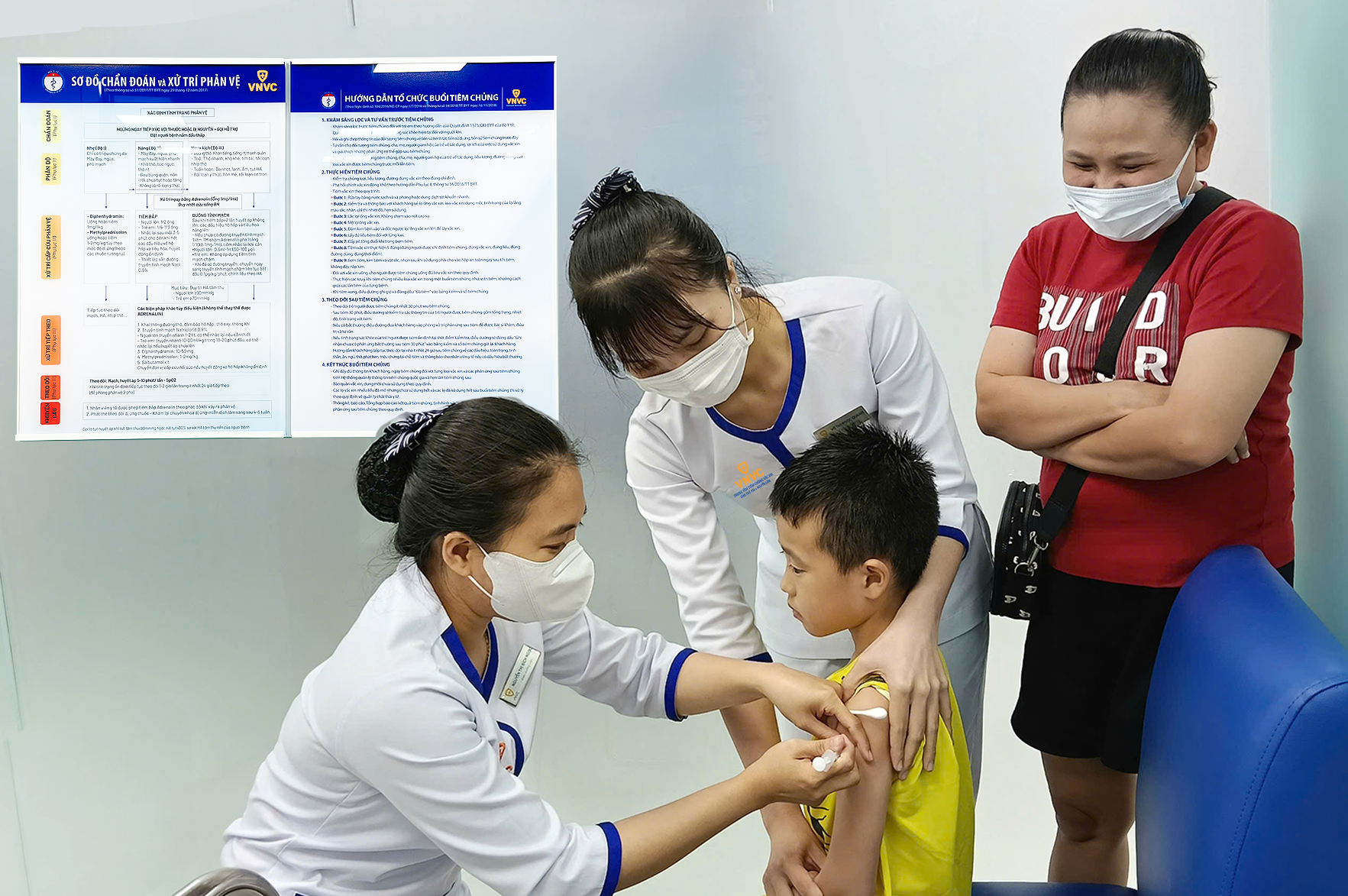 |
Children are taken by parents for rabies vaccination at VNVC Vaccination System. Photo: Hoang Duong |
Children are taken by parents for rabies vaccination at VNVC Vaccination System. Photo: Hoang Duong
Doctor Gam advises people, especially children, to maintain distance from dogs encountered on the street and avoid teasing them. If a dog shows aggressive behavior and attacks, stand still, avoid direct eye contact, and if holding something, throw it in another direction to distract the animal. If attacked and unable to resist, curl into a ball, tightly hug your neck with your hands, and use your elbows to shield your face and protect vital areas.
After ensuring safety, wash the wound under clean running water with soap for 15 minutes, then disinfect it with iodine alcohol or povidone solution. Afterward, go to the nearest vaccination center for a doctor to assess the wound and prescribe appropriate vaccination.
Individuals who have not been previously vaccinated require a five-dose regimen (intramuscular) on days 0, 3, 7, 14, and 28, or an eight-dose regimen (intradermal, two doses each time) on days 0, 3, 7, and 28. For severe wounds or bites to the head, face, or neck, areas with numerous nerves, doctors may prescribe rabies antiserum according to Ministry of Health guidelines.
Individuals who have not been bitten or scratched by dogs or cats but frequently interact with pets, or travel to areas with limited access to vaccines and antiserum, can receive pre-exposure prophylaxis with three doses on days 0, 7, and 21 or 28. If bitten or scratched by a mammal, individuals only need two additional doses on day 0 and day 3, without requiring antiserum, even for severe wounds.
By Binh Khanh
*Names have been changed.