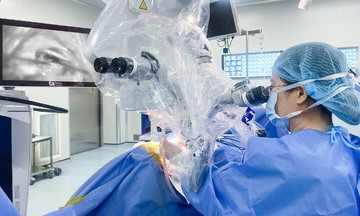
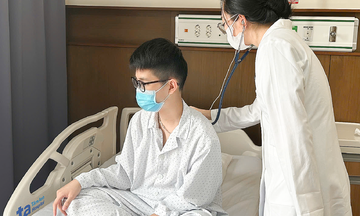
On 15/12, Dr. Tran Thi Thao, head of the Obstetrics and Gynecology Department at Hung Vuong Gia Lai Hospital, reported the patient was in stable condition and receiving postoperative care in the General Surgery Department.
The Cambodian patient, who had undergone sterilization and experienced amenorrhea for about 6 months, had been aware of a uterine fibroid for some time but had not sought treatment. Recently, the tumor rapidly grew on the anterior uterine wall, causing her abdomen to swell significantly, resembling an 8-9 month pregnancy. This growth pushed out the serosa, leading to abdominal pain and discomfort, along with a risk of intestinal adhesion and other abdominal complications. The tumor had invaded the terminal ileum of the small intestine, and the greater omentum was tightly adhered.
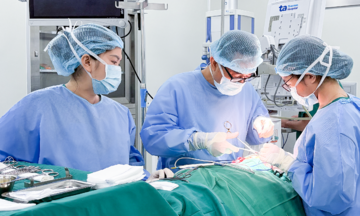
Surgeons successfully removed the entire tumor and safely resected and reconnected the intestine.
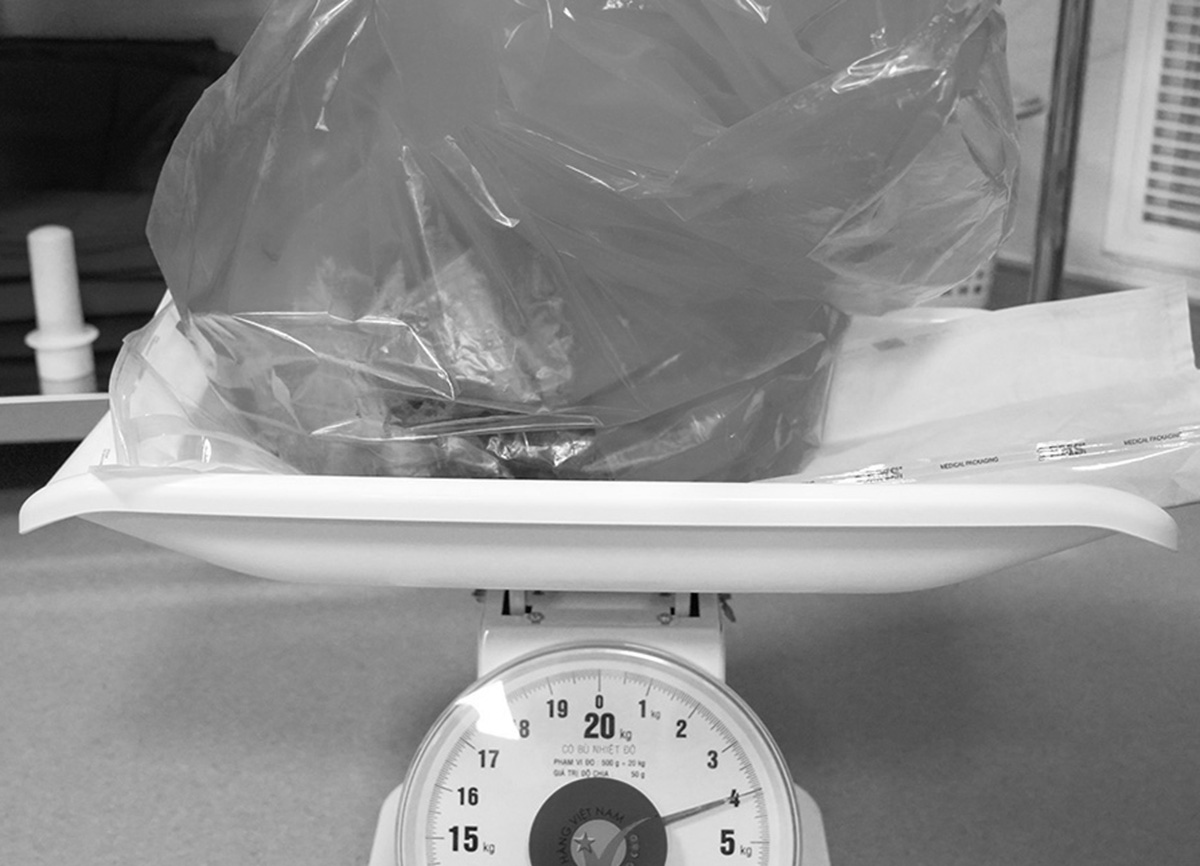 |
The 4 kg tumor was successfully removed by doctors. Photo: Ngoc Oanh |
Uterine fibroids are benign conditions that can develop silently over long periods. Large fibroids can cause: abdominal pain, menstrual irregularities, anemia, compression of adjacent organs, and an increased risk of severe complications, especially intestinal adhesion, intestinal torsion, and hemorrhage.
Women, especially those 35 years and older, should undergo regular gynecological check-ups every 6-12 months. This allows for early detection and treatment, protecting their long-term health.
Ngoc Oanh