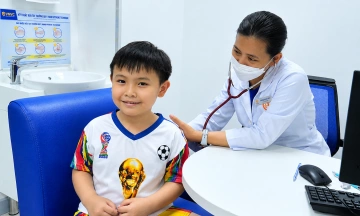
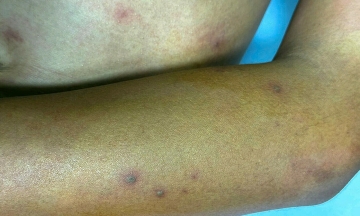
A 13-year-old boy named Tung recently underwent surgery at Tam Anh General Hospital TP HCM to remove a congenital birthmark (nevus) that had caused him discomfort. The rough skin patch, located on his left cheek and right chin since childhood, had begun to itch. Dr. Nguyen Do Trong, Head of Pediatric Surgery, identified the lesion as an epidermal nevus or a sebaceous nevus, approximately 3-3.3 mm thick.
Given the lesion's large size, laser treatment was deemed unsuitable due to the difficulty of complete removal and a higher risk of significant scarring compared to surgery. Following consultation, Dr. Trong and his team decided on surgical excision for thorough removal. The endotracheal anesthesia surgery proceeded smoothly, and Tung is recovering well.
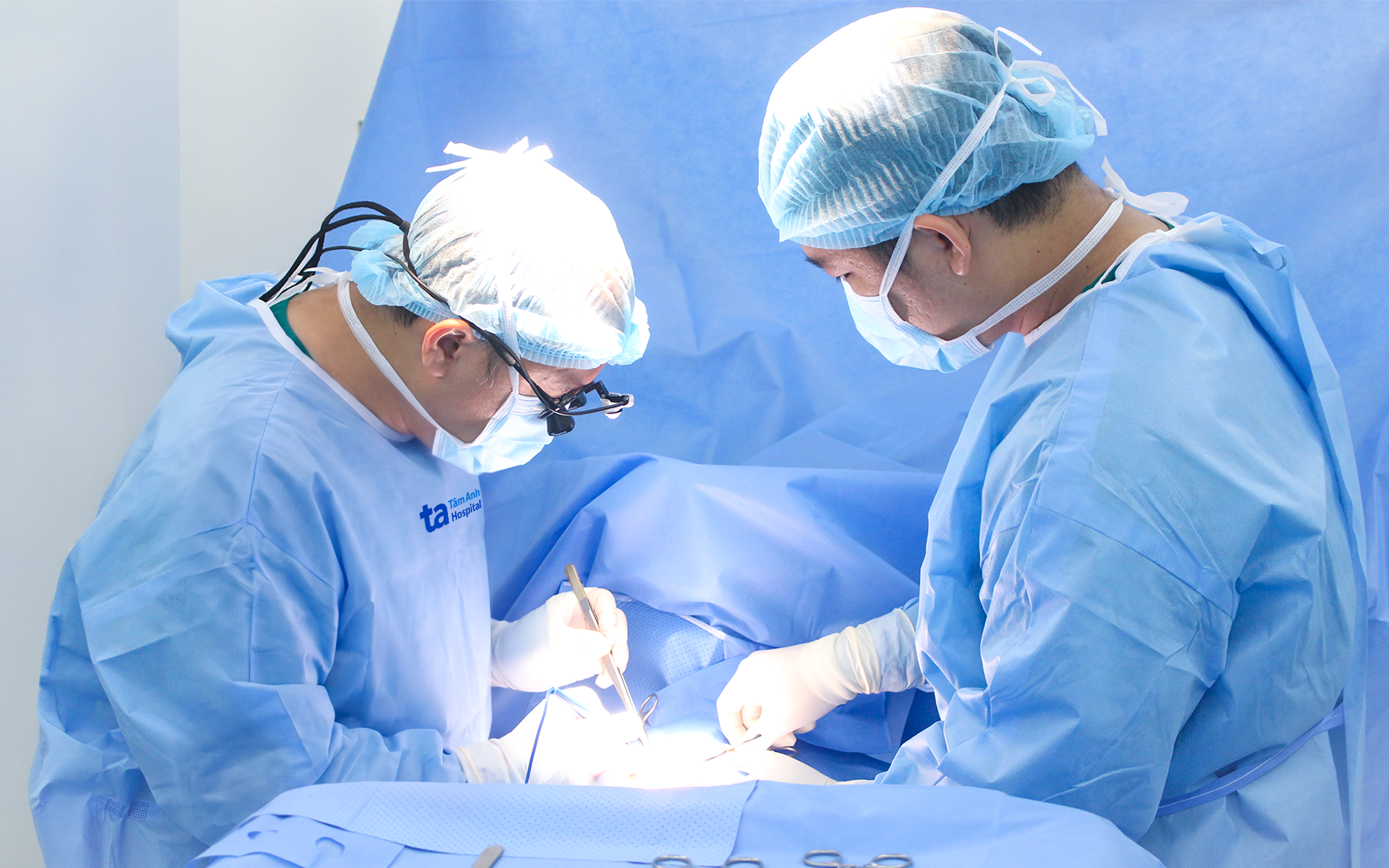 |
Dr. Trong (left) and his surgical team operating on Tung. *Photo: Tam Anh General Hospital*
While most birthmarks like Tung's are benign, they can grow with age, leading to cosmetic concerns and affecting a child's psychology and daily life. Surgical removal often boosts a child's confidence. Notably, Tung's 17-year-old sister also has a similar skin lesion and is undergoing monitoring. Dr. Trong emphasized that while birthmarks typically appear individually, cases involving multiple family members warrant further examination for related genetic factors.
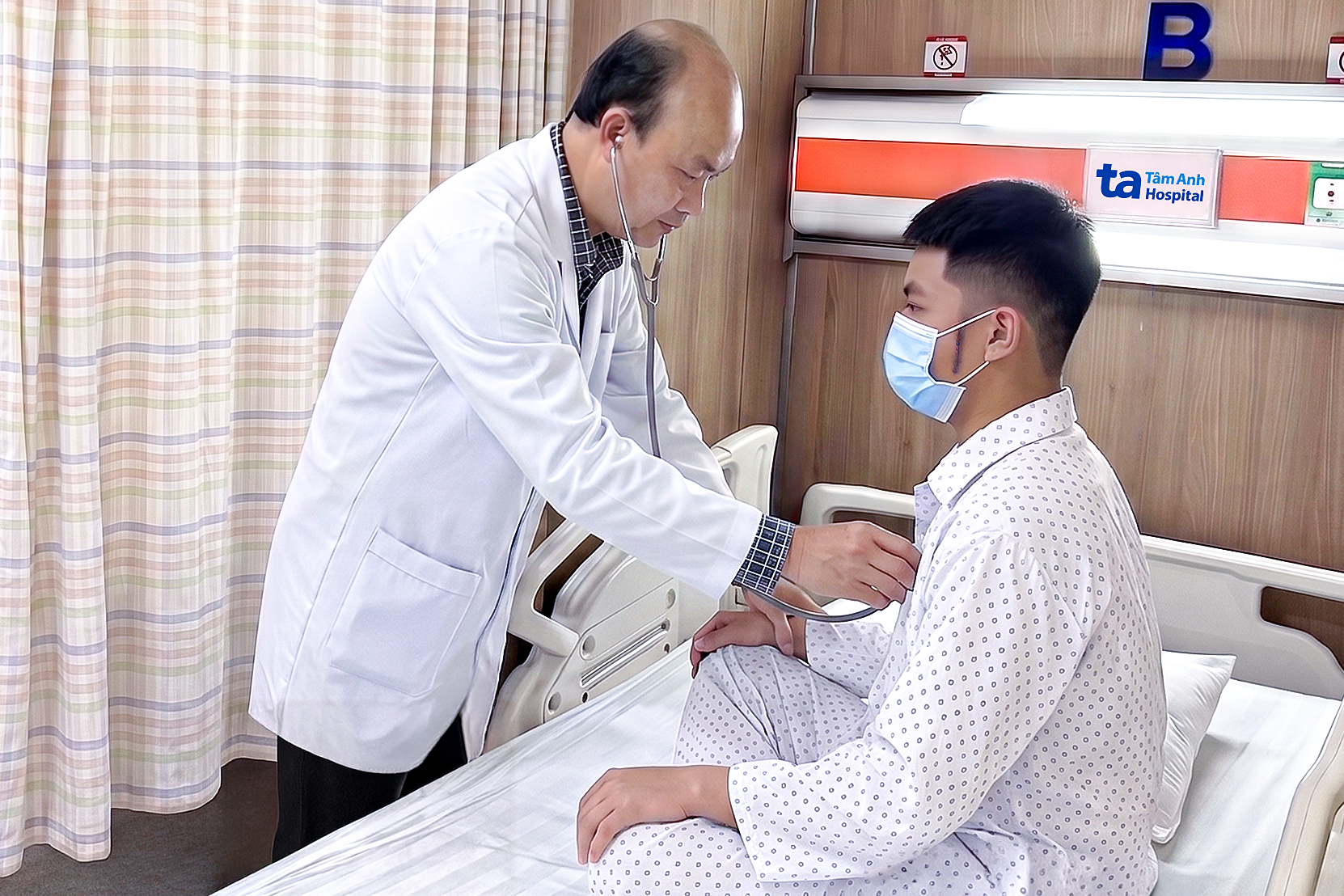 |
A pediatric surgeon examining Tung after surgery. *Photo: Tam Anh General Hospital*
Birthmarks are skin lesions present from birth or appearing in early childhood, affecting approximately one to three per 1,000 children. Dr. Trong explained that their causes are linked to genetics, environmental factors such as radiation and toxic chemicals, or underlying medical conditions like Gardner syndrome and Peutz-Jeghers syndrome. These lesions can appear as moles or dark patches, either flat or raised on the skin. Although most are benign, they require monitoring if they show signs of rapid growth, changes in color or shape, or if ulceration or bleeding occurs.
Treatment for skin birthmarks varies by case and may include periodic monitoring, laser therapy, liquid nitrogen application (cryotherapy), or surgery. The primary goal of treatment is to remove the lesion, reduce inflammation and bleeding, and facilitate the ongoing monitoring of any abnormal skin changes.
Doctors advise parents to seek medical consultation for their children if they observe a birthmark or congenital mole that is rapidly growing, becoming raised, changing color, or interfering with daily activities. Parents should refrain from self-medicating, attempting to burn off lesions, or pursuing cosmetic interventions without a specialist doctor's assessment.
Minh Tam
*The patient's name has been changed.
| Readers can submit questions about pediatric diseases here to receive answers from doctors. |